By Mirror & Glow Editorial Desk – November 23, 2026
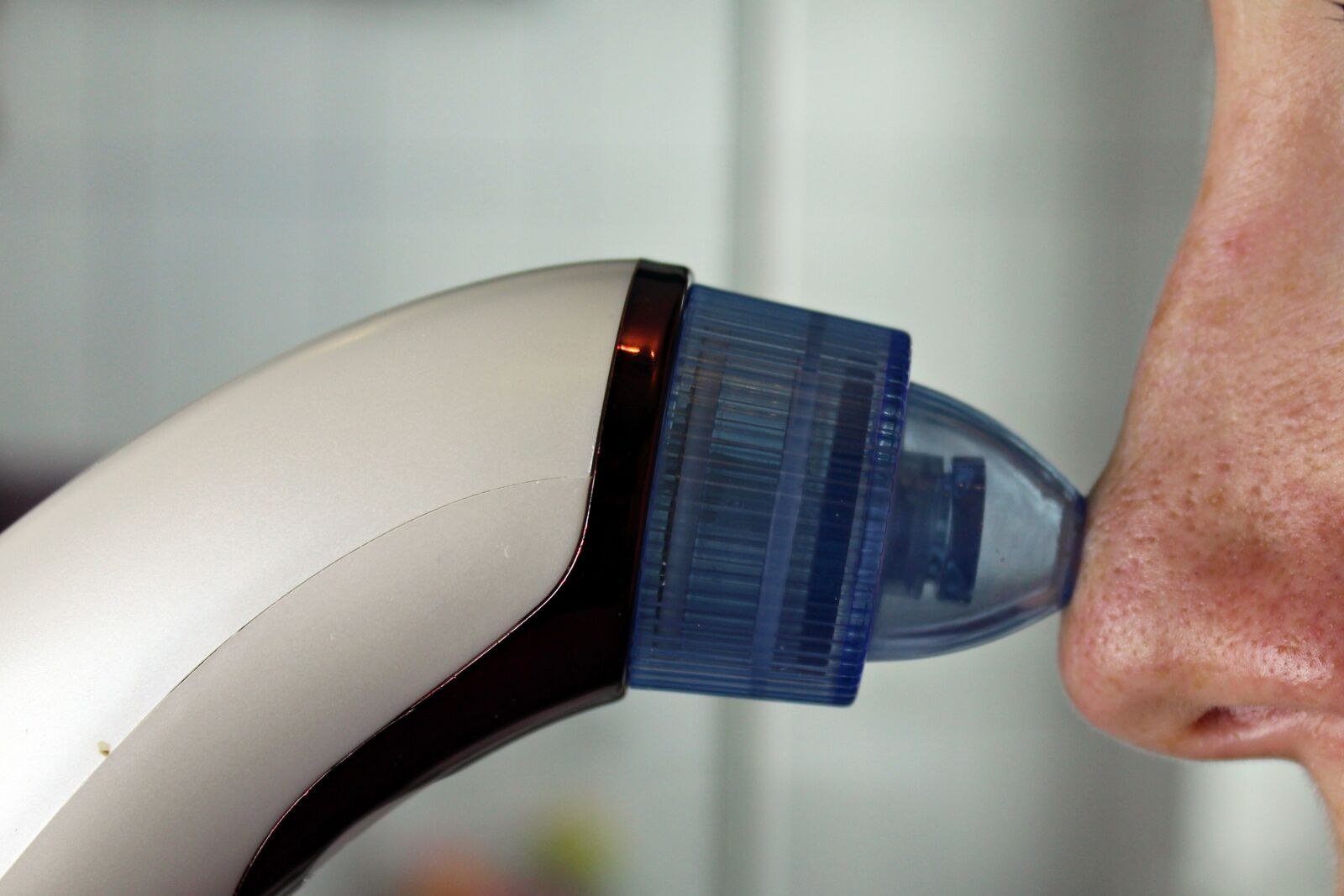
Woman pressing a pore vacuum device to the side of her nose at a vanity.
The direct answer: in most cases yes, with conditions. Whether you can use pore vacuum on a pimple depends on the products involved, your skin or hair type, and how you layer or time them. The guide below gives the conditions, the safe way to do it, and the situations where the answer becomes no.
Pore Vacuum Explained
A pore vacuum is a small suction device marketed to pull blackheads and oil from pores. It can lift surface plugs from the nose area, but it is the most technique sensitive of the blackhead tools, and the one most likely to leave marks when misused.
Suction does not discriminate: set too high or held still, it bruises the skin and can leave the hickey like marks and broken capillaries that fill review sections. Used correctly it is kept moving constantly, on the lowest effective setting, after a warm shower, for seconds per area. It does nothing for the rate at which pores refill; salicylic acid does that part. On thin, sensitive or rosacea prone skin, the honest advice is to skip suction entirely.
Putting It Into Practice
Lowest setting, constant motion, one short pass over the nose and chin after a warm shower, at most weekly. Follow with something calming, and treat any lingering red mark as a sign the setting or dwell time was too much.
Build the habit at the gentlest effective level first and attach it to something you already do, after a shower, before bed, with your morning routine, because techniques attached to existing habits survive. Keep the rest of your beauty devices routine stable while you judge the change, and give the routine the full period the product guidance describes before deciding it does not work.
Step by Step: Pore Vacuum
The method below is the standard technique for this category, in the order that makes each step work. Adapt the amounts to your own skin or hair, and keep the order. If you still need the product itself, the buying guide Best Pore Vacuum for Sensitive Skin compares the current options for this exact need.
Read the manufacturer’s manual fully before the first session, including who should not use the device
Patch test or start with the shortest, lowest setting the manual allows
Prepare skin as directed, usually clean and dry with no products unless a gel is specified
Follow the stated session time and weekly frequency rather than improvising more
Track results over the full period the manual describes before judging the device
Getting Pore Vacuum Right in Your Routine
Fit matters more than intensity with pore vacuum. Build the habit at the gentlest effective level first: the right product amount, the right frequency for your type, and one change at a time so you can see what is actually helping. Keep the rest of your beauty devices routine stable while you judge the change, and give the routine the full period the product guidance describes before deciding it does not work.
Keep notes for the first two weeks: what you used, how much, and how your skin or hair felt the next day. That simple record answers most follow up questions, including whether a reaction came from the new step or from something layered with it.
The pore vacuum is the gadget end of blackhead removal, and this kit is the representative worth buying: five suction heads sized from a small round tip for the nose crease to broader heads for the chin, three modes matched to skin type, and a set of manual extractors in the box for the plugs suction cannot shift. Used correctly, on steamed skin, kept moving in slow strokes and never parked in one spot, it lifts loose sebum and surface plugs across the whole nose and chin faster than manual work, and the visible result in the tip is undeniably satisfying. Used incorrectly, parked or dragged on high suction, it is a bruise machine: the hickey-like marks these devices are known for are a technique failure, not a defect. The honest verdict is that a vacuum is a maintenance tool for oily, plug prone skin, excellent weekly upkeep between proper extractions, and no substitute for the loop on a stubborn blackhead. Buy it for upkeep, respect the lowest setting first, and it earns its place. The included manual tools matter more than the box suggests: the plugs a vacuum cannot lift are usually the ones worth removing properly with a loop, so the kit works best as a two stage routine, suction across the zone first for the loose material, then the loop, used sparingly, on what remains. Charging is by USB, a full charge covers many sessions, and the heads rinse clean under a tap, which keeps the weekly upkeep this device depends on genuinely low effort.
Specifications
Lowest setting only near inflamed skin, and never held in one place, as this article warns
Pros
Five heads sized for nose crease and chin
Three modes matched to skin type
Fast weekly upkeep for oily, plug prone skin
Cons
Bruises skin if parked or overused
Maintenance only, not deep extraction
Needs charging and head cleaning
Who should buyyou want fast weekly upkeep for an oily nose and chin
Who should skipyou have sensitive or bruise prone skin
The Lonove appears in this guide in a different role from its lead position in the blackhead guide: here it is the known quantity, the device whose behaviour at its lowest settings is predictable, steady and surge free, which is what sensitive skin actually needs from a motor. Surges and grabs are what mark delicate skin, more than headline strength, and the Lonove’s even pull at level one is its sensitive credential. The method is the strict one: smallest probe head, lowest level, shower softened skin, single moving passes over the nose and chin only, once a week, with the session abandoned entirely in any week the skin is irritated, sunburnt or mid flare. The extractor tools in the kit are, for this readership, mostly decorative; a sensitive skin that needs a vacuum weekly rarely benefits from steel on top of suction. What the Lonove does not offer is guidance: no display, no named gentle mode, so the discipline lives in the routine rather than the device, and readers who know they improvise should choose the labelled machines above it. For a careful owner with a settled routine, it is a calm, proven tool that asks little and startles less.
Specifications
The small probe is the controlled option for single congested pores
Pros
Even, surge free pull at low levels
Predictable behaviour week to week
Small heads suit nose only routines
Cons
No display or named gentle mode
Discipline must come from the routine
Tools in the kit are not for sensitive skin
Who should buyyou keep a settled routine and want a calm, proven device
Who should skipyou need the device itself to guide the gentle setting, where the Yccu and Makingtec do that
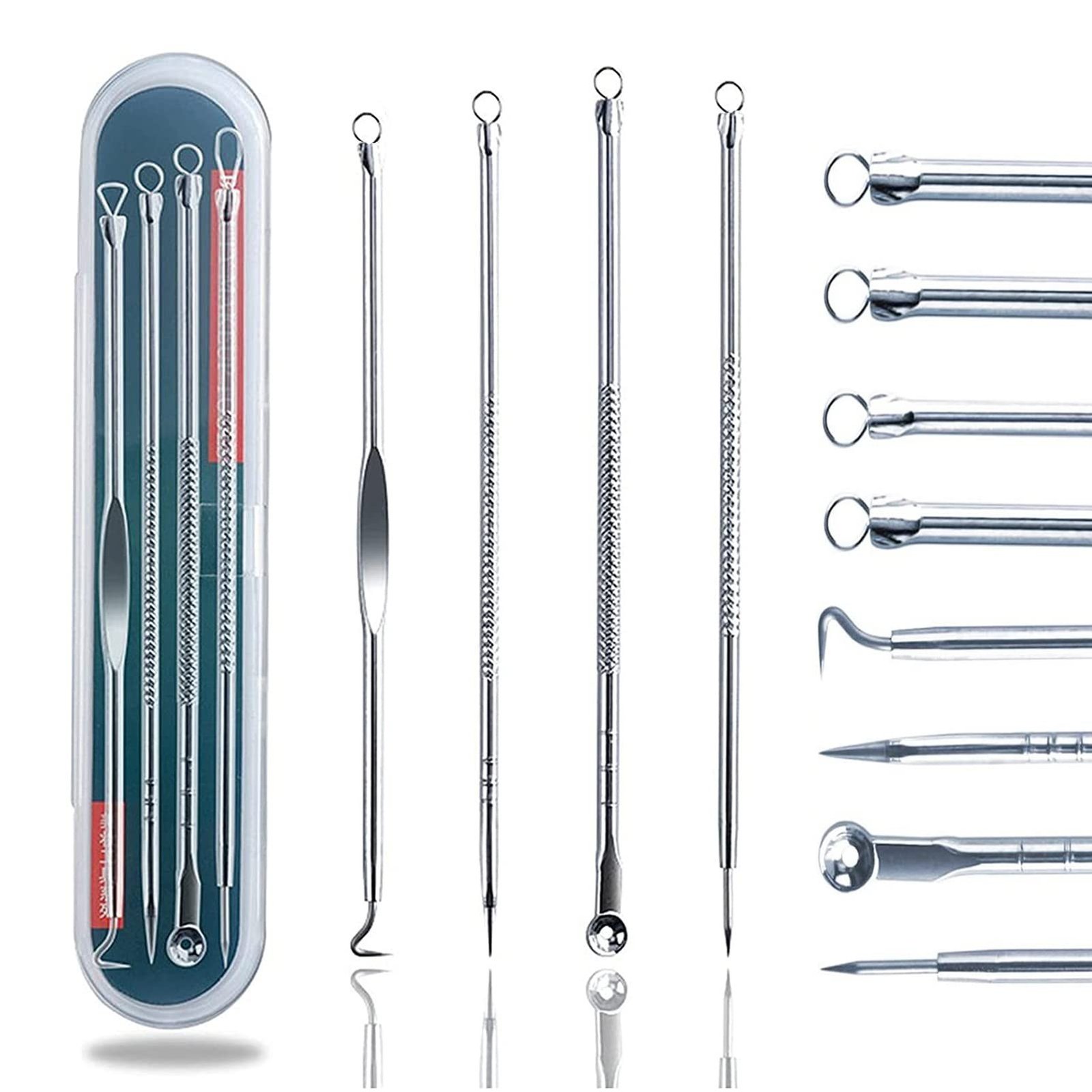
The manual extractor kit is where blackhead removal on the nose and chin should start, because it is the only tool here that removes a blackhead completely rather than loosening it. The four double ended tools cover the anatomy of the area: a small loop for the creases at the sides of the nose, a flat spoon for the chin’s broader plugs, and angled ends for the awkward curve where the nose meets the cheek. Stainless steel matters because the tools must be disinfected before and after every use, with alcohol or boiling water, and cheap plated kits pit and rust. Technique decides whether this pick helps or harms: steam or a warm shower first, loop centred over the blackhead, gentle even pressure with a slight rocking motion, and a hard rule that anything that does not release with two gentle attempts is left for another day. Used that way, a kit like this is a one time purchase that outperforms every gadget in this guide on the blackheads it can reach. Used impatiently, it is also the fastest route to broken capillaries and marks, which is why the discipline is part of the recommendation. Storage is part of the hygiene story too: the case keeps the ends from knocking against each other in a drawer, and a wipedown with alcohol before the case closes means the kit is ready the next time. For households sharing a bathroom, one kit per person is the sensible rule, since these are skin contact tools in every sense that matters.
Specifications
The manual alternative for a single ready plug, with no suction involved
Pros
Removes blackheads completely, not just loosened
Loop and spoon ends shaped for nose and chin
Disinfects properly and lasts for years
Cons
Technique decides safety, patience required
Can mark skin if forced
No help for closed, deep plugs
Who should buyyou want the most effective removal and will learn the gentle technique
Who should skipyou want a no-skill, press-and-go gadget
Using a device more often than directed, expecting faster results
Skipping the suitability chart for skin tone, hair colour or medical conditions
Using IPL or light devices over tattoos, moles or irritated skin
Judging a gradual device after two sessions instead of a full course
Parking the nozzle on one spot to really get a plug, which is exactly how bruises happen
Using it on dry, unprepared skin at full power on the first day
When to See a Professional
Stop using any device and seek advice if you get burns, blistering, persistent redness or eye symptoms, and check the manual’s contraindications before the first session rather than after a problem: pregnancy, pacemakers, light sensitising medication and certain skin conditions are standard exclusions in this category. Devices are powerful enough to help, which means they are powerful enough to misuse.
Deciding between options? The comparison Pore Vacuum vs Pore Strips sets out the differences, downsides and verdicts for this topic.
Frequently Asked Questions
Can I Use Pore Vacuum on a Pimple – what is the most important thing to get right?
Consistency at the right level for your type. With pore vacuum, the correct amount and frequency used steadily will outperform an intense routine used occasionally, and it avoids most of the irritation that makes people abandon the routine.
How long does it take to see a difference?
Most beauty devices routines show their direction within two to four weeks of consistent use, with fuller results over two to three months for concerns involving skin renewal or hair growth cycles. Judge on that timeline, not on single days.
What if my skin or hair reacts badly?
Stop the new step, return to your simplest routine until things settle, and reintroduce only one product at a time if you try again. Persistent pain, swelling or spreading irritation is a reason to seek professional advice rather than push through.
What is the biggest mistake people make with pore vacuum?
Parking the nozzle on one spot to really get a plug, which is exactly how bruises happen A close second: using it on dry, unprepared skin at full power on the first day
What should I check before starting with pore vacuum?
Suction does not discriminate: set too high or held still, it bruises the skin and can leave the hickey like marks and broken capillaries that fill review sections. Beyond that, check the product’s own directions against your skin or hair type, start at the gentle end of any range, and change nothing else in your routine for the first two weeks so the result is readable.
What is the best pore vacuum for sensitive skin?
The buying guide Best Pore Vacuum for Sensitive Skin compares the leading options for this exact need against the criteria that matter, with specifications, honest pros and cons, and a clear statement of who should skip each pick. It is linked from this page.
By Mirror & Glow Editorial Desk – November 23, 2026
Everything behind when to use pore vacuum in skin care routine: suction does not discriminate: set too high or held still, set out as a clear step by step with the mistakes and questions readers raise most.
By Mirror & Glow Editorial Desk – November 23, 2026
Suction does not discriminate: set too high or held still. This guide applies that to can you use a blackhead vacuum on whiteheads: the method, the timing, and the traps to avoid.
By Mirror & Glow Editorial Desk – November 23, 2026
Everything behind how often should i use a pore vacuum: suction does not discriminate: set too high or held still, set out as a clear step by step with the mistakes and questions readers raise most.