By Mirror & Glow Editorial Desk – November 23, 2026
Woman in a bathrobe applying body oil to her leg beside the bath.
Affiliate disclosure: Mirror & Glow may earn a commission from qualifying purchases made through links on this page, at no extra cost to you. Full disclosure.
The verdict up front: start with Bio-Oil Skincare Oil, the strongest all round match in this line up for aging skin. Every pick is compared in the table below, then reviewed in full with its downsides as well as its strengths.
If you are looking for the best body oil for aging skin, the right choice depends on fit, not hype. This guide is written for aging skin, and every criterion below is weighted for that need first. The short answer: choose the body oil whose formula, format and strength match your skin, check the ingredient or specification list before the marketing claims, and avoid the options whose downsides match the problem you are trying to solve.
What matters most in body oil is covered in depth below: what the product actually is, the types on sale and how they differ, the buying criteria explained one by one, how to use what you buy, and the mistakes that waste the most money in this category.
Best Body Oil for Aging Skin Compared
Product
Standout Point
Key Specification
Bio-Oil Skincare OilTop Pick
Light dry oil texture absorbs without a greasy film
60 ml bottle shown, larger sizes available – PurCellin Oil base – vitamins A and E – calendula, lavender, rosemary and chamomile oils – for scars and stretch marks
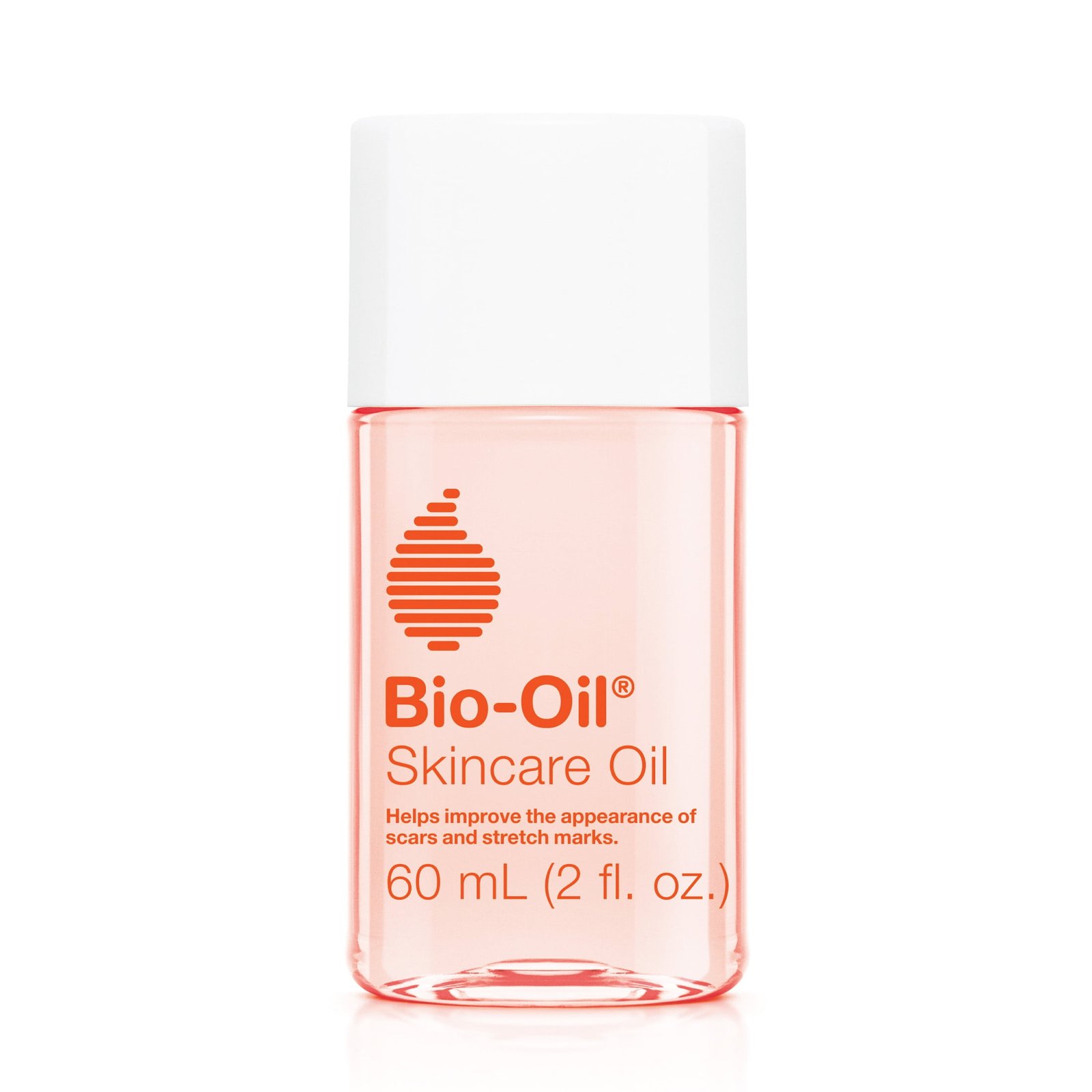
Bio-Oil leads this guide because it is the oil aging skin questions most often start with, and because its formula does contain two ingredients relevant to older skin: vitamins A and E in a light, non greasy base. The PurCellin Oil base is the practical point: it thins the oil so it spreads and absorbs like a dry oil rather than sitting on the surface, which matters on mature skin that needs daily use to stay comfortable. The brand’s positioning is scars, stretch marks and uneven tone, applied twice daily with massage for at least three months, and that slow, massage based ritual is honestly the main benefit for aging body skin: suppleness, comfort and a better surface for everything else. What it will not do is firm, lift or reverse thinning, and no oil in this guide will. It is fragranced with its botanical oils, which reactive skin may not love, and the vitamin A content, while low, is a reason it is not the pick for pregnancy. Bought in the larger sizes it is reasonably priced for daily body use. As the accessible, pleasant starting oil for dry, aging skin, it earns its place at the top. The larger 125 ml and 200 ml bottles are the sensible sizes for body use, since the 60 ml bottle shown is closer to a trial size.
Specifications
60 ml bottle shown, larger sizes available
PurCellin Oil base
vitamins A and E
calendula, lavender, rosemary and chamomile oils
for scars and stretch marks
Pros
Light dry oil texture absorbs without a greasy film
Vitamins A and E with a massage based routine
Several sizes keep daily body use affordable
Cons
Will not firm or reverse thinning skin
Fragranced botanical formula
Not the pick for pregnancy
Who should buyyour aging skin is dry and uneven in tone and you want an affordable daily oil you will actually use
Who should skipyou expect firming or lifting, or you need a fragrance free formula
Palmer’s Skin Therapy Oil is the budget overachiever of this category: a cocoa butter and vitamin E oil with argan oil and the brand’s Cetesomate-E delivery complex, sold in a spray bottle at a drugstore price. For aging skin its appeal is the combination of richness and convenience. Cocoa butter gives it more body than the dry oils here, so crepey shins and forearms feel cushioned rather than just slicked, while the spray format makes full body application fast enough to happen daily. The brand positions it for scars, stretch marks, dry damaged skin and fine lines, and the honest reading is that it is a very good moisturising oil whose visible benefit is softer, smoother looking skin with consistent use. It contains no mineral oil, which some readers specifically look for. The trade offs: the cocoa butter scent is distinct and sweet, the richer texture takes a few minutes before clothing, and like every oil here it supports the surface rather than changing the structure of aging skin. For the price of a coffee or two per month of use, though, it is the easiest recommendation in this guide for dry, mature body skin on a budget. A face version is sold separately, but the body spray shown here is the one sized and priced for arms, legs and stomach.
Specifications
150 ml spray bottle
cocoa butter and vitamin E
argan oil
Cetesomate-E complex
no mineral oil
for scars, stretch marks and dry skin
Pros
Rich cocoa butter oil at a drugstore price
Spray bottle makes daily full body use realistic
No mineral oil formula with argan oil and vitamin E
Cons
Distinct sweet cocoa butter scent
Richer texture needs a few minutes before dressing
Supports the surface rather than changing skin structure
Who should buyyour aging skin is dry and crepey and you want a rich oil at a budget price
Who should skipyou dislike scented oils or want the fastest absorbing dry finish
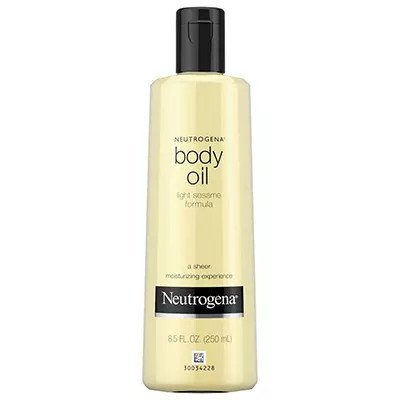
Neutrogena’s body oil is the classic of this category, sold for decades on one simple idea: a light sesame oil that you apply to damp skin after a shower, where a few drops spread over the whole body and seal in the water already on the skin. For aging skin that routine is the point. Mature skin loses water faster than it loses oil, so an oil used on damp skin often leaves it more comfortable than a richer oil used dry, and the sheer texture means it never feels like wearing a coating. It can also be added to bath water, which suits readers with limited mobility who struggle to reach their backs and legs. The original formula shown has a light, recognisable scent; a fragrance free version is also sold and is the better buy for reactive skin. The honest limits are that it is a single purpose moisturising oil: no retinoids, no brighteners, nothing targeted at age spots or firmness, and the bottle’s flip cap pours generously until you learn the tilt. As the lightest, simplest daily habit in this guide, and one of the cheapest per month of use, it remains the oil many dermatologists mention first.
Specifications
250 ml bottle
sesame oil based
light sheer formula
applied to damp skin or added to bath water
Pros
Light sesame oil designed for damp skin after showering
Can be added to bath water for hard to reach areas
One of the cheapest oils per month of use
Cons
Moisture only, nothing for age spots or firmness
Original formula is scented; fragrance free version is separate
Flip cap pours generously
Who should buyyou want the lightest daily oil habit, applied to damp skin after a shower
Who should skipyou want targeted ingredients for pigmentation or firmness as well
L’Occitane’s almond oil is the premium pick for aging skin that has started to lose its bounce, because it is one of the few body oils actually formulated and tested around firmness rather than just moisture. The base is sweet almond oil from Provence, paired with silymarin from milk thistle, an antioxidant the brand uses across its almond line for skin that looks slack. It comes as a fine spray, which makes even application over thighs, arms and stomach simple, and it absorbs to a satin finish with the line’s warm almond scent. The brand’s own consumer testing reports firmer feeling skin after a month of twice daily use, and the honest framing is that this is a feel and appearance benefit: skin that is well oiled, massaged daily and protected by antioxidants looks firmer than dry, neglected skin. It will not restore collagen. The price is the clear downside, the highest per millilitre in this guide alongside the NUXE, and the scent, while beautiful, rules it out for fragrance free readers. For someone who wants one beautiful, firming positioned oil and will use it daily, it is the luxury buy that justifies itself. The almond line’s shower oil and milk concentrate are designed to layer with it, but the oil alone is the step that does the firming positioned work.
Specifications
100 ml spray bottle
sweet almond oil from Provence
silymarin from milk thistle
firming and beautifying positioning
Pros
Formulated and tested around firmness, not just moisture
Fine spray gives even coverage on large areas
Satin finish with the signature almond scent
Cons
Premium price per millilitre
Scented, so not for fragrance free readers
Improves feel and appearance rather than restoring collagen
Who should buyyour main concern is skin that feels slack and you want a firming positioned oil you will enjoy using daily
Who should skipyou are on a budget or need a fragrance free formula
Huile Prodigieuse is France’s bestselling dry oil, and for aging body skin its value is the finish: seven botanical oils, led by tsubaki and camellia, in a formula that dries genuinely dry, leaving skin with a sheen rather than a slick. That matters more with age, because the glow of well oiled skin is most of what makes mature arms and legs look healthier, and this oil delivers it without marking clothing or bedding. It is a multi purpose product, face, body and hair, in a glass spray bottle, and a little goes a long way on damp or dry skin. The formula is 98% natural origin per the brand and includes vitamin E among its antioxidant oils. The honest caveats are scent and price. The fragrance is famous, warm and floral, and it is strong enough that fragrance sensitive readers should choose another pick in this guide; there is a lighter floral version, but the original is the one shown. It is also a premium price for what is, structurally, a beautifying moisturising oil with no retinoid or firming active. As a daily pleasure that makes aging skin look its best, it is superb; as a treatment, it is not one.
Specifications
100 ml glass spray bottle, 50 ml also sold
seven botanical oils including tsubaki and camellia
dry oil finish
face, body and hair
Pros
Dry oil finish gives mature skin a sheen without grease
Seven botanical oils including tsubaki and camellia
One bottle covers face, body and hair
Cons
Strong signature fragrance
Premium price for a beautifying oil
No retinoid or firming active
Who should buyyou want aging skin to look glowy and feel dry to the touch, and you love a scented ritual
Who should skipyou are fragrance sensitive or you want a treatment active in your oil
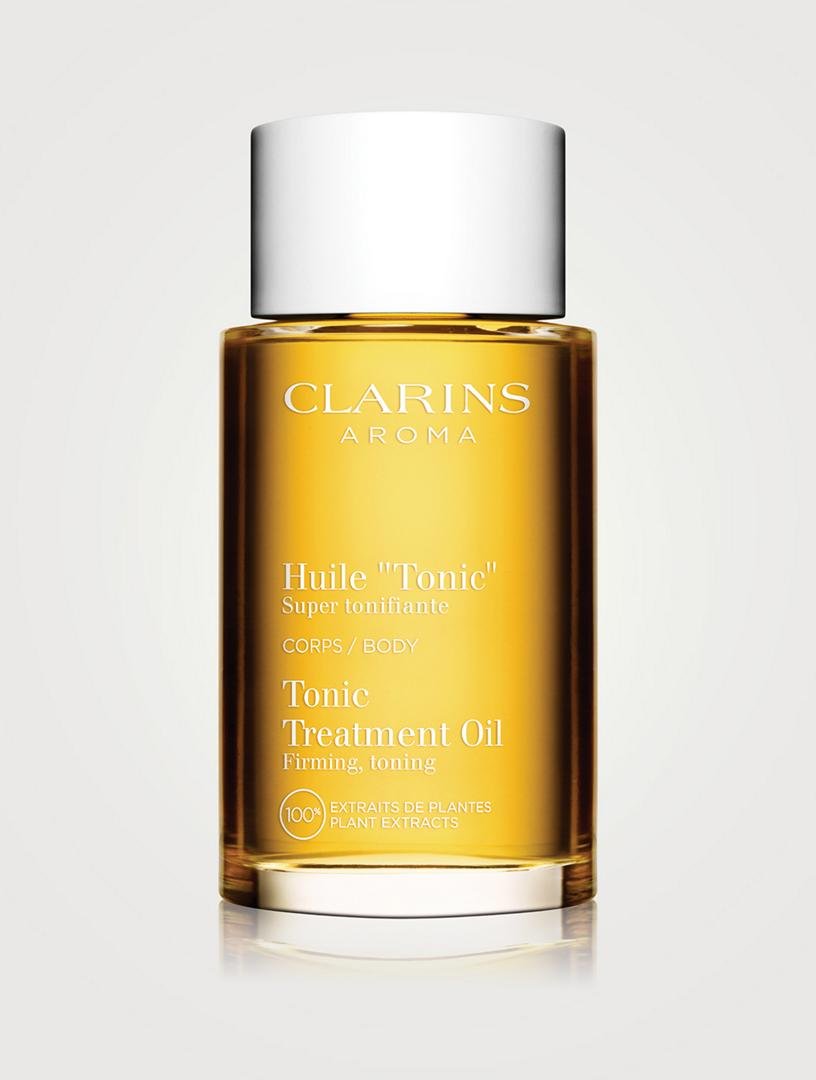
Clarins Tonic is the oldest firming oil in this guide, sold since the 1960s, and it is built differently from the dry oils around it: a hazelnut oil base carrying geranium, mint and rosemary essential oils, positioned by the brand for firming and toning and traditionally recommended during and after weight change and pregnancy. The application is part of the product: Clarins teaches a specific self massage, working upward on damp skin, and for aging skin that massage habit is a real part of why users rate it, because it forces daily attention to thighs, arms and stomach. The texture is a true oil, richer than the NUXE or Kiehl’s, and it needs a minute of massage to absorb. The essential oil scent is herbal and strong. Honest limits: the evidence for essential oils firming skin is brand led rather than clinical, the price is premium, and essential oil formulas are not the choice for very reactive or broken skin. It is also not a dry oil, so it is an evening product for most people. For readers who want the massage ritual and a firming positioned oil with a sixty year track record, it remains the reference. Clarins also sells a relaxing treatment oil in the same format, but the tonic is the firming one and the right bottle for this guide.
Specifications
100 ml bottle
100% plant extracts per brand
hazelnut oil base
geranium, mint and rosemary essential oils
firming and toning positioning
Pros
Firming positioned oil with a sixty year track record
Comes with a taught self massage method
Hazelnut base suits a thorough evening massage
Cons
Strong herbal essential oil scent
Premium price and brand led firming evidence
Too rich for daytime use for most people
Who should buyyou want a firming oil with a real massage ritual for thighs, arms and stomach
Who should skipyou have reactive skin, dislike essential oils, or want a dry daytime finish
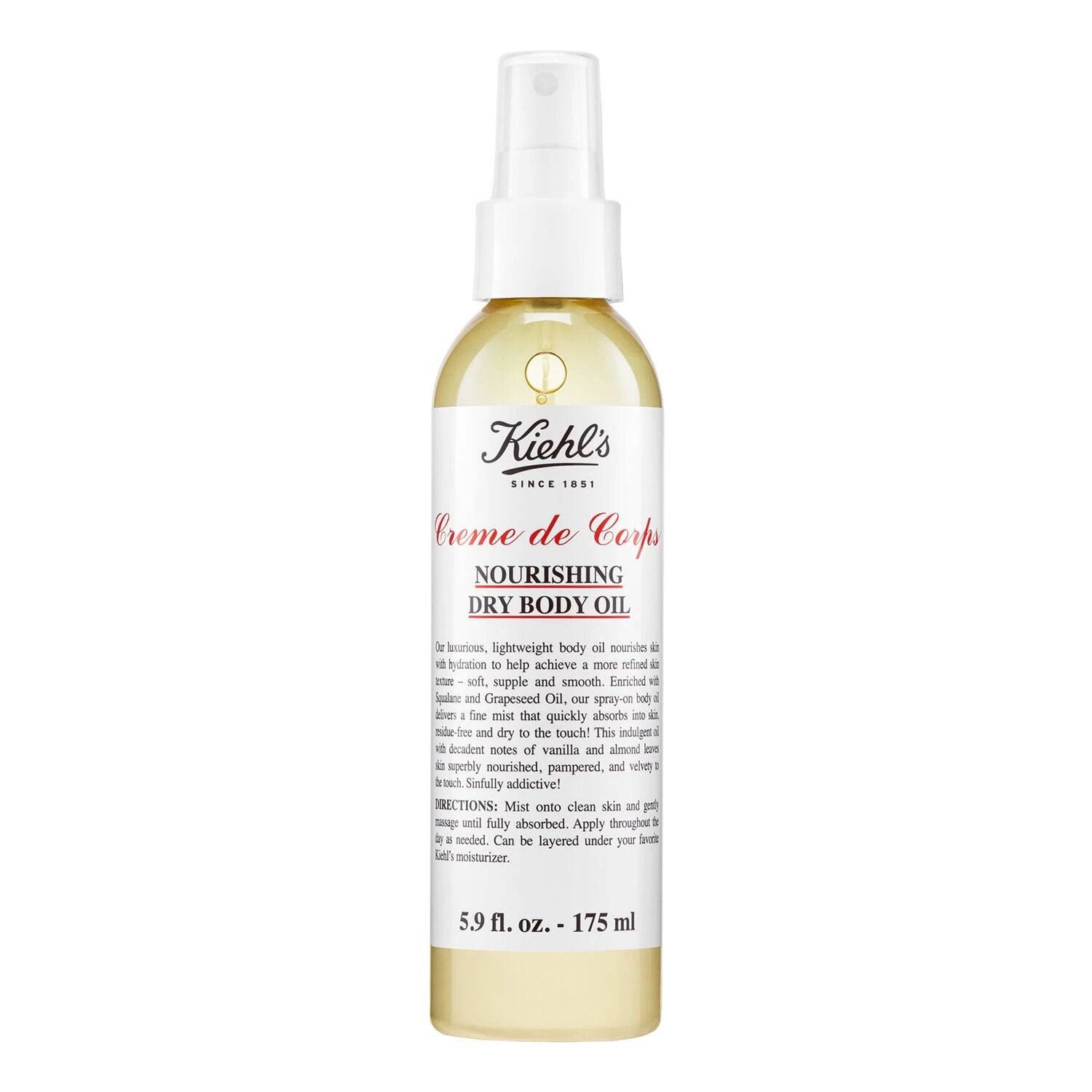
Kiehl’s dry body oil takes the brand’s famous Creme de Corps idea and makes it sprayable: squalane and grapeseed oil delivered as a fine mist that the label promises absorbs quickly, residue free and dry to the touch. Squalane is the ingredient that earns it a place in an aging skin guide, because it is a skin identical emollient that mature, thinning skin tolerates exceptionally well and that supports the barrier without weight. In practice this is the easiest oil here to apply well: mist over legs and arms, one quick pass of the hands, dressed in under a minute. The vanilla and almond scent is warm and noticeable for the first hour. The trade offs are format and price. A spray always wastes some product to the air and the bathroom floor, which also gets slippery, so spray close to the skin. Per millilitre it is a premium product, and like the other dry oils it is a beautifying moisturiser, not a treatment for pigmentation or laxity. For aging skin that wants squalane’s comfort with the least possible effort and no greasy interval, it is the most practical premium pick in the guide. It layers well under a plain moisturiser on the driest days, when even a good oil benefits from a cream over the top.
Specifications
175 ml spray bottle
squalane and grapeseed oil
fine mist application
vanilla and almond notes
dry to the touch finish
Pros
Squalane based dry oil that mature skin tolerates very well
Fine mist applies in seconds and dries to the touch
Warm vanilla and almond scent
Cons
Spray wastes some product and can make floors slippery
Premium price per millilitre
Beautifying moisturiser rather than a treatment
Who should buyyou want a squalane oil that sprays on and lets you dress almost immediately
Who should skipyou dislike scented products or want the lowest cost per use
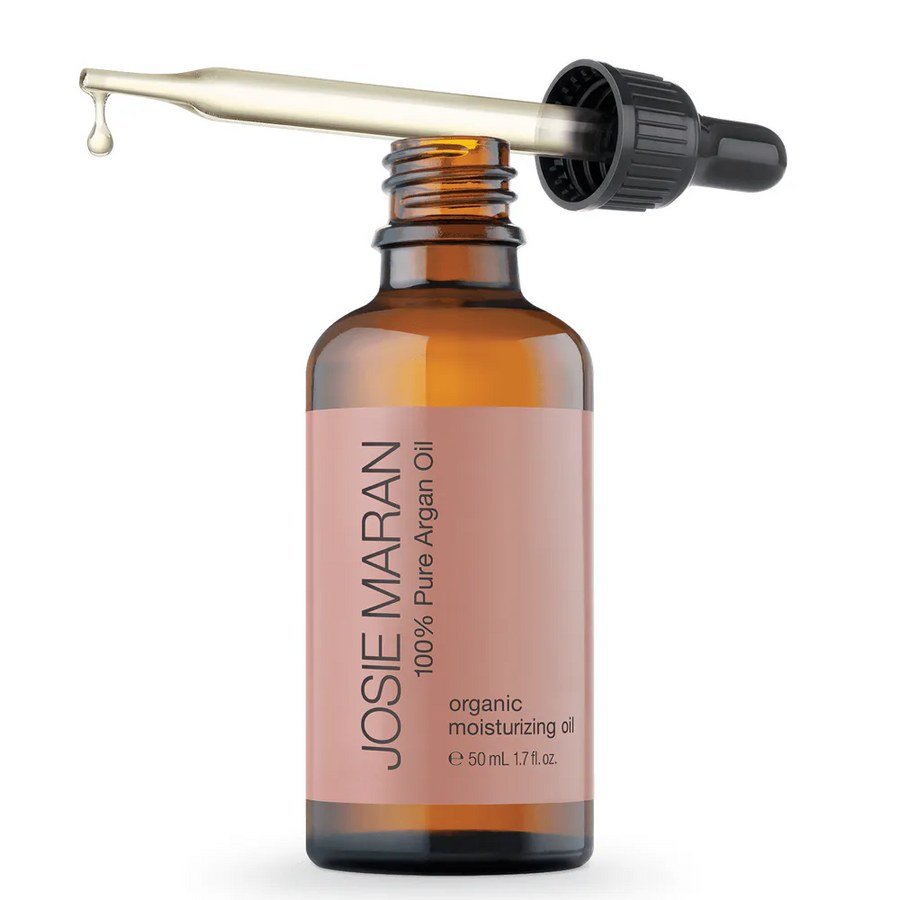
This is the single ingredient option: 100% organic argan oil, first cold pressed, in a glass dropper bottle, with nothing added and no fragrance at all. Argan oil’s relevance to aging skin is its composition, naturally rich in vitamin E and essential fatty acids, and its versatility: the same bottle serves dry forearms, cuticles, the ends of hair and a flaky patch anywhere on the body. For readers whose mature skin has become reactive to formulated products, a single ingredient oil with a short, knowable composition is often the answer, and argan is one of the better balanced face and body oils, absorbing more cleanly than olive or coconut oil. The dropper format suits targeted use rather than full body coverage, and the price per millilitre reflects that: this is an oil for the areas that need it most, used a few drops at a time, where a bottle lasts months. It will not address pigmentation or firmness, and pure oils vary subtly between batches, which some users notice as a faint nutty smell. For fragrance free, single ingredient care of dry aging skin, it is the cleanest choice in the guide. A lighter version is also sold for oilier skin, but the original pure oil is the right choice for dry, mature body skin.
Specifications
1.7 fl oz glass dropper bottle
100 percent organic argan oil
first cold pressed
sustainably sourced from Moroccan cooperatives
fragrance free
Pros
Single ingredient, fragrance free and organic
Vitamin E and fatty acid rich argan oil
A few drops at a time makes the bottle last
Cons
Dropper format suits targeted areas, not full body coverage
Premium price per millilitre
No help for pigmentation or firmness
Who should buyyour aging skin has become reactive and you want one pure, fragrance free oil for the driest areas
Who should skipyou want full body coverage at a low cost per use
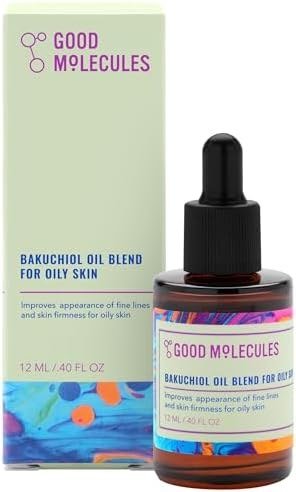
This little bottle is the treatment oil of the guide: 1% bakuchiol, the plant derived ingredient studied as a gentler alternative to retinol, blended into chia and rosehip seed oils. It earns its place for aging body skin because it is the one oil here with an active aimed at the visible signs themselves: the brand’s cited study found bakuchiol improved the look of fine lines and pigmentation with less irritation than retinol typically causes, which is why it suits the thin skin of the chest, forearms and backs of hands where retinoids often sting. The blend comes in two versions, for dry and for oily skin types, so check which you are buying. Used on the body, a 13 ml bottle is a targeted product: a few drops for the chest, a few for each forearm, in the evening. That size is the honest downside, along with the fact that the evidence base for bakuchiol, while promising, is far smaller than retinol’s. It is also not a moisturising body oil in the usual sense. As an affordable way to add a retinol alternative to the areas that age fastest, nothing else in this guide does the same job. Good Molecules publishes the study it cites on the product page, which is a welcome habit in a category full of vague claims.
Specifications
13 ml dropper bottle
1% bakuchiol
chia and rosehip seed oils
two versions
Pros
1% bakuchiol targets fine lines and pigmentation gently
Suits thin chest, forearm and hand skin that retinoids irritate
Chia and rosehip seed oil base at a low price
Cons
Tiny 13 ml bottle is for targeted areas only
Evidence base is promising but much smaller than retinol’s
Two versions, so check which one you are buying
Who should buyyou want a gentle retinol alternative oil for the chest, forearms and backs of hands
Who should skipyou want a full body moisturising oil, because this bottle is far too small for that
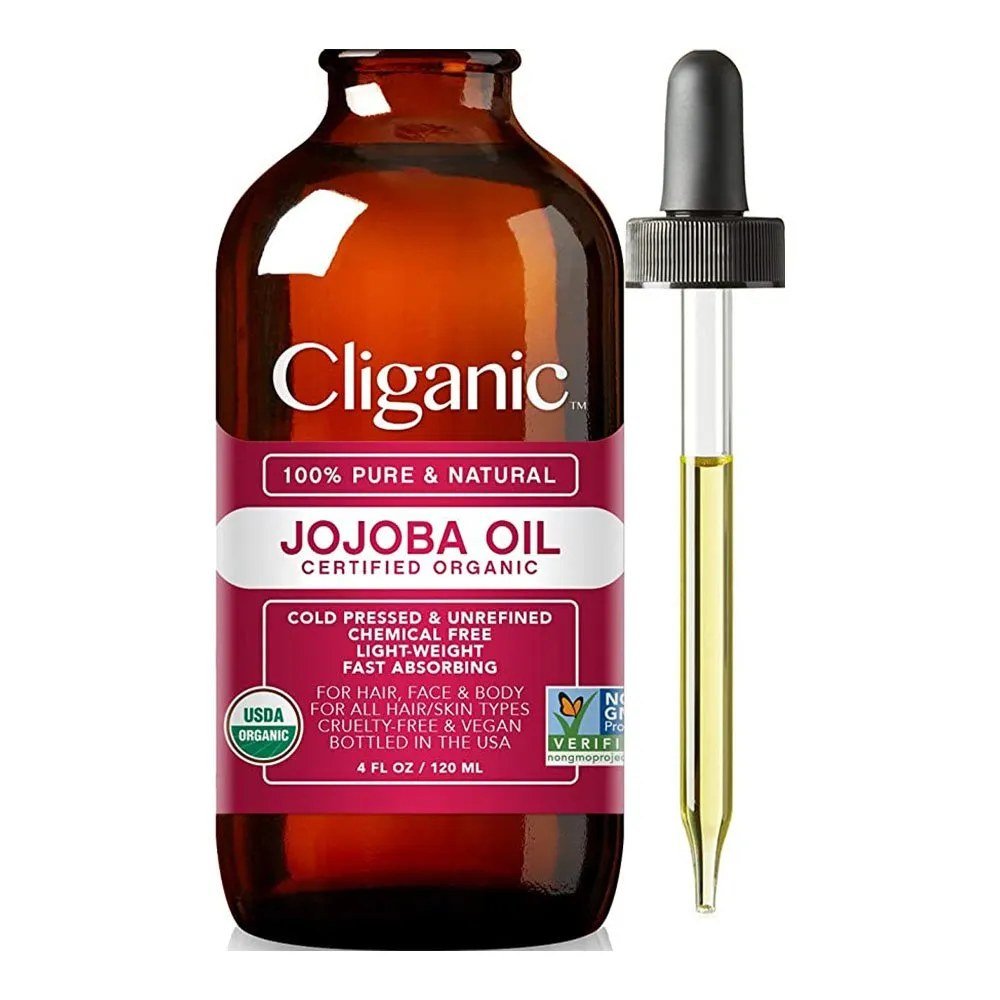
Jojoba closes the guide because it is technically not an oil at all but a liquid wax, and that chemistry gives it two advantages for aging skin: it is exceptionally stable, so it does not go rancid the way delicate plant oils can, and its structure is close to the skin’s own sebum, which is why it absorbs so cleanly and rarely clogs or irritates. Cliganic’s version is USDA organic, cold pressed and unrefined, in an amber glass bottle with a dropper, at a price well below the prestige oils here. For mature skin its best uses are the precise ones: cuticles and nails, dry patches on shins and elbows, a few drops pressed over a night cream on the chest, or softening the rough skin around heels. It is fragrance free in practice, with only the faintest natural scent. The limits are the same as any single oil: no active for pigmentation, firmness or lines, and a dropper bottle that suits targeted use better than full body coverage, though the 4 oz size is more generous than most. As the stable, affordable, do everything oil for an aging skin shelf, it is the quiet recommendation of this guide. The same oil is sold in an 8 oz size for households that end up using it on everything.
Specifications
4 oz amber glass bottle
USDA organic
cold pressed and unrefined
dropper cap
Pros
Liquid wax close to skin’s own sebum, absorbs cleanly
USDA organic, cold pressed and very stable
Generous 4 oz bottle at a modest price
Cons
No active for pigmentation, firmness or lines
Dropper suits targeted use more than full body coverage
Faint natural scent despite being unperfumed
Who should buyyou want one stable, affordable pure oil for dry patches, cuticles and layering over cream
Who should skipyou want a fragranced ritual oil or a targeted anti aging active
Body oil is an oil or oil blend applied to body skin, usually on damp skin after a shower, to seal in water, soften and add a sheen. It contains no water itself, so it moisturises by trapping what is already there rather than adding hydration.
That mechanism explains both its strength and its limit: on damp skin it is one of the most effective softeners there is; on dry skin it can leave you greasy and still dehydrated. Oil choice decides feel: squalane and lighter esters absorb cleanly, while rich plant oils linger. Dry oils are formulations designed to reduce transfer onto clothes. In shower oils cleanse and deposit oil in one step, a different product wearing a similar name.
How to Choose: the Criteria That Matter
Choosing body care well means matching the active to the concern and the texture to the severity. Bumps need a keratolytic active, cracks need urea and occlusion, plain dryness needs humectants and consistency. Read the ingredient list for the one active your concern calls for, choose a format you will genuinely use daily, and give texture problems a month of consistency before judging.
The texture your skin needs: lotion for mild dryness, cream or ointment style richness for severe dryness
Texture follows severity. Mild dryness maintains well on a lotion; established dryness needs a cream; cracked, thickened areas need ointment weight richness or an active formula. Buying too light a texture for the problem is the commonest waste in this category.
Key ingredients for the job, such as urea or lactic acid for roughness and ceramides for barrier support
Ingredients do the work: urea and lactic acid for roughness and bumps, ceramides and petrolatum for barrier repair, salicylic acid for body breakouts. A pleasant smell is not an ingredient strategy, so read the list for the active your concern actually needs.
Fragrance position, since body products are a common trigger for sensitive skin
Body products cover the largest skin area you own, which makes them the most likely trigger for fragrance sensitivity. If skin reacts to products generally, the fragrance free version of the same formula is the buy.
Application area and skin thickness: heels and elbows need stronger formulas than arms and legs
Skin thickness varies by site: heels, elbows and knees tolerate and need stronger formulas than the inner arm or chest. One product rarely serves the whole body optimally, and targeted products for feet and hands earn their separate place.
How it fits a shower routine, because the best body product is the one used daily
A body routine survives on convenience: a pump by the shower beats a beautiful jar in a cupboard. Choose the format you will use daily, because in body care consistency outperforms potency.
Also Considered
These products were researched for this guide and left off the picks list for the reasons given. They are not poor products; they simply fit the exact question of this guide less well.
Aura Cacia Jojoba Skin Care Oil
A good, inexpensive jojoba from an aromatherapy brand. Researched and left off only because the guide carries one pure jojoba slot and the Cliganic’s organic certification and amber glass bottle made it the stronger pick.
Desert Essence Organic Jojoba Oil
Another sound organic jojoba, widely sold in health food stores. Left off for the same reason: with Josie Maran’s argan and Cliganic’s jojoba covering the pure oil slots, a third single oil added nothing new.
How to Use What You Buy
Apply moisturiser within a few minutes of showering, on skin that is still slightly damp
Use enough to cover the area in a thin, even film rather than spot treating
For exfoliating products, start once or twice a week and build as skin tolerates
Give rough areas such as heels a nightly application, with socks to protect bedding
Allow four weeks of consistent use before judging texture problems like bumps
Body care works on shower logic: exfoliate a few times a week, moisturise within minutes of washing while skin is still damp, and give targeted areas a nightly treatment. That rhythm, kept for a month, changes skin more than any single premium product used sporadically. Keep the products where the routine happens, at the shower and the bedside, not in a cabinet.
Apply to damp skin straight after showering, a few drops per limb spread thin, then pat dry or dress once it has settled for a minute. In winter, layering oil over lotion is the heavy duty pattern for very dry skin.
Who Should Buy, and Who Should Skip
Buy if your need matches this guide exactly: you are looking for options for aging skin, you have checked the criteria above against your current routine, and you are willing to introduce the product gradually and judge it over the period the category needs.
Skip if your concern is different from the one in the title, your skin or hair is currently irritated or damaged and needs recovery first, or a clinician has advised you on this concern, in which case their advice comes before any buying guide.
Common Mistakes in Body Oil
Moisturising dry skin hours after showering, when the water has already escaped
Scrubbing rough or bumpy skin harder instead of using the right active ingredient
Applying exfoliating acids to broken, shaved or sunburnt skin
Stopping after a week when texture concerns respond over a month
Applying to dry skin and concluding body oil does not moisturise, when it was never given water to seal in
Flooding the skin so it transfers to clothes and bedding, when a thin film does the same job
Frequently Asked Questions
How do I choose the right body oil?
Start with the criteria in this guide: match the formula or specification to your skin type and the exact concern in the title, check the published ingredient or specification list, and pick the option whose downsides do not overlap with your problem. The type decision comes first: most disappointment in body oil is a good product bought in the wrong type.
How long before I see results from a body oil product?
It depends on the category, but most body care products need consistent use over several weeks before a fair judgement. Devices and treatments state their expected course in the manual or on the packaging, and that timeline is the one to follow. Judge on the category’s clock, not on the first week.
What should I avoid when buying for aging skin?
Avoid buying on claims alone: skip options with no published ingredient or specification list, strengths far beyond what your routine needs, and any product whose stated downsides match the exact issue you are trying to fix. Also avoid changing two other parts of your routine in the same week, which makes the new product impossible to judge.
Is the most expensive option always the best?
No. In body oil, price often reflects branding, packaging and extras rather than the core ingredient or specification doing the work. The criteria in this guide matter more than the price band, and mid priced options with the right specification beat premium options with the wrong one.
What is the most common mistake with body oil?
Applying to dry skin and concluding body oil does not moisturise, when it was never given water to seal in A close second: flooding the skin so it transfers to clothes and bedding, when a thin film does the same job
How does body oil fit into a daily routine?
Apply to damp skin straight after showering, a few drops per limb spread thin, then pat dry or dress once it has settled for a minute. In winter, layering oil over lotion is the heavy duty pattern for very dry skin. Body care works on shower logic: exfoliate a few times a week, moisturise within minutes of washing while skin is still damp, and give targeted areas a nightly treatment.
Can You Use Body Oil and Body Butter Together?
The companion how-to guide, Can You Use Body Oil and Body Butter Together, covers this in full: the step by step method, the right amounts and frequency for your type, and the mistakes that stop it working. It is linked from the routine sections of this page, and it is the right next read once you have chosen a product.
By Mirror & Glow Editorial Desk – November 23, 2026
Can You Use Body Oil and Body Butter Together? Apply to damp skin straight after showering. The full method, the mistakes to avoid, and where it fits in your routine.
By Mirror & Glow Editorial Desk – November 23, 2026
Answering how often do i need to use body oil properly: apply to damp skin straight after showering. Background, method, routine placement and FAQs, written for your skin or hair type.
By Mirror & Glow Editorial Desk – November 23, 2026
How Often Should You Use Body Oil and Lotion? Apply to damp skin straight after showering. The full method, the mistakes to avoid, and where it fits in your routine.