By Mirror & Glow Editorial Desk – November 23, 2026
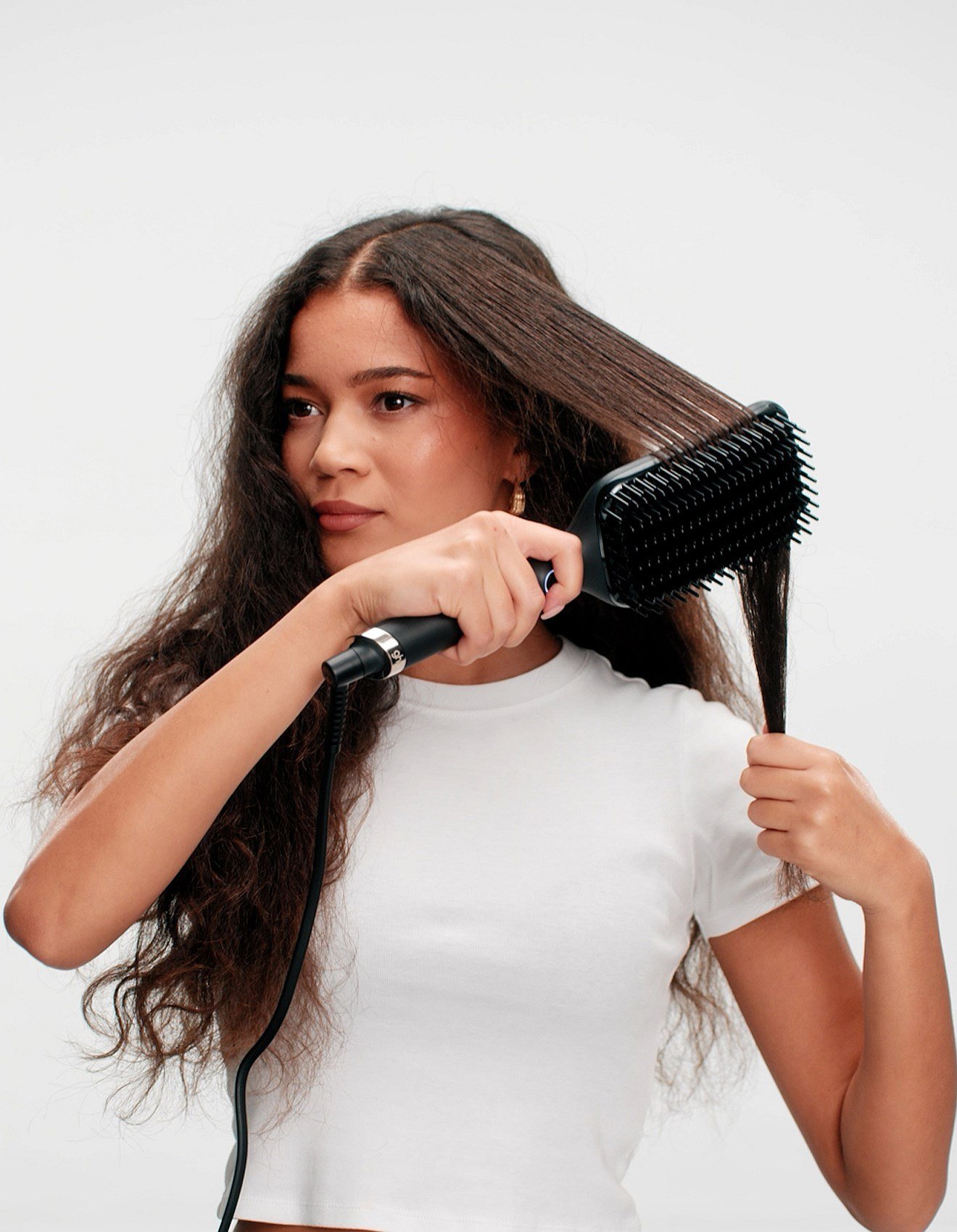
Woman pulling a heated straightening brush through her long wavy hair.
Affiliate disclosure: Mirror & Glow may earn a commission from qualifying purchases made through links on this page, at no extra cost to you. Full disclosure.
The verdict up front: start with amika Polished Perfection Straightening Brush 2.0, the strongest all round match in this line up for thick curly hair. Every pick is compared in the table below, then reviewed in full with its downsides as well as its strengths.
If you are looking for the best hair straightener brush for thick curly hair, the right choice depends on fit, not hype. This guide is written for thick curly hair, and every criterion below is weighted for that need first. The short answer: choose the hair straightener brush whose formula, format and strength match your hair, check the ingredient or specification list before the marketing claims, and avoid the options whose downsides match the problem you are trying to solve.
What matters most in hair straightener brush is covered in depth below: what the product actually is, the types on sale and how they differ, the buying criteria explained one by one, how to use what you buy, and the mistakes that waste the most money in this category.
Best Hair Straightener Brush for Thick Curly Hair Compared
Ceramic technology with built in ioniser – fixed optimum temperature 185°C (365°F) – pearl ceramic coated bristles – sleep mode after 60 minutes – professional length cord
Double ionic generators – adjustable heat up to 450°F – anti-scald bristle design – 60 minute auto shut off – includes heat resistant glove and carry bag
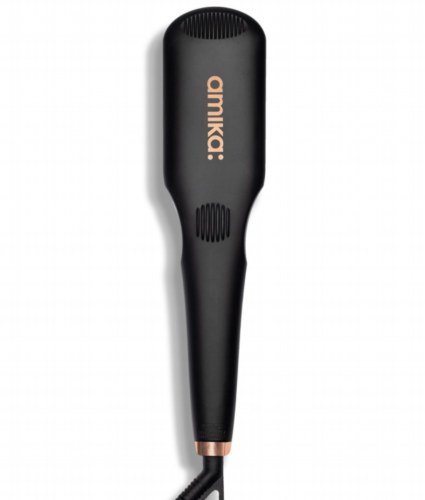
Thick curly hair asks three things of a straightening brush: enough heat to matter, bristles that actually reach the root, and a plate area wide enough that the job does not take an hour. The Polished Perfection 2.0 is the only brush here that answers all three at full strength. Its ceramic bristles carry amika’s iRED beam technology, infrared heat that the brand says penetrates the strand to heat it from within at lower surface temperatures, and the digital control runs to a genuine 450°F, matching the strongest flat irons rather than the timid ceilings most brushes stop at. The paddle is wide, the bristles are dense enough to grip a section under the tension curly hair needs, and an ion generator works on the static that thick hair throws off when it is brushed straight. In practice it takes well detangled, fully dry curls to a smooth, stretched blowout finish in a fraction of flat iron time, with more body left in the hair than plates leave. The honest limits: it is a brush, so the result is a sleek blowout, not a bone straight silk press, the price is the highest in this guide, and the infrared story, while plausible, rests on the brand’s own claims. For thick curls that want speed, heat and root access in one pass, it is the complete package.
Specifications
Ceramic bristles with iRED infrared beam technology
digital temperature control up to 450°F
ionic generator
9 ft swivel cord
auto shut off
Pros
Full 450°F heat, highest class here
Infrared iRED technology heats within the strand
Wide paddle covers thick hair quickly
Cons
Highest price in this guide
Blowout finish, not a silk press
Infrared benefits rest on brand claims
Who should buyyour curls are thick and you want the fastest, hottest brush straighten available
Who should skipyou want a bone straight pressed finish only a flat iron gives
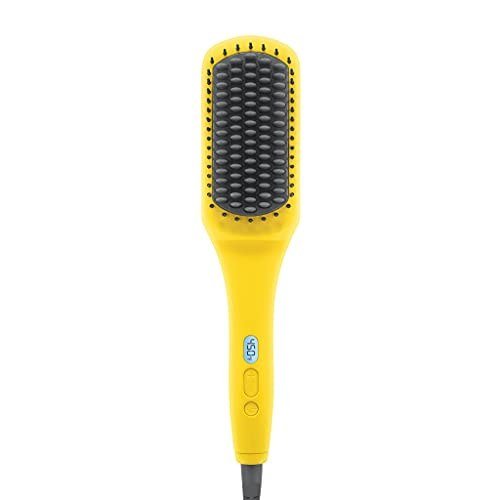
The Brush Crush is Drybar’s entry in this category and it is built to salon logic: a wide paddle of ceramic bristles, ionic technology to close the cuticle as it passes, and digital heat running to 450°F, because Drybar’s stylists work on every hair type and a brush that stops at 380°F would be useless on half their clients. On thick curly hair that ceiling matters more than any other single specification. Curls that laugh at 365°F surrender at 450°F, and the Crush delivers it with the even, pad style heating that makes brushes gentler per pass than plates: the heat is spread across dozens of bristle tips rather than clamped between two hot surfaces. The result is the Drybar signature, straight but with movement, the blowout look rather than the pressed look, achieved in one handed passes that are far easier to learn than flat iron technique. The compromises are a premium price in amika territory, a result that will not satisfy anyone chasing a silk press, and a paddle wide enough that edges and short layers are better finished with a small iron. It also wants fully dry, detangled hair; run it through damp or tangled curls and it will snag like any brush. For thick curls that want a fast, hot, genuinely sleek brush straighten from a salon proven brand, it is the co leader of this guide.
Specifications
Ionic technology
digital temperature control up to 450°F
ceramic bristles
60 minute auto shut off
professional length cord
Pros
450°F ceiling handles resistant curls
Even bristle heat is gentler than clamping plates
Salon proven design and build
Cons
Premium pricing
Blowout straight, never press straight
Wide paddle is clumsy on edges and short layers
Who should buyyou want salon grade heat and an easy one handed straighten for thick curls
Who should skipyou need edge control and press level sleekness
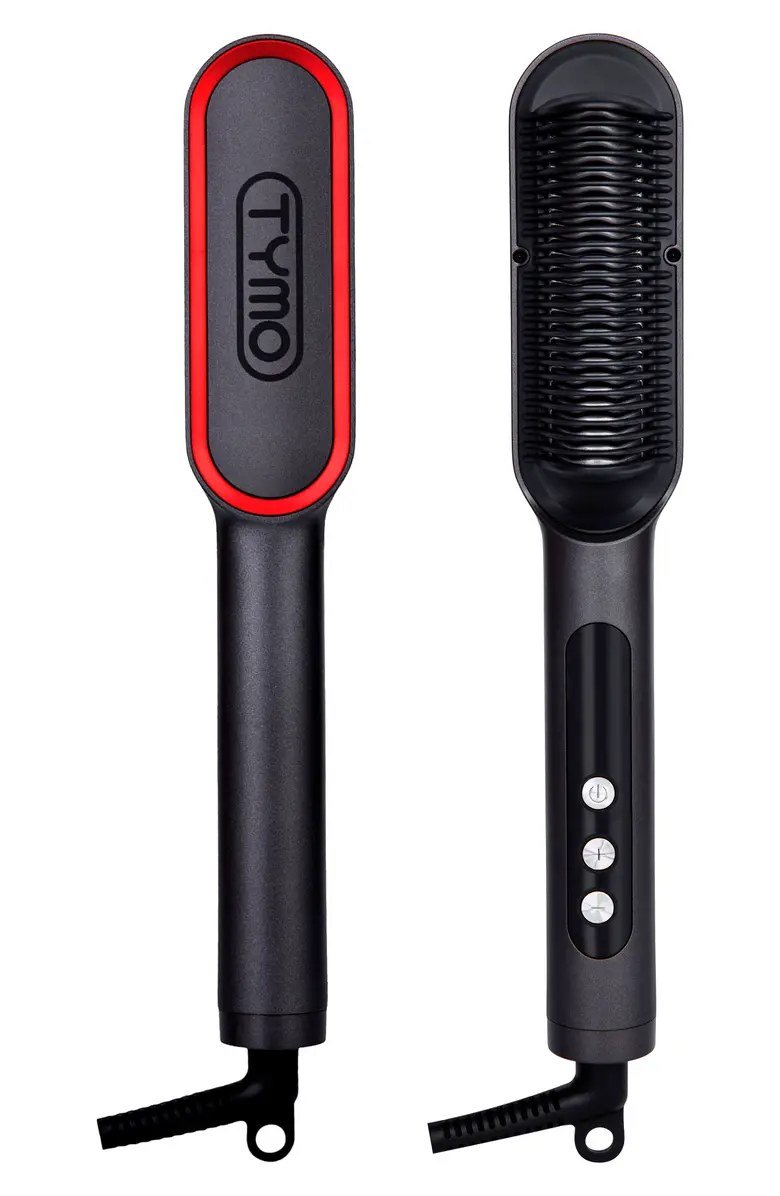
The TYMO Ring Plus is the brush that made this category mainstream, and its design shows a real understanding of curly hair’s problem with brushes: the bristles are packed in a dense ring pattern that separates and grips the section as it passes, so the hair is held under light tension against the heated core instead of skating over the top of it. An ionic generator works against frizz, the LED display is clear, the anti-scald outer bristles let it get close to the root safely, and nine settings give a proper ladder from fine to coarse hair. On thick curls it produces a smooth, stretched finish quickly and with the least learning curve in this guide, which is why it sells in the numbers it does. The honest limitation is printed on its own specification: the ceiling is 410°F. For many curly heads that is plenty, but the densest, most resistant coils, the ones this guide is titled for, may find the last degree of sleekness out of reach and need a second slower pass or a flat iron finish at the roots. It is also a mass market tool, with build quality a step below the salon brushes. Judged fairly, it is the best value route to a good brush straighten for most curly hair, and only the truly resistant should look above it.
Specifications
Ionic straightening brush with dense bristle design
9 heat settings from 250°F to 410°F
LED temperature display
anti-scald design
dual voltage
Pros
Dense bristles grip and tension the section
Easiest brush here to learn
Excellent value for the specification
Cons
410°F ceiling limits the most resistant coils
Build quality a step below salon brushes
May need a second pass on dense roots
Who should buyyour curls are thick but not extremely resistant and you want the best value brush
Who should skipyour coils need a full 450°F to straighten fully
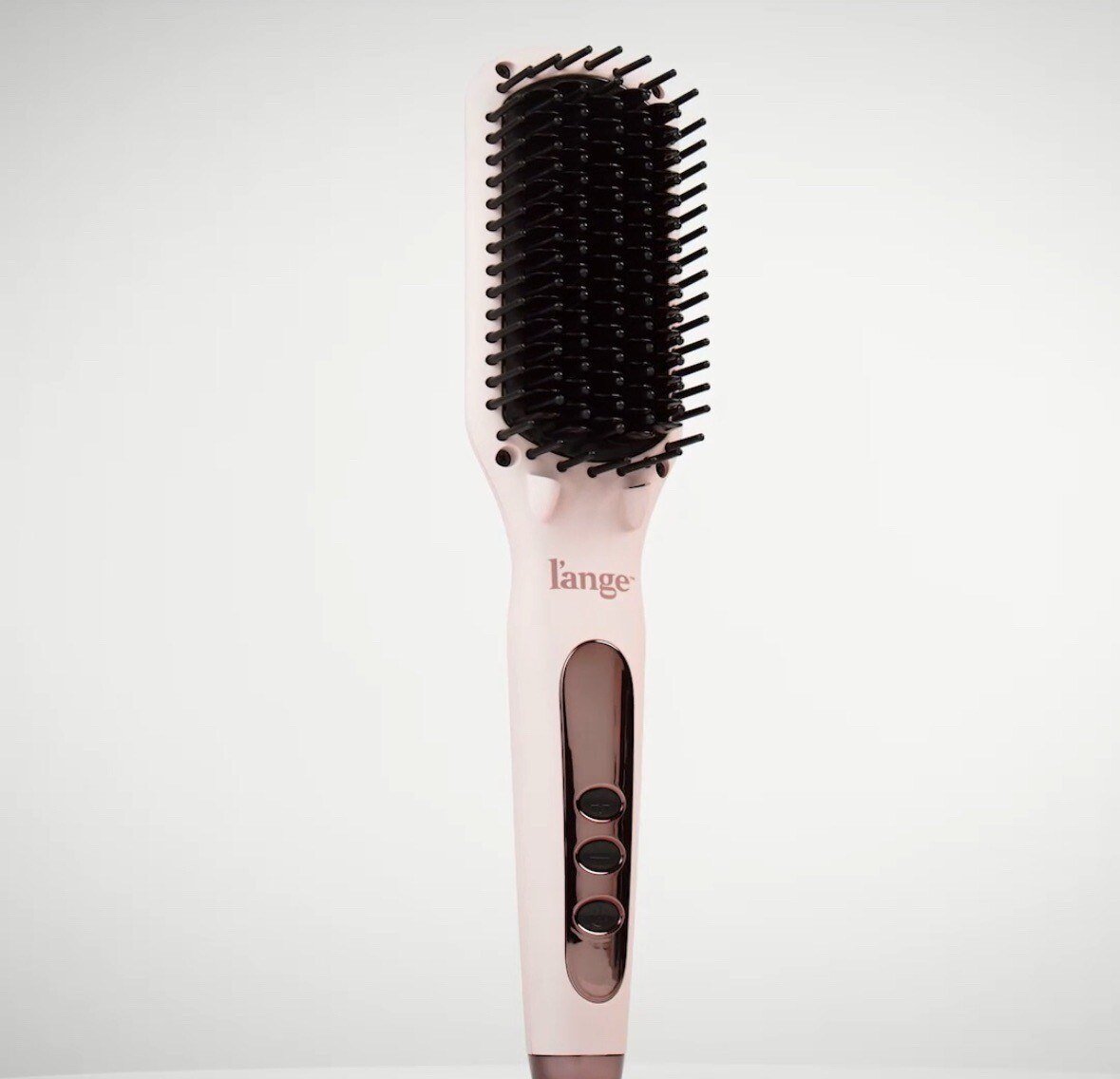
Le Vite is the specification sheet overachiever of this guide: a ceramic straightening brush with an LCD display and a temperature range running from 170°F all the way to 450°F, a span none of the other mid priced brushes match, wrapped in L’ange’s blush pink design language. That range is the whole story for thick curly hair. The top end does the straightening work on resistant sections, while the long ladder below it lets the same brush smooth finer front sections and second day touch ups without reheating the whole head at maximum. The ceramic bristles heat evenly, the cool tips protect the scalp at the root, and the brush body is light enough for the many passes thick hair needs without wrist fatigue becoming the limiting factor. In use it gives a smooth, natural straight finish with body, closer to a good blowout than a press. The compromises are distribution and finish: L’ange sells direct and through social channels, so prices swing with promotions and returns run through the brand, and the bristle density, while good, does not grip a section quite as firmly as the TYMO’s ring pattern, so very coily roots may want smaller sections. For the reader who wants maximum temperature flexibility at a mid price in a brush that is pleasant to use daily, Le Vite is a strong, sensible pick.
Specifications
Ceramic straightening brush
adjustable temperature 170°F to 450°F
LCD display
dual voltage
auto shut off
cool tip bristles
Pros
Widest temperature range here, 170°F to 450°F
Light body suits long sessions
LCD display keeps heat honest
Cons
Direct sales model means swinging prices
Grip on very coily roots needs smaller sections
Finish is blowout straight, not pressed
Who should buyyou want one brush with the heat range for both resistant lengths and delicate edges
Who should skipyou prefer buying from a major retailer with easy returns
The Glide is the contrarian pick of this guide, and it earns its place by being superb at a slightly different job. ghd fixes its temperature at 185°C, 365°F, the brand’s researched optimum for styling without extreme heat damage, adds an ioniser to kill static, and coats the bristles in pearl ceramic for smooth glide. On thick curly hair that has already been blow dried or stretched, the Glide is magnificent: it revives second and third day hair in minutes, smooths the surface, restores the blowout and calms frizz with big, lazy passes that need no technique at all, which is precisely what it was designed for, a smoothing and refreshing brush rather than a from wet straightener. The limitation must be stated plainly, because this guide’s title promises straightening thick curls: 365°F fixed will not take dense, resistant curls from natural to straight on its own, and there is no dial to argue with. Used as the first tool on truly thick curls it will underwhelm; used as the maintenance tool on hair already straightened by other means, nothing here is faster or easier. It is also priced like the premium tool it is. Buy it with clear eyes, as the best second day brush in the business, and it will delight; buy it as a primary straightener for resistant hair and it will not.
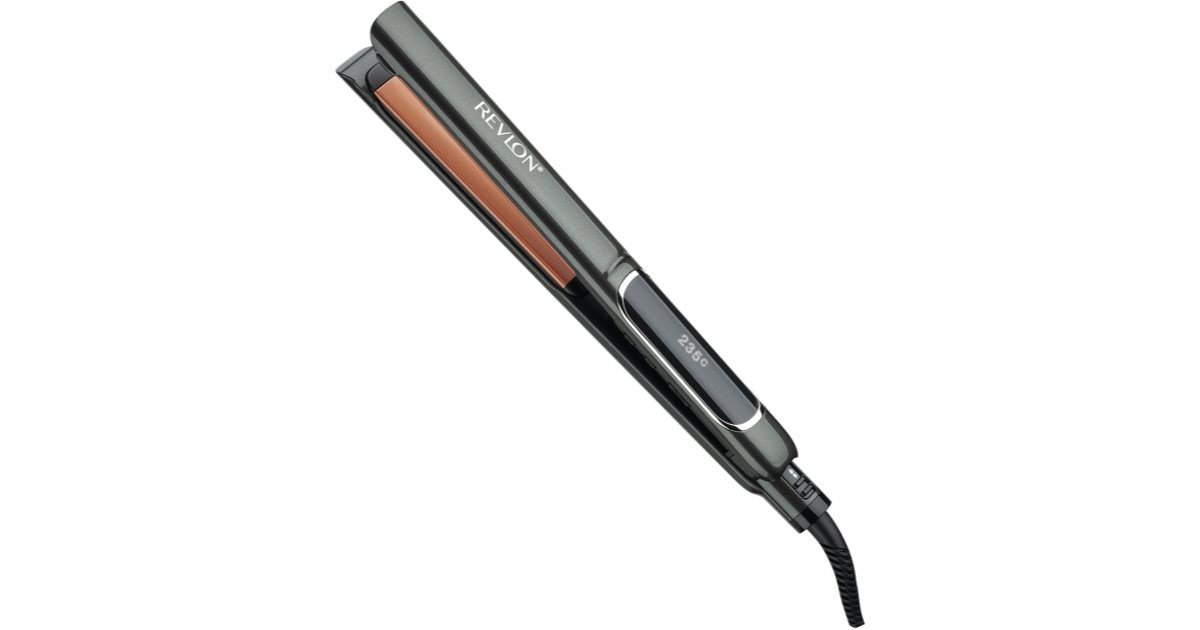
Revlon’s copper brush is the quiet achiever of the drugstore aisle. Its bristles use a copper ceramic construction the brand chose for fast, even heat, the digital control offers ten settings running to 430°F, within touching distance of the salon brushes’ ceilings, and an LCD keeps the temperature visible instead of guessed. For thick curly hair those numbers translate into a brush that genuinely straightens rather than merely smooths, at a price that undercuts the premium names by half or more. The paddle is a sensible width, the bristle tips are rounded for scalp comfort at the root, and dual voltage makes it the travel friendly member of the high heat club. Where the money was saved shows in the hand rather than the hair: the body feels lighter and less substantial than the Drybar or amika, the bristle density is a touch sparser, so the thickest sections benefit from being taken smaller, and long term durability reports are good rather than stellar. None of that changes the value equation. A reader who wants real straightening heat and digital control without paying salon brand prices will find this the most rational purchase in the guide, and its results on curls up to moderately resistant are honestly close to brushes costing three times as much.
Specifications
Copper ceramic bristle technology
10 heat settings up to 430°F
LCD digital display
dual voltage
auto shut off
Pros
430°F and digital control at a drugstore price
Copper ceramic bristles heat fast and evenly
Dual voltage for travel
Cons
Lighter, less substantial build
Sparser bristles prefer smaller sections
Durability good, not stellar
Who should buyyou want genuine straightening heat and digital control on a budget
Who should skipyou want the densest bristles and salon build quality
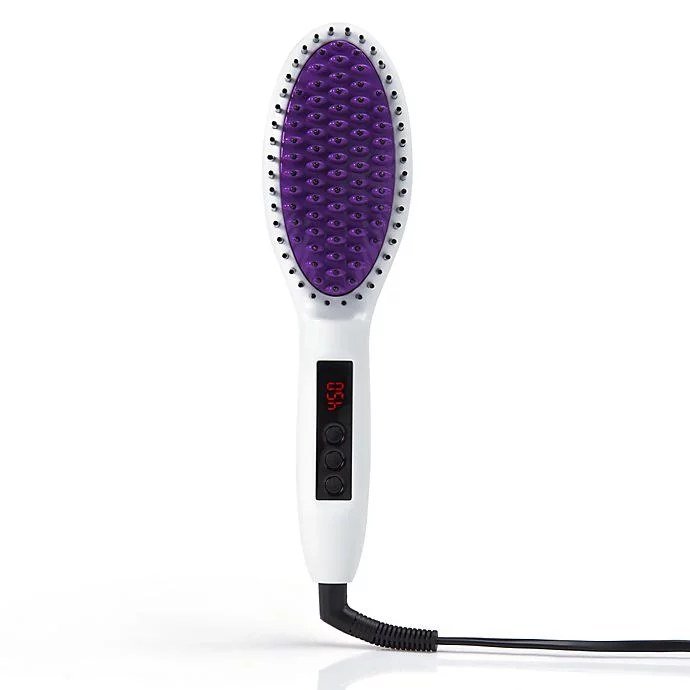
MiroPure built its brush for the value end of this market and specified it like it meant it: dual ionic generators, heat adjustable up to a claimed 450°F, anti-scald bristles, an hour’s auto shut off, and a box that includes the heat glove and carry bag other brands sell separately. For thick curly hair on a budget, that headline heat matters, because the difference between the budget brushes that straighten and the ones that merely warm the hair is almost entirely the top fifty degrees. In use the MiroPure gives a respectable blowout straight finish, grips sections adequately, and its ionic output keeps the static halo down on dry days. The compromises are the expected ones at this price and should be weighed honestly. Temperature accuracy at the top setting is less rigorously verified than the salon brands, so resistant hair may find its 450°F gentler than Drybar’s, the build is functional plastic rather than premium, and the brand’s support runs through online marketplaces. It also, like every brush here, wants dry, detangled hair and patience on the densest sections. As an entry point into brush straightening for thick hair, though, it offers the fullest specification per pound or dollar in this guide, and thousands of curly haired owners have started exactly here and been perfectly happy.
Specifications
Double ionic generators
adjustable heat up to 450°F
anti-scald bristle design
60 minute auto shut off
includes heat resistant glove and carry bag
Pros
450°F claim at a budget price
Glove and carry bag included
Dual ion generators fight static
Cons
Top heat less verified than salon brands
Functional plastic build
Support via online marketplaces only
Who should buyyou want the fullest budget specification for a first straightening brush
Who should skipyou want verified salon grade heat and build
LANDOT markets this brush specifically at thick, curly and afro hair, which is rarer honesty than the usual one size claims, and the specification backs the targeting: twelve heat settings climbing to 450°F, an LED display, ionic ceramic bristles and a kit that includes the glove and sectioning clips the job actually requires. The wide setting ladder is the feature thick haired readers will use most, because a head of curls is rarely one texture: the crown may need the top settings while the nape and edges straighten several notches lower, and twelve steps let the brush follow the head instead of forcing one compromise temperature on all of it. The paddle is generously sized, the anti-scald bristles allow proper root work, and the results on detangled, dry curls are a smooth, stretched finish with body. The trade offs mirror the other value brands: build and finish are a step below the salon tools, temperature at the ceiling should be treated as approximate, and the brand is an online specialist rather than a household name, with the support experience that implies. Within those limits it is one of the most thoughtfully specified budget brushes for this exact hair type, and readers who section carefully and work methodically will get results well above its price.
Specifications
Ionic ceramic straightening brush
12 heat settings up to 450°F
LED display
anti-scald design
dual voltage
includes glove and clips
Pros
Twelve settings follow mixed textures around the head
Marketed and specified honestly for thick curly hair
Useful kit with glove and clips included
Cons
Ceiling temperature approximate
Build a step below salon tools
Online brand, marketplace support
Who should buyyour curls vary in texture around your head and you want fine heat gradations cheaply
Who should skipyou want a household name brand with salon support
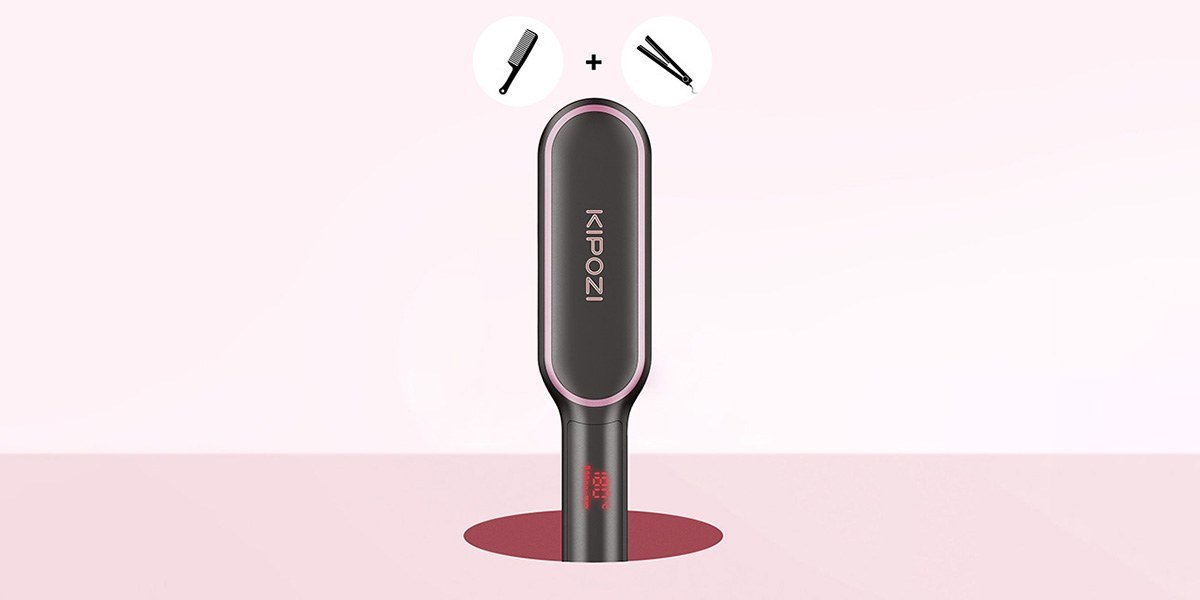
KIPOZI’s brush is the slim, simple option in this guide: a narrow paddle with ionic ceramic bristles, a clear digital display on the handle, heat adjustable up to 450°F, and a shape that behaves more like a large comb than a salon paddle. That slimness cuts both ways for thick curly hair, and the honest review has to hold both truths. On the debit side, the narrow head covers less hair per pass, so a full head of thick curls takes longer than with the wide paddles, and the bristle field is shallower, giving less grip on very dense sections. On the credit side, the same slim profile reaches roots, edges, fringes and shorter layers better than any wide brush here, heats quickly, travels well, and its digital control at this price is genuinely good, with the display showing temperature plainly rather than hiding it behind unmarked dial clicks. It suits the reader whose hair is curly and full rather than extremely dense, or who wants a second, precise brush for the front and finish work while a wider tool does the bulk. As a sole straightener for a big head of resistant curls it asks for patience; as a nimble, honest, inexpensive brush used within its limits, it does its job well.
Specifications
Ionic ceramic straightening brush
digital temperature display
adjustable heat up to 450°F
anti-scald bristles
swivel cord
Pros
Slim head excels at roots, edges and fringes
Clear digital display at a low price
Heats quickly and travels well
Cons
Narrow head is slow on a full thick head
Shallower bristles grip dense sections less
Best as a precision or second brush for thick hair
Who should buyyou want a precise, inexpensive brush for roots, edges and moderate curls
Who should skipyou need to straighten a full head of very dense curls quickly
The Straight Up comes from InStyler, the brand that popularised rotating irons, and its design is a hybrid: a ceramic heated plate sits behind rows of ionic bristles, so the section is simultaneously brushed, tensioned and pressed against a hot surface as it passes through. That plate is its distinction in this guide. Pure bristle brushes heat hair from many small points; the Straight Up adds a continuous heated surface, which gives its finish a little more of the flat iron’s sleekness while keeping the brush’s one handed ease, a middle path that suits thick curls that find ordinary brushes too gentle. Seven settings run from 330°F to 430°F, shown on a digital display, and the cool tip bristles protect fingers and scalp. The compromises: 430°F is a notch below the leaders’ ceilings, the brush is a long standing design whose availability comes and goes between retailers, and the plate hybrid wants careful cleaning, since product build up collects where bristles meet ceramic. It also sits at a mid price that buys the newer TYMO or the hotter Revlon, so it must win on finish rather than value, and for the right reader it does. If ordinary straightening brushes leave your curls puffier than you like but a flat iron feels like too much tool, this is the bridge between them.
Specifications
Ceramic heated plate with ionic bristles
7 heat settings from 330°F to 430°F
digital temperature display
cool tip bristles
auto shut off
Pros
Heated plate adds flat iron sleekness to a brush
One handed ease with a smoother finish
Digital display with seven settings
Cons
430°F ceiling below the leaders
Availability varies between retailers
Plate needs regular cleaning of build up
Who should buyordinary brushes leave your curls too puffy and you want a sleeker hybrid finish
Who should skipyou want the absolute highest heat or the newest design
A straightener brush is a heated brush that smooths and straightens as you brush, giving a natural, blowout style straightness rather than the pin flat finish of a flat iron. It is the speed and simplicity option for everyday smoothing.
Heated bristle tips and a heated backing plate do the work, so bristle design and temperature range are the specs to compare. Because contact is lighter than plates, results on very curly or coarse hair are smoother rather than fully straight, and most models are for dry hair only unless explicitly rated wet to dry. Anti scald tips matter, since the brush works close to the scalp and ears.
How to Choose: the Criteria That Matter
Choosing a hair tool well means matching three things: the tool’s heat range to your hair’s tolerance, its size to your hair’s length and thickness, and its design to the style you actually wear most days. Read the temperature specification before the marketing, check the attachments your hair type needs are in the box, and be honest about session length, because a tool that takes forty minutes will be abandoned by February.
Temperature range and control, since fine hair needs genuinely low settings and coarse hair needs sustained heat
Temperature range is a safety specification, not a power boast. Fine, bleached and damaged hair needs a tool that genuinely works at low heat; coarse, resistant hair needs heat that holds under load. A wide, controllable range serves both.
Plate, barrel or airflow design matched to your hair texture and the style you want
The working surface must match the hair: plate width and float for irons, barrel diameter for curlers, airflow and attachments for dryers. A mismatch here cannot be fixed by technique, so it is the first thing to check.
Heat protection technology such as sensors, even heat plates or controlled airflow
Even heat is what separates a good tool from a damaging one. Sensors, quality plates and controlled airflow exist to remove hot spots, the places that scorch one section while the next stays damp.
Size and weight for your hair length and for how long styling sessions last
A tool that is heavy or oversized for your hair length will be used badly and then not used at all. Short hair needs narrow plates and small barrels; long, thick hair needs the opposite, plus a motor or element that keeps up.
Attachments included, such as diffusers for curls or concentrators for smooth blowouts
Attachments are part of the product: a diffuser decides whether a dryer serves curly hair at all, and a concentrator decides the smoothness of a blowout. Price the tool with the attachments your hair needs included.
Also Considered
These products were researched for this guide and left off the picks list for the reasons given. They are not poor products; they simply fit the exact question of this guide less well.
Dafni Classic Straightening Brush
The original premium straightening brush, still beautifully made, and researched with respect. It was left off because its fixed 185°C temperature and smaller bristle field were designed for smoothing and quick straightening of moderate hair; on thick, resistant curls the 450°F adjustable brushes in this guide simply do the titled job more completely, at lower prices.
TYMO Ring (original)
The brush that started TYMO’s rise, researched as the budget alternative to its own successor. The Ring Plus took the slot because it improves on the original in heat settings, display and bristle design for a small price difference, and recommending the older model would save readers little while giving them less. Anyone who already owns the original has no pressing reason to upgrade.
Conair InfinitiPRO Diamond Brilliance Hot Paddle Brush
A widely sold paddle brush from a trusted brand, researched for the value slot. It was left off because its temperature range and bristle design target smoothing and moderate straightening rather than thick curly hair specifically, and its availability has become inconsistent between retailers, which makes the exact model harder to verify and buy with confidence.
How to Use What You Buy
Start with clean, fully detangled hair and apply heat protectant evenly
Dry hair completely before using irons, unless the tool is designed for wet to dry use
Work in small sections, no wider than the plate or barrel
Use the lowest temperature that achieves the style in one or two passes
Let each section cool in shape before touching it, which is what sets the style
Technique is half the tool. Hair should be detangled, protected and, for irons, completely dry before styling starts. Work in sections sized to the tool, use the lowest temperature that does the job in one or two passes, and let each section cool in shape before touching it. Those habits protect hair more than any single product feature, and they are free.
Brush slowly through detangled, dry hair in sections, letting the bristles reach the roots, and use a slower pass rather than repeated fast ones. It doubles as a second day refresher for slept on hair.
Who Should Buy, and Who Should Skip
Buy if your need matches this guide exactly: you are looking for options for thick curly hair, you have checked the criteria above against your current routine, and you are willing to introduce the product gradually and judge it over the period the category needs.
Skip if your concern is different from the one in the title, your skin or hair is currently irritated or damaged and needs recovery first, or a clinician has advised you on this concern, in which case their advice comes before any buying guide.
Common Mistakes in Hair Straightener Brush
Using maximum heat by default instead of the lowest effective setting
Passing the iron repeatedly over the same section
Styling damp hair with a flat iron, which boils water inside the hair shaft
Taking sections too large, which leaves the inside under styled and the outside over heated
Using it on wet hair when the model is dry only, which steams hair and frazzles ends
Expecting flat iron sleekness from a brush and over brushing when the finish is different by design
Frequently Asked Questions
How do I choose the right hair straightener brush?
Start with the criteria in this guide: match the formula or specification to your hair type and the exact concern in the title, check the published ingredient or specification list, and pick the option whose downsides do not overlap with your problem. The type decision comes first: most disappointment in hair straightener brush is a good product bought in the wrong type.
How long before I see results from a hair straightener brush product?
It depends on the category, but most hair tools products need consistent use over several weeks before a fair judgement. Devices and treatments state their expected course in the manual or on the packaging, and that timeline is the one to follow. Judge on the category’s clock, not on the first week.
What should I avoid when buying for thick curly hair?
Avoid buying on claims alone: skip options with no published ingredient or specification list, strengths far beyond what your routine needs, and any product whose stated downsides match the exact issue you are trying to fix. Also avoid changing two other parts of your routine in the same week, which makes the new product impossible to judge.
Is the most expensive option always the best?
No. In hair straightener brush, price often reflects branding, packaging and extras rather than the core ingredient or specification doing the work. The criteria in this guide matter more than the price band, and mid priced options with the right specification beat premium options with the wrong one.
What is the most common mistake with hair straightener brush?
Using it on wet hair when the model is dry only, which steams hair and frazzles ends A close second: expecting flat iron sleekness from a brush and over brushing when the finish is different by design
How does hair straightener brush fit into a daily routine?
Brush slowly through detangled, dry hair in sections, letting the bristles reach the roots, and use a slower pass rather than repeated fast ones. It doubles as a second day refresher for slept on hair. Technique is half the tool.
Can You Use Hair Straightener Brush on Wet Hair?
The companion how-to guide, Can You Use Hair Straightener Brush on Wet Hair, covers this in full: the step by step method, the right amounts and frequency for your type, and the mistakes that stop it working. It is linked from the routine sections of this page, and it is the right next read once you have chosen a product.
By Mirror & Glow Editorial Desk – November 23, 2026
Heated bristle tips and a heated backing plate do the work. This guide applies that to can you use hair straightener brush on wet hair: the method, the timing, and the traps to avoid.
By Mirror & Glow Editorial Desk – November 23, 2026
Heated bristle tips and a heated backing plate do the work. This guide applies that to how to use philips hair straightener brush at home: the method, the timing, and the traps to avoid.
By Mirror & Glow Editorial Desk – November 23, 2026
Do Hair Straightening Brushes Work on Curly Hair? Brush slowly through detangled, dry hair in sections, letting the bristles reach the roots. The full method, the mistakes to avoid, and where it fits in your routine.