By Mirror & Glow Editorial Desk – November 23, 2026
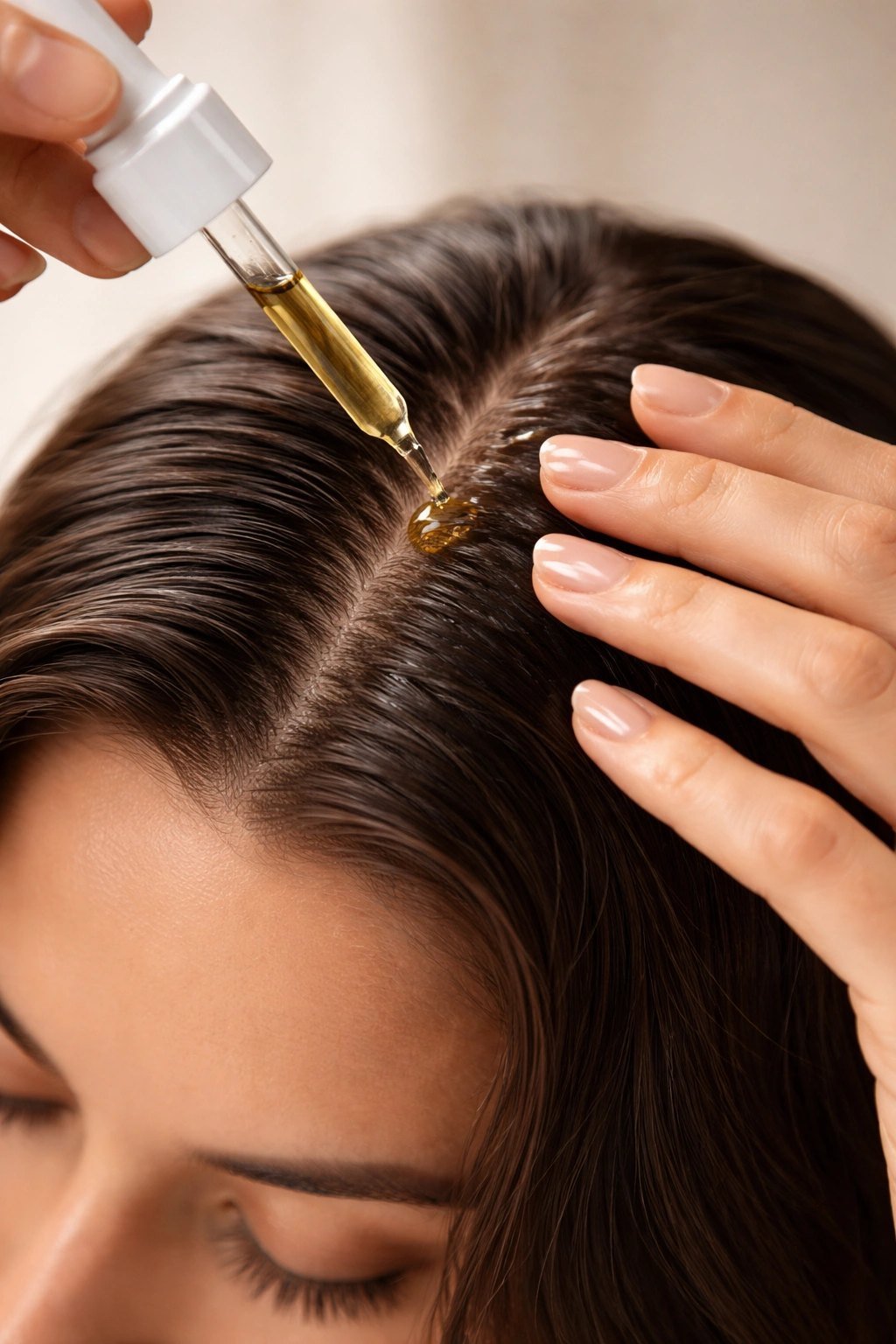
Hand holding a dropper of golden oil over a dark hair parting.
The short verdict on castor oil for hair vs coconut oil: neither option wins for everyone. Castor Oil for Hair, Coconut Oil differ in how they work, who they suit and what they cost in effort and money terms. Each option is explained in depth below, the table sets the differences out plainly, and the verdict section matches each option to the readers it actually suits.
Castor Oil for Hair vs Coconut Oil Compared
Factor
Castor Oil for Hair
Coconut Oil
How it works
Its thickness coats and conditions intensely.
It reduces protein loss in hair during washing in studies.
Best for
Targeted scalp and edge routines.
Very dry, coarse hair as a pre wash treatment.
Routine fit
Use as a pre wash scalp treatment: part hair, apply small amounts to the scalp, massage, leave thirty minutes to a few hours, then shampoo twice to remove. A drop smoothed over edges or ends is the leave in maximum for most hair.
Fits a standard hair care routine; the matching buying guide below gives the step by step for this category.
Cost level
Varies by brand and format; judge by the criteria in this guide rather than headline prices.
Varies by brand and format; judge by the criteria in this guide rather than headline prices.
Downsides
Too heavy for full head use on fine hair.
Can stiffen some hair types and clog facial skin.
The Products Behind This Comparison
Comparisons are settled by real products, so the full line up from the buying guide Best Castor Oil for Hair Growth and Thickness is set out here in the same detail: every product with its photo, full description, specifications, pros and cons, and who should buy or skip it.
Product
Standout Point
Key Specification
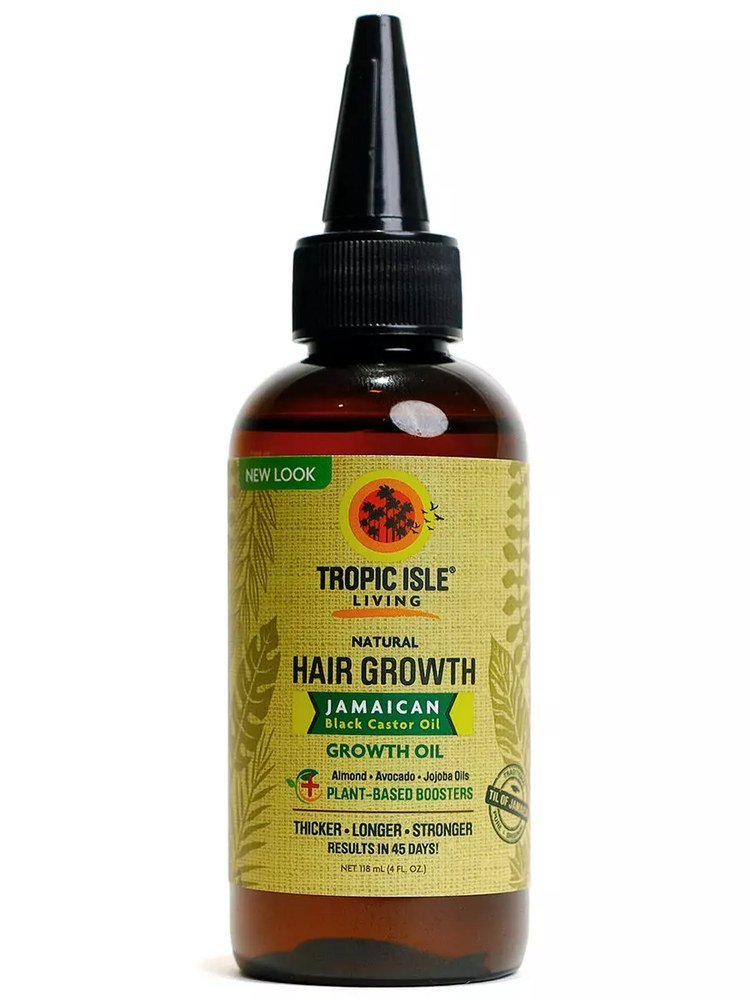
Tropic Isle Living Jamaican Black Castor OilTop Pick
The reference Jamaican black castor oil brand
4 fl oz applicator bottle – traditional roasted Jamaican black castor oil – for scalp, hair and edges
Tropic Isle Living is the name most people mean when they say Jamaican black castor oil: the brand built its reputation on the traditional Jamaican method, in which castor beans are roasted, ground and boiled, producing a dark, amber oil with a characteristic roasted scent and an ash content that raises its pH above clear cold pressed castor oil. That alkalinity is the traditional argument for JBCO on the scalp, the idea being that it helps lift and clear the scalp surface as it conditions. The current Hair Growth bottle adds a precision applicator tip, which turns out to be the most practical detail in this whole guide: castor oil is one of the thickest cosmetic oils sold, and a tip that lays a thin line along the parting or the edges beats a palmful that has to be dragged through hair. For the growth and thickness question, the honest framing is the one this whole guide uses: no oil is a proven hair growth drug, but castor oil’s ricinoleic acid rich composition makes it an excellent scalp conditioning and protective oil, and hair that is moisturised, protected and handled gently breaks less, which is how length and the appearance of thickness are actually gained. Tropic Isle’s oil is also a genuine multi use bottle, used on edges, brows, lashes and dry skin.
Specifications
4 fl oz applicator bottle
traditional roasted Jamaican black castor oil
for scalp, hair and edges
Pros
The reference Jamaican black castor oil brand
Applicator tip suits a very thick oil
Traditional roasted bean method, nothing diluted
Cons
Strong roasted scent not everyone likes
Very thick texture needs warming to spread
4 oz bottle is small for full head use
Who should buyyou want authentic Jamaican black castor oil for scalp and edge care, in a bottle designed to apply it neatly
Who should skipyou dislike strong roasted scents or want a large, economical bottle for full head oiling
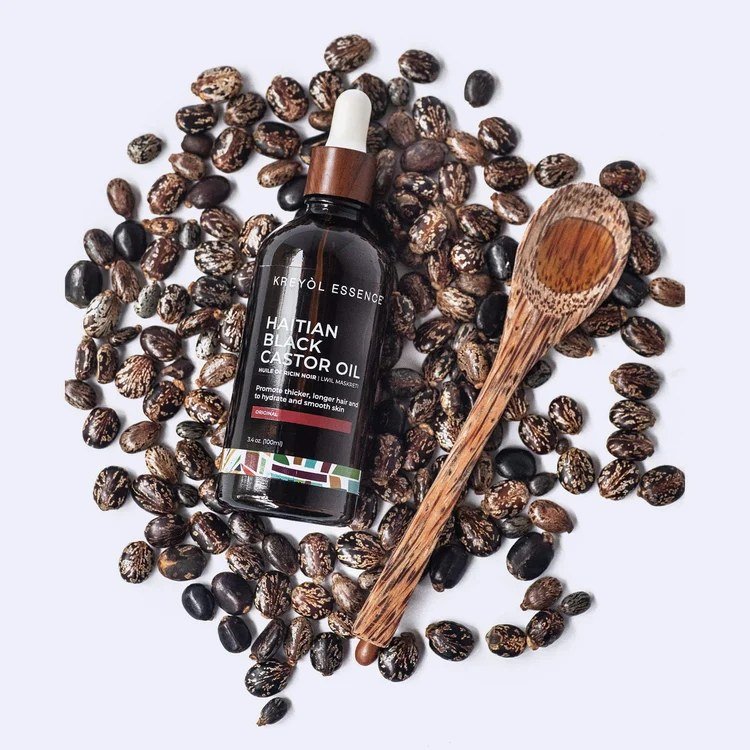
Kreyol Essence is the Haitian counterpart to the Jamaican oils in this guide, and its difference is provenance. The company, founded by Haitian American entrepreneur Yve-Car Momperousse, works with producers in Haiti to make black castor oil, called lwil maskreti or Palma Christi, by traditional hand processing: the beans are roasted and pressed in small batches, and the brand publishes its sourcing and its social enterprise model, including employment of Haitian farmers and women producers. The oil itself is dark, rich and strongly scented like all traditional black castor oils, with the same ricinoleic acid profile that makes castor oil the thickest, most protective of the common hair oils. In practice it is used the same way as JBCO, warmed between the palms, massaged into the scalp, worked along fragile lengths and edges, and it doubles as a body and skin oil, which is its traditional Haitian use. The 3.4 fl oz bottle is the premium option in this guide and the price per ounce is the highest here, which the brand answers with its sourcing story and small batch positioning. Buyers who care where an oil comes from, and how the people making it are paid, will find this the most transparent bottle in the line up; buyers who just want castor oil by the pint should look below.
Specifications
3.4 fl oz bottle
hand processed Haitian black castor oil
Palma Christi, single origin
for hair, scalp and skin
Pros
Single origin Haitian oil with published sourcing
Traditional hand processed black castor oil
Small batch quality, rich and undiluted
Cons
Highest price per ounce in this guide
Small 3.4 fl oz bottle
Strong natural scent, as with all black castor oils
Who should buyyou want black castor oil with transparent, ethical sourcing and are happy to pay for it
Who should skipyou oil your whole head often and need a large, economical bottle instead
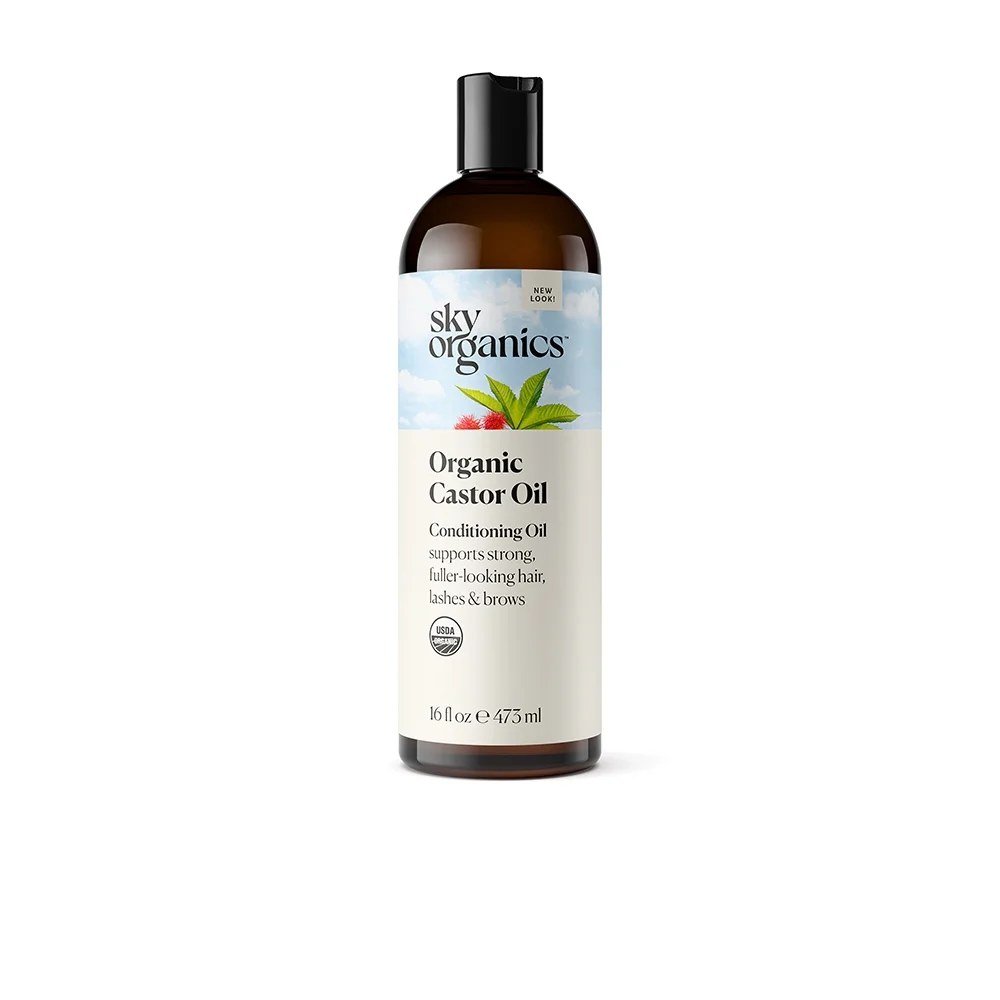
Sky Organics is the clear oil counterpoint to the black castor oils above it: a certified USDA organic, cold pressed, hexane free castor oil, pale gold in colour, with the milder scent and slightly lighter feel that come from unroasted beans. If the traditional argument for black castor oil is its ash and alkalinity, the argument for a cold pressed organic oil is purity and certification: one ingredient, organically grown, pressed without chemical solvents, and verified by a certification you can check. The 16 fl oz bottle is the joint largest in this guide and the best value per ounce among the certified organic picks, which matters because castor oil routines are generous: scalp massages, pre shampoo treatments and sealing the ends of protective styles all use more oil than a dropper bottle suggests. Sky Organics positions the oil for hair, scalp, lashes, brows and skin, and the thickness that makes castor oil awkward in a pump is the same property that makes it an effective sealant over water based leave ins, particularly on coarse, coily and dry hair that loses moisture fastest. It will not feel elegant: castor oil is sticky, needs warming and a light hand, and overapplication is the most common reason people abandon it. Judged as a pure, certified, bulk castor oil, it is the sensible default buy.
Specifications
16 fl oz bottle
USDA organic, cold pressed and hexane free
100% pure castor oil
for hair, lashes, brows and skin
Pros
USDA organic and cold pressed, certified pure
Large 16 fl oz bottle, best organic value here
Milder scent than black castor oils
Cons
Thick and sticky, needs warming and restraint
Plain bottle dispenses messily for lash use
No applicator tip for edges and partings
Who should buyyou want a certified organic, cold pressed castor oil in a size that suits regular scalp and hair use
Who should skipyou specifically want traditional black castor oil and its roasted character
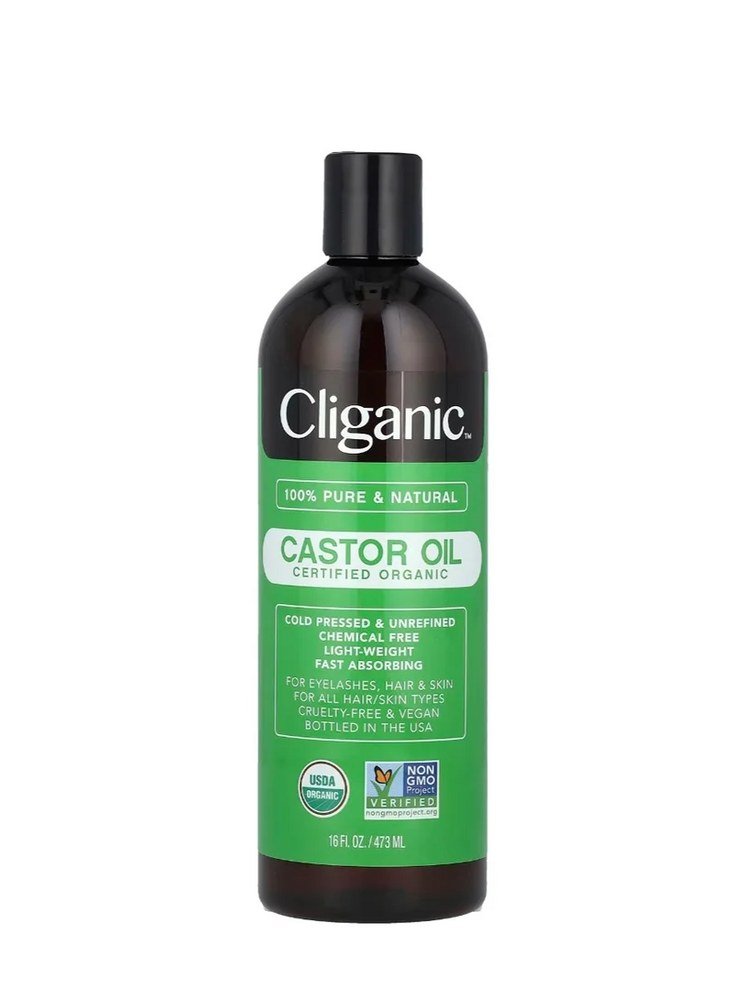
Cliganic built its name on single ingredient certified oils, and its castor oil follows the house pattern exactly: USDA organic, Non-GMO Project verified, cold pressed and unrefined, 100% pure castor oil with nothing added and nothing taken away. The 16 fl oz bottle photographed for this guide is the bulk format, aimed at the user who oils a scalp twice a week and does not want to reorder monthly. Against Sky Organics, the other certified bulk oil here, the differences are small and mostly about the label: both are organic, cold pressed and hexane free, and the honest advice is to buy whichever is better priced on the day. Where Cliganic earns its own slot is consistency of certification across its oil range and a long track record in the pure oils category, which matters in a market full of castor oils diluted with cheaper carrier oils and sold under vague cold pressed wording. On hair, use it as you would any pure castor oil: warmed, sparingly, on the scalp and the oldest, driest parts of the lengths, and expect a sticky learning curve for the first applications. It is not the bottle for lash and brow precision, there is no dropper or brush kit here, and the big bottle is a commitment if you turn out to dislike castor oil’s texture.
Specifications
16 fl oz bottle
USDA organic and Non-GMO Project verified
cold pressed and unrefined
hexane free
Pros
USDA organic and Non-GMO Project verified
Pure single ingredient, no dilution
Bulk 16 fl oz size for regular users
Cons
No dropper or brushes for lashes and brows
Big bottle is a commitment for first time users
Same sticky texture as every pure castor oil
Who should buyyou already know you like castor oil and want a certified pure oil in bulk
Who should skipyou are trying castor oil for the first time and want a small bottle with applicators
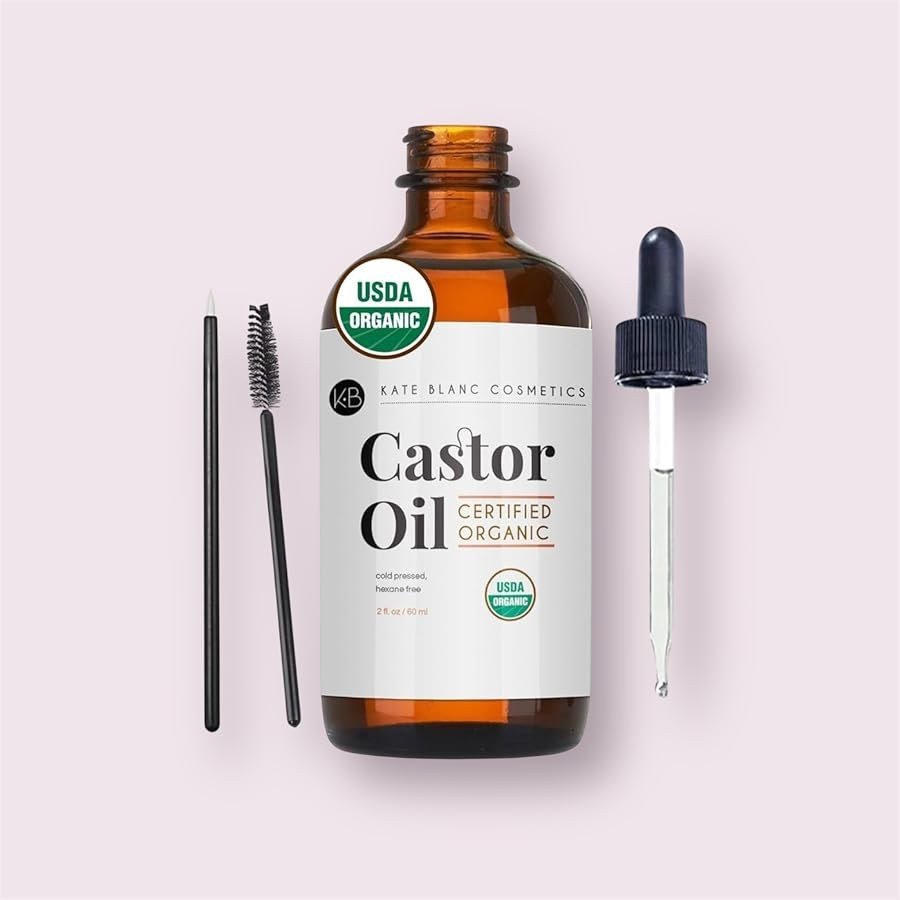
Kate Blanc’s castor oil is the precision option: a small 2 fl oz amber glass bottle with a dropper, sold with a kit of mascara wands and eyeliner brushes, because the brand understands that a large share of castor oil buyers are buying it for eyelashes and eyebrows as much as for the scalp. The oil itself is USDA certified organic, cold pressed and hexane free, the same purity specification as the big bottles in this guide, just in a format designed for controlled, drop by drop use. For hair, this is the bottle for targeted work: a drop along a thinning edge line, worked into a dry patch of scalp, or mixed in small amounts into a mask or conditioner, rather than full head oiling, which would empty it in a fortnight. The glass dropper also keeps the oil cleaner over months of use than a wide necked bottle. The trade off is straightforward value: the price per ounce is among the highest here, and anyone planning regular scalp treatments should buy the bulk oils above and decant. But as a first castor oil purchase, or as the dedicated lash and brow bottle that lives in a makeup bag, the kit format is the most thoughtfully assembled in the guide, and the small size means an abandoned experiment costs little.
Specifications
2 fl oz glass dropper bottle
USDA organic, cold pressed and hexane free
includes lash and brow brush kit
Pros
Dropper and brush kit for lashes, brows and edges
USDA organic, cold pressed, hexane free
Glass bottle keeps oil clean in use
Cons
Highest price per ounce among the pure oils
2 fl oz empties fast on scalp routines
Glass bottle needs care in a bathroom
Who should buyyou are buying castor oil mainly for lashes, brows and precise edge work
Who should skipyou want to oil your scalp and lengths regularly, where the 16 fl oz bottles are far better value
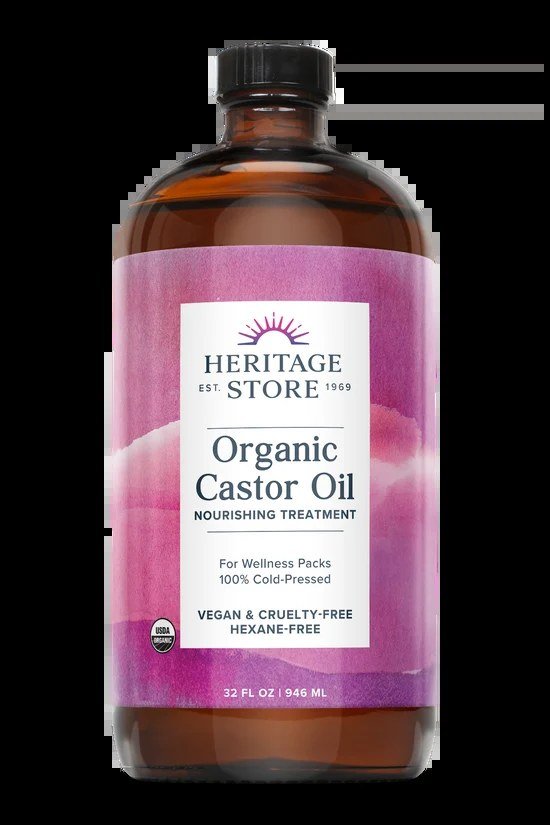
Heritage Store is the elder of this guide: the brand has sold castor oil since 1969, originally for the castor oil pack tradition associated with Edgar Cayce, and its oil remains the pharmacy shelf standard against which the newer organic brands position themselves. The current organic version is 100% cold pressed, hexane free, vegan and cruelty free, sold in large bottles, 16 and 32 fl oz, that reflect its history as a wellness staple rather than a beauty accessory. For hair use, that heritage translates into simple value: this is typically among the lowest costs per ounce of any certified oil in the guide, and the big bottle suits the way castor oil is actually used in hair routines, in tablespoon quantities for scalp treatments and pre shampoo oiling, not in drops. The oil is the clear, cold pressed type, milder in scent than the black castor oils, and it doubles for skin and pack use, which is why so many households keep it as a general purpose bottle. The compromises are presentation and precision: the big plastic bottle pours generously whether you want it to or not, there are no applicators, and the wellness framing means the hair specific guidance on the label is minimal. As the economical, trusted, bulk castor oil, it is hard to beat.
Specifications
32 fl oz bottle also sold in 16 fl oz
organic, 100% cold pressed
hexane free, vegan and cruelty free
Pros
Selling castor oil since 1969, a trusted staple
Among the lowest costs per ounce here
Organic, cold pressed, hexane free
Cons
Big bottle pours too freely for small amounts
No dropper or applicator included
Wellness framing, little hair specific guidance
Who should buyyou want a proven, economical castor oil in a large bottle for scalp, hair and skin
Who should skipyou want a small, precise bottle with lash and brow tools included
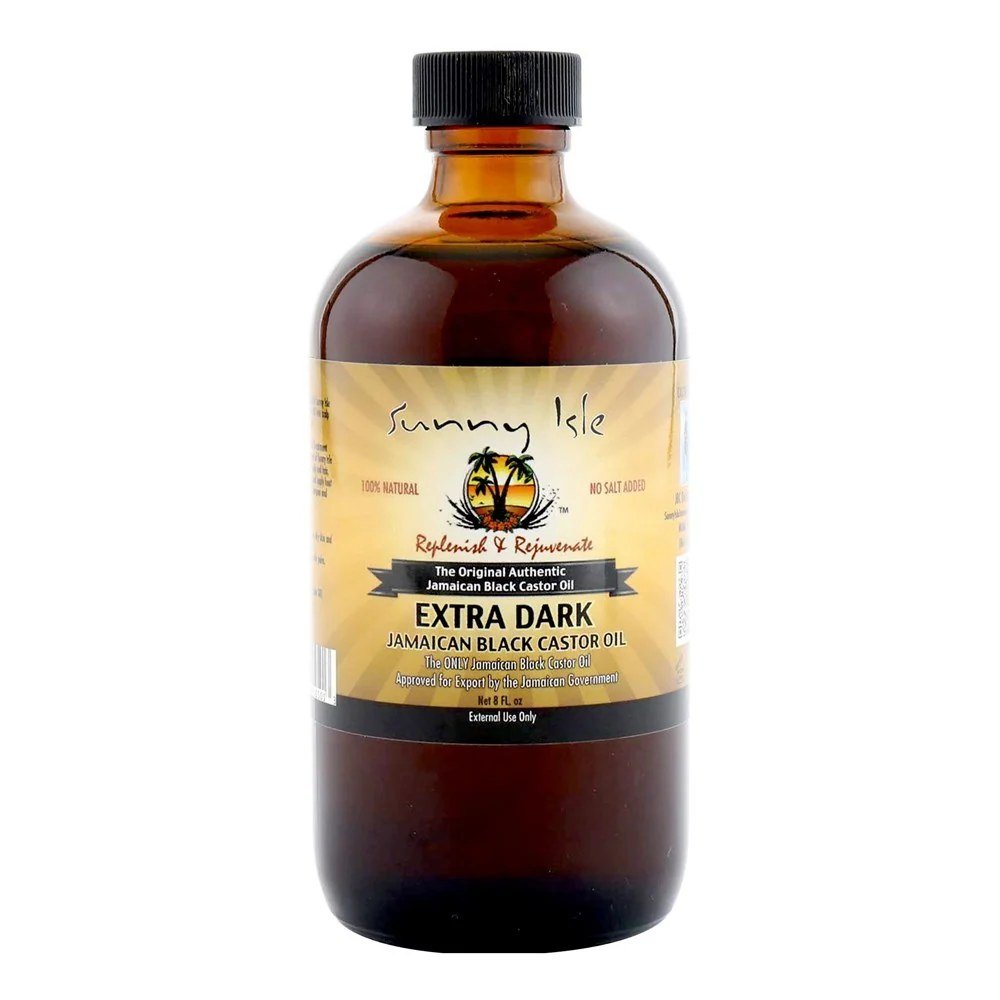
Sunny Isle’s Extra Dark is the strongest expression of the Jamaican tradition in this guide: the beans are roasted longer before pressing, giving an oil that is darker, thicker and higher in ash than the brand’s original JBCO, which is exactly what committed black castor oil users are shopping for. The brand states the oil is organic and made by the traditional roasting and boiling method, and the 8 fl oz amber bottle is a practical middle size, twice the Tropic Isle bottle, at a mid level price per ounce. In use, extra dark JBCO is a scalp and edges oil first: warmed, massaged in with fingertips, and used as a sealant over moisturised lengths, particularly on natural and protective styled hair where its weight is an advantage rather than a problem. The same properties set its limits. The roasted scent is at its most pronounced here, the thickness can overwhelm fine hair and sit on low porosity strands if you use it like a finishing oil, and the dark colour demands care around light pillowcases and collars after application. Between the two Jamaican brands in this guide, Tropic Isle is the heritage pick with the applicator; Sunny Isle Extra Dark is the pick for readers who have already decided they want the darkest, richest version of the oil.
Specifications
8 fl oz amber bottle
extra dark Jamaican black castor oil
organic, roasted and boiled
for hair and scalp
Pros
Darkest, richest JBCO in this guide
Practical 8 fl oz bottle size
Organic, traditional roast and boil method
Cons
Strongest roasted scent here
Too heavy for fine hair as a finisher
Dark oil can mark light fabrics after use
Who should buyyou already use black castor oil and want the darkest, most traditional version
Who should skipyour hair is fine or low porosity and needs a lighter oil format
Home Health is the other heritage American castor oil in this guide, a cold pressed, cold processed oil sold in big bottles at drugstore prices, with a label that reads like a specification sheet: 100% solvent free, hexane and paraben free, no artificial colours or fragrances, vegan, and guaranteed pure. It competes directly with Heritage Store, and the honest comparison is that both are clear, cold pressed, bulk castor oils from long established American wellness brands, and the better buy is usually the one on offer. Home Health’s bottle earns its place for hair users on value per ounce and availability: it is stocked widely, the 32 fl oz size is among the cheapest ways to buy castor oil anywhere, and for pre shampoo oiling, hot oil treatments and scalp massage routines that use oil by the tablespoon, that economy is the whole point. What you give up is certification: unlike the Sky Organics, Cliganic and Heritage organic bottles, this oil is not certified organic, and there is no applicator, dropper or hair specific presentation, just a large bottle of pure oil. If your priority is a certified supply chain, buy the organic picks above; if your priority is a pure, solvent free oil at the lowest cost for heavy hair use, this is the pragmatic bottle.
Specifications
16 and 32 fl oz bottles
cold pressed and cold processed
100% solvent free and hexane free
vegan
Pros
Among the cheapest pure castor oils per ounce
Cold pressed, solvent free and hexane free
Widely stocked in large sizes
Cons
Not certified organic
Plain large bottle, no applicator
Minimal hair specific guidance on label
Who should buyyou use castor oil generously for hot oil treatments and want the lowest cost pure oil
Who should skipcertified organic sourcing matters more to you than price per ounce
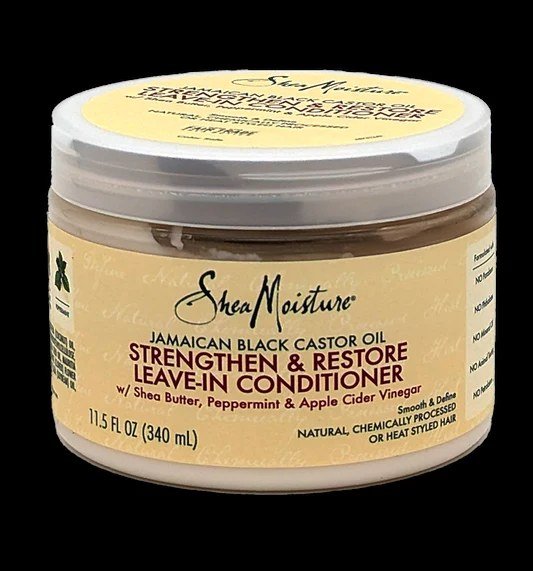
This is the one pick in the guide that is not a bottle of oil, and it is here because many readers searching for castor oil for growth and thickness actually want what this jar does: a daily, wearable product that puts Jamaican black castor oil into a routine without the grease, the warming or the wash out timing of a pure oil treatment. Shea Moisture builds the leave in on certified organic shea butter with JBCO, peppermint oil and apple cider vinegar, positioned for natural, chemically processed and heat styled hair, to soften, detangle and support elasticity so hair breaks less as it grows out. The texture is a rich cream, scooped from the jar and worked through damp hair, and for thick, coily and transitioning hair it doubles as the moisture layer under a sealant, which can be a few drops of one of the pure oils above. The compromises follow from the format: the castor oil here is one ingredient in a cream, at cosmetic rather than pure oil levels, so it does not replace an oil treatment for readers who want the full scalp oiling ritual, and the richness that thick hair loves will weigh down fine hair and can build up if it is reapplied daily without washing. As the low effort way to get JBCO into every wash day, it is the most used product in this guide.
Specifications
11.5 fl oz jar
JBCO with shea butter, peppermint and apple cider vinegar
leave in for natural and transitioning hair
Pros
JBCO in a wearable daily leave in format
Detangles and softens thick, coily hair
Peppermint and ACV for a fresh scalp feel
Cons
Castor oil at cosmetic levels, not a pure oil
Too rich for fine hair
Builds up if layered daily without washing
Who should buyyou want castor oil benefits in a normal leave in step, especially on thick or transitioning hair
Who should skipyou want a pure oil for scalp massage and hot oil treatments
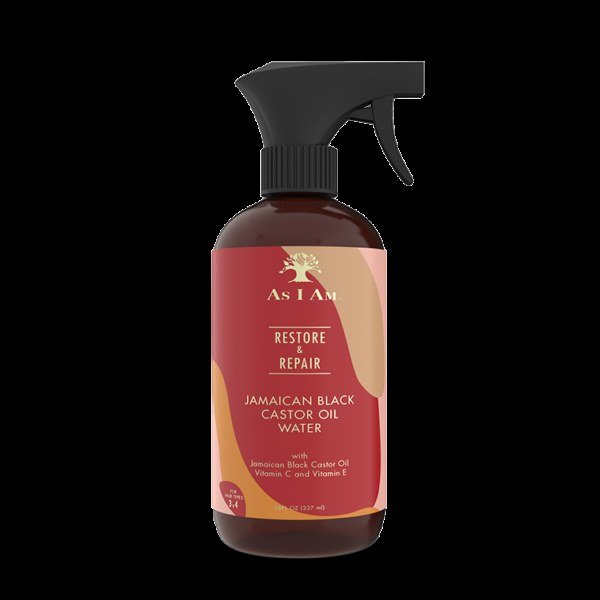
JBCO Water is the lightest way to use Jamaican black castor oil, and for many natural hair routines it is the most useful product in this guide. As I Am suspends JBCO in a water based spray with ceramides and vitamins C and E, producing a fine mist you can apply daily to refresh curls, re moisturise a protective style, or dampen hair before sealing, all without the weight or transfer of the pure oil. That format solves the two problems that make people quit castor oil: the thickness and the mess. A spray delivers a thin, even film, the ceramide content speaks to barrier support for the hair shaft, and the bottle lives happily next to your other daily stylers rather than in a treatment drawer. The honesty note matters here too: a mist contains far less actual castor oil per use than a scalp oiling with the pure oils above, so if your goal is the intensive scalp treatment ritual, this complements it rather than replacing it. It can also leave hair feeling producty if it is sprayed heavily day after day on top of creams and gels, and the scent, while lighter than pure JBCO, still carries the roasted note. As the everyday, low commitment JBCO format, it has no real rival in this line up.
Specifications
16 fl oz spray bottle
JBCO water mist with ceramides and vitamins C and E
lightweight daily refresher
Pros
Castor oil in a light daily spray, no mess
Ceramides and vitamins C and E included
Ideal for refreshing protective styles
Cons
Far less oil per use than pure oil treatments
Can feel producty if layered heavily daily
Roasted JBCO scent still present, if lighter
Who should buyyou want JBCO in a daily refresher spray for curls or protective styles
Who should skipyou want the intensive pure oil scalp treatment this mist only complements
A very thick, viscous plant oil used on scalp, lashes and brows in small amounts.
How it works: Its thickness coats and conditions intensely.
Its main fatty acid, ricinoleic acid, gives it the unusual thickness that defines both its use and its difficulty: it is hard to spread and harder to wash out, so it is usually blended with a lighter oil. No oil has been shown to grow hair faster from the follicle; reduced breakage and a healthier scalp environment are the defensible benefits. Jamaican black castor oil is the roasted, ash containing variant with a stronger smell and a loyal following, on similar evidence.
Best for: Targeted scalp and edge routines.
In your routine: Use as a pre wash scalp treatment: part hair, apply small amounts to the scalp, massage, leave thirty minutes to a few hours, then shampoo twice to remove. A drop smoothed over edges or ends is the leave in maximum for most hair.
What Is Coconut Oil?
A saturated plant oil that penetrates hair well but can feel heavy and solidifies when cool.
How it works: It reduces protein loss in hair during washing in studies.
Best for: Very dry, coarse hair as a pre wash treatment.
The Downsides of Each
Castor Oil for Hair: Too heavy for full head use on fine hair. The commonest way people make it worse: applying it through the lengths and expecting a normal shampoo to remove it, then fighting residue for days
Coconut Oil: Can stiffen some hair types and clog facial skin.
Verdict by Use Case
Choose Castor Oil for Hair if targeted scalp and edge routines. That is the use case where its strengths matter most, and where its main downside, too heavy for full head use on fine hair.
Choose Coconut Oil if very dry, coarse hair as a pre wash treatment. That is the use case where its strengths matter most, and where its main downside, can stiffen some hair types and clog facial skin.
If your situation sits between the two, the deciding question is usually effort: which option fits the routine you will actually keep for the next three months? The better option on paper loses to the one you use consistently, in almost every hair care category.
Can You Use Both?
In many hair care routines the options complement each other: used at different times, on different days or for different areas, each covering the other’s weak ground. The cautions are overload and duplication: do not run both at full intensity in the same session, and do not pay twice for the same job. Introduce any combination gradually, one change at a time, so you can tell what each option is actually doing for you.
How to Decide
Work through three questions in order. First, which option matches your type: the table’s best for row is written for exactly this, and a mismatch there outweighs every other advantage. Second, which downside can you live with: every option in this comparison has one, and the right choice is usually the one whose downside does not touch your actual problem. Third, which fits the routine you already keep: the option that slots into your existing hair care habits will still be in use in three months, and consistency is what turns a reasonable choice into a good result. If the answers point different ways, weight them in that order: type, downside, routine.
Which is better overall, castor oil for hair or coconut oil?
There is no universal winner: the better option is the one matching your skin or hair type, routine and the use cases in the verdict section above. The difference table shows where each one genuinely leads, and the downsides section shows what each one costs you.
Can I use both in the same routine?
In many hair care routines the two can complement each other, used at different times or for different areas, as long as the combination does not overload skin or hair. Introduce any combination gradually, and keep the total intensity at a level your routine can sustain.
Which is better for beginners?
Beginners usually do best with the option that has the gentler learning curve and the fewer downsides for their type, as set out in the table. Start there, and switch only if your needs change.
Which is better for delicate or damaged hair?
The option with the shorter, gentler downside list for your type: compare the downsides row in the table first, start with the milder option, and patch test or trial at the lowest intensity before committing. If your skin or hair is under a clinician’s care, their sequencing comes first.
Which works out cheaper over time?
Compare total cost, not shelf price: how much product or how many consumables each option uses per month, how long a unit lasts in real use, and what you would otherwise spend on the alternative. In this category the cheaper option per use is often the one people abandon, which makes it the most expensive of all.
How do I decide if I can only choose one?
Match the option to your type first, using the best for row in the table, then check that its main downside does not overlap with the problem you are trying to solve. Finally, pick the one that fits the routine you already keep, because three months of consistent use with the second best option beats three weeks of the best one.
What is the best castor oil for hair growth and thickness?
The buying guide Best Castor Oil for Hair Growth and Thickness compares the leading options for this exact need against the criteria that matter, with specifications, honest pros and cons, and a clear statement of who should skip each pick. It is linked from this page.
By Mirror & Glow Editorial Desk – November 23, 2026
Its main fatty acid, ricinoleic acid. This guide applies that to how often to use castor oil for hair growth and thickness: the method, the timing, and the traps to avoid.
By Mirror & Glow Editorial Desk – November 23, 2026
Everything behind how often to use castor oil on hair for hair loss: its main fatty acid, ricinoleic acid, set out as a clear step by step with the mistakes and questions readers raise most.
By Mirror & Glow Editorial Desk – November 23, 2026
Best Castor Oil for Hair Growth and Thickness: Tropic Isle Living Jamaican Black Castor Oil first, Kreyol Essence Haitian Black Castor Oil close behind, every pick specced, photographed and given a buy or skip verdict.