By Mirror & Glow Editorial Desk – November 23, 2026
Woman applying a rich moisturizer to her face with both hands.
The short verdict on ceramide moisturizer vs hyaluronic acid: neither option wins for everyone. Ceramide Moisturizer, Hyaluronic Acid differ in how they work, who they suit and what they cost in effort and money terms. Each option is explained in depth below, the table sets the differences out plainly, and the verdict section matches each option to the readers it actually suits.
Ceramide Moisturizer vs Hyaluronic Acid Compared
Factor
Ceramide Moisturizer
Hyaluronic Acid
How it works
Ceramides rebuild the mortar between skin cells to hold water in.
It binds water in the surface layers for a plumper feel.
Best for
Dry, sensitive and over treated skin needing barrier support.
Dehydrated skin of every type needing weightless hydration.
Routine fit
Apply morning and night, to damp skin, as the sealing step of the routine. During retinoid or acid adjustment, using it as a buffer layer before the active is a standard technique.
Apply to damp skin after cleansing, morning or night, then moisturiser over it to seal. Judge hydration within days; it is one of the few products whose effect is immediate and short lived, renewed at each application.
Cost level
Varies by brand and format; judge by the criteria in this guide rather than headline prices.
Varies by brand and format; judge by the criteria in this guide rather than headline prices.
Downsides
They repair rather than transform, and formula context matters.
It hydrates only; it does not firm or repair.
The Products Behind This Comparison
Comparisons are settled by real products, so the full line up from the buying guide Best Ceramide Moisturizer for Oily Acne Prone Skin is set out here in the same detail: every product with its photo, full description, specifications, pros and cons, and who should buy or skip it.
Product
Standout Point
Key Specification
La Roche-Posay Toleriane Double Repair Matte MoisturizerTop Pick
Matte finish designed for oily, combination skin
3.38 fl oz tube – ceramide-3 and niacinamide – matte gel cream finish – oil free and fragrance free
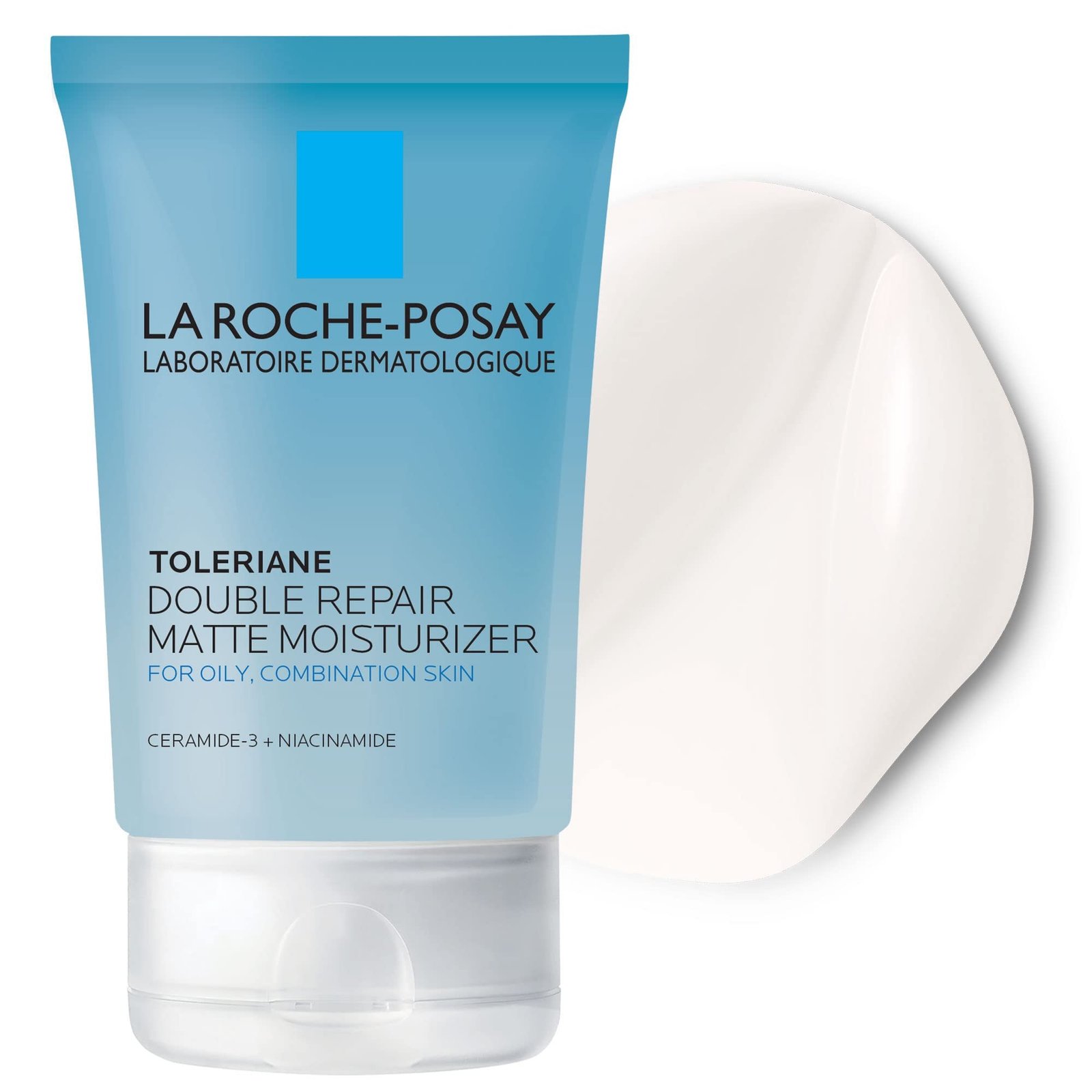
La Roche-Posay Toleriane Double Repair Matte Moisturizer
Most ceramide creams are built for dry skin and feel like it, which is why this matte version of La Roche-Posay’s Toleriane Double Repair leads a guide for oily, acne prone skin. The formula pairs ceramide-3 with niacinamide, glycerin and the brand’s thermal spring water, then adds silica so the finish stays matte rather than glossy through the day. In practice it behaves like a gel cream: it spreads thin, sets quickly, and leaves skin comfortable without the film that makes oily skin look shiny by mid morning. For acne prone readers the relevant points are what is missing as much as what is present: it is oil free, fragrance free and non comedogenic, so it can sit over benzoyl peroxide or under sunscreen without pilling or adding grease. Niacinamide is a sensible partner active here, since it is the ingredient most often used to calm the look of blemish related redness while the ceramide supports the barrier that acne treatments tend to strip. The honest limits are price per tube against basic drugstore rivals, a matte finish that can feel tight on combination skin in winter, and a single size. If your skin is oily but your barrier is suffering from treatment, this is the pick that answers both problems at once.
Specifications
3.38 fl oz tube
ceramide-3 and niacinamide
matte gel cream finish
oil free and fragrance free
Pros
Matte finish designed for oily, combination skin
Ceramide-3 plus niacinamide in one step
Oil free, fragrance free and non comedogenic
Cons
Premium price against drugstore rivals
Matte set can feel tight on drier cheeks
Only one tube size sold
Who should buyyou are oily and acne prone but your barrier feels stripped by treatments, and you want a ceramide cream that will not leave you shiny
Who should skipyour skin is dry rather than oily, in which case the matte finish will feel tight and the standard Double Repair suits you better
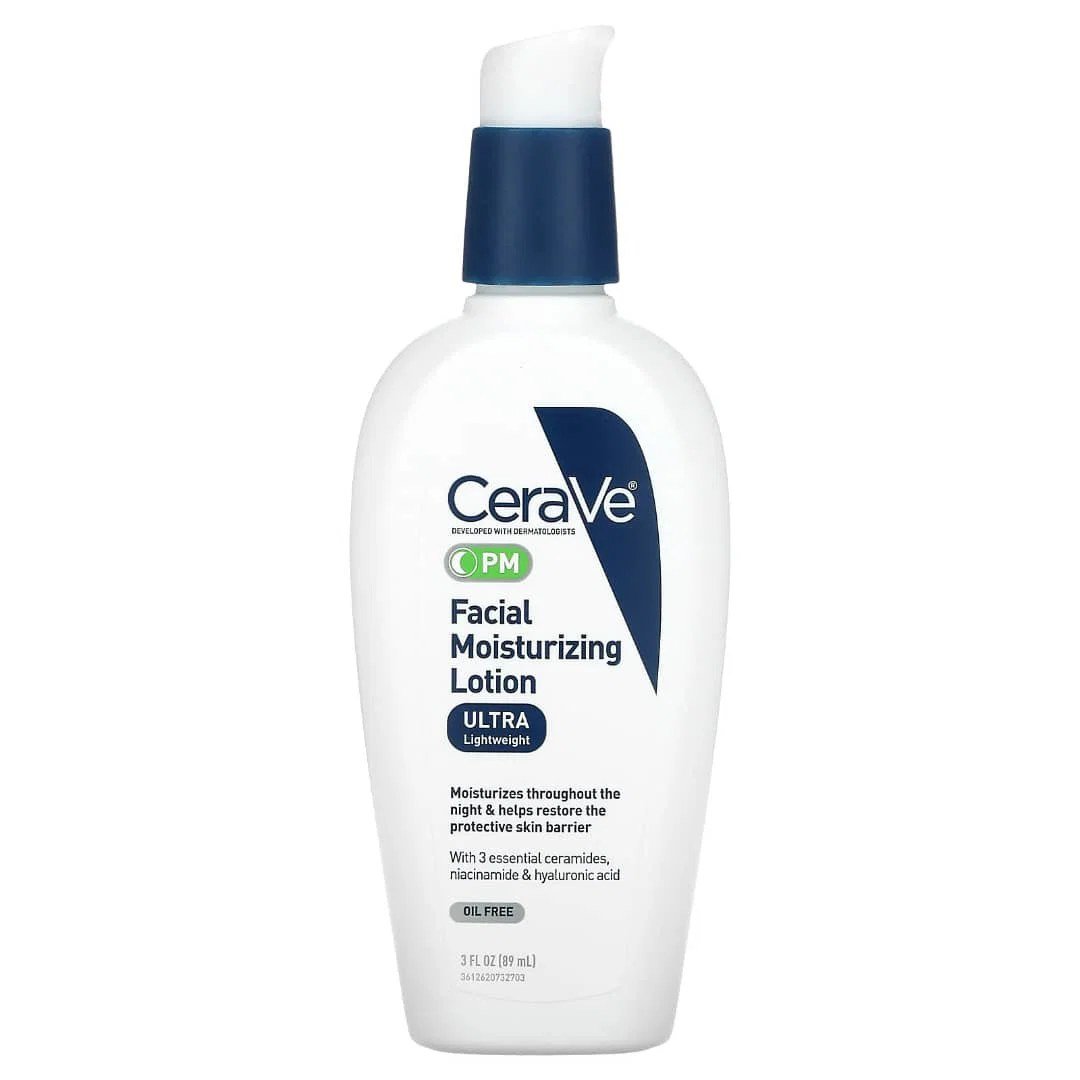
CeraVe PM is the night lotion that made ceramide moisturising mainstream, and it still earns its place for oily, acne prone skin because of how light it is. The formula carries the brand’s three essential ceramides (NP, AP and EOP) with cholesterol and phytosphingosine, plus niacinamide and hyaluronic acid, delivered through the slow release MVE system in an oil free lotion that feels closer to a gel than a cream. The pump bottle gives a measured dose, two pumps cover the face, and the texture absorbs without the residue that makes oily skin uncomfortable under a duvet. It was designed as a night product, and that is its best role here: it restores barrier lipids overnight while daytime acne treatments do their work, and the niacinamide helps the skin look calmer by morning. It contains no sunscreen, so it is not a morning shortcut, and very dry patches may want something richer layered over it in winter. The formula is fragrance free and non comedogenic, and it layers cleanly over retinoids and benzoyl peroxide once those have dried down. For readers who want the proven, inexpensive ceramide option for the evening half of an acne routine, this remains the default recommendation.
Specifications
3 fl oz pump bottle
three essential ceramides
niacinamide and hyaluronic acid
oil free night lotion
Pros
Featherlight lotion that suits oily skin at night
Three ceramides plus niacinamide and hyaluronic acid
Pump bottle doses cleanly and lasts well
Cons
No sunscreen, so it is a night product only
May be too light for dry patches in winter
Basic presentation compared with premium rivals
Who should buyyou want an affordable, proven ceramide lotion for the evening, to pair with acne treatments that dry your skin out
Who should skipyou need one product for morning and night, since this has no SPF and its strength is overnight barrier support
CeraVe’s Oil Control Gel-Cream is the brand’s direct answer to a common complaint: the regular lotions still leave very oily skin shiny. It keeps the three essential ceramides and niacinamide that define the range, then builds the formula around oil absorbing technology with silica, so the gel cream goes on light and actively blurs shine rather than just avoiding grease. The texture is the point here. It spreads like a water gel, sets to a soft, almost powdery finish, and works well under sunscreen and makeup, which makes it the most daytime friendly pick in this guide. For acne prone skin it is oil free, fragrance free and non comedogenic, and it gives barrier support to skin that is often simultaneously oily and irritated by treatment, a combination many richer ceramide creams handle badly. The trade offs are real: the tube is small at 1.75 fl oz, so heavy users will repurchase often, the oil control effect is cosmetic and lasts hours rather than all day, and skin that is combination rather than truly oily may find the finish too dry by evening. As the morning moisturiser in an oily skin routine, though, it is the most purpose built option CeraVe sells.
Specifications
1.75 fl oz tube
three essential ceramides
oil absorbing silica technology
gel cream for oily skin
Pros
Gel cream texture with genuine shine control
Ceramides and niacinamide, oil free formula
Sits well under sunscreen and makeup
Cons
Small 1.75 fl oz tube runs out quickly
Shine control fades after several hours
Too drying for combination or dry areas
Who should buyyour skin is genuinely oily and every other ceramide cream leaves you shiny by midday
Who should skipyour skin is dry or only mildly combination, where the oil absorbing finish will feel chalky and tight
Paula’s Choice builds this moisturiser inside its CLEAR range for blemish prone skin, and the positioning shows in the formula choices. It is a weightless gel lotion with ceramides and niacinamide, supported by soothing ingredients such as pumpkin seed extract and vitamin B5, and it is completely oil free, so nothing in the tube works against the acne routine it is designed to accompany. The texture is the lightest in this guide alongside the CeraVe gel cream: it absorbs in seconds and leaves no film, which makes it a comfortable final step after a benzoyl peroxide or salicylic acid treatment at night. Where it differs from the drugstore picks is formulation transparency and the absence of anything decorative; there is no fragrance, no drying alcohol and no essential oils, and the brand publishes its reasoning for each ingredient. The costs of that approach are a higher price for a 2 fl oz tube and availability that is mostly online rather than on a pharmacy shelf. It is also deliberately minimal, so readers who want a moisturiser that doubles as an active treatment step should look at the niacinamide content as support, not therapy. For acne prone skin that reacts to rich creams, this is the safest pair of hands here.
Specifications
2 fl oz tube
ceramides and niacinamide
oil free gel lotion
from the CLEAR acne range
Pros
Built specifically for blemish prone skin
Ceramides and niacinamide, zero oil or fragrance
Absorbs fast with no film after treatments
Cons
Higher price for a 2 fl oz tube
Mostly sold online, not on store shelves
Too light to rescue very dry, flaking skin
Who should buyyou break out easily, react to fragrance, and want a moisturiser designed from the start for acne routines
Who should skipyou want a rich night cream, since this gel lotion is intentionally the lightest texture in the guide
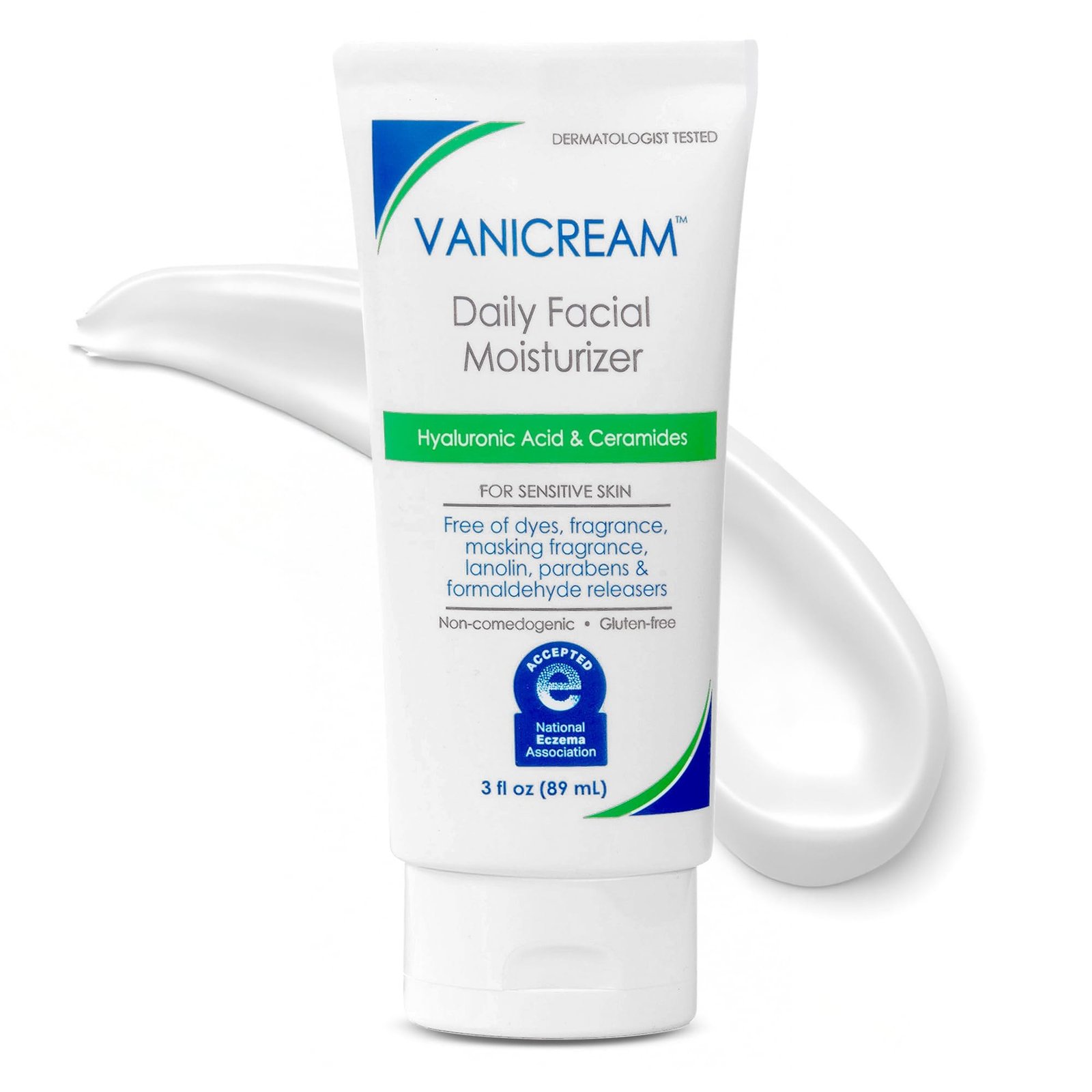
Vanicream’s Daily Facial Moisturizer is the pick for acne prone skin that is also reactive, the combination that makes moisturiser shopping miserable. The formula is built on five ceramides with hyaluronic acid and squalane in a light lotion, and it leaves out the ingredients sensitive skin most often blames: it is free of fragrance, dyes, lanolin, parabens and formaldehyde releasers, and it carries the National Eczema Association’s seal of acceptance. For this guide’s reader, that restraint matters because oily, acne prone skin is frequently sensitised by the treatments used on it, and a moisturiser that simply cannot irritate is worth more than a clever one. The texture sits between the gel creams and the true creams here, a lotion that hydrates properly without shine, and it works morning or night. It has no oil control technology and no anti blemish actives, so shine management and treatment are other steps’ jobs, and the plain, clinical packaging will not please anyone who buys with their eyes. The tube is a practical 3 fl oz and the price is drugstore level despite the specialist positioning. If every fragranced or fashionable moisturiser has stung or broken you out, this is the reset button. It is also widely stocked in US pharmacies, which makes repurchasing painless.
Specifications
3 fl oz tube
five ceramides
hyaluronic acid and squalane
National Eczema Association accepted
Pros
Five ceramides in a genuinely gentle formula
Free of fragrance, dyes and common irritants
Accepted by the National Eczema Association
Cons
No oil control, so shine is unmanaged
Plain clinical packaging and feel
No anti blemish actives of its own
Who should buyyour acne prone skin is also sensitive or reactive and most moisturisers sting or trigger breakouts
Who should skipyou want oil control or treatment actives in your moisturiser, which this deliberately does not offer
The Daily Moisturizing Lotion is CeraVe’s original all purpose lotion, and for oily, acne prone skin its appeal is simplicity and value. It carries the same three essential ceramides and hyaluronic acid as the PM lotion in a lightweight, oil free texture, but it comes in a large 12 fl oz pump that costs little per ounce and can serve face and body from one bottle. That economy matters for readers moisturising generously twice a day, which is what barrier repair during acne treatment actually requires. The texture is a true lotion: more fluid than the creams in this guide, quick to absorb, and comfortable on oily skin in all but the most humid weather, when the gel cream picks here feel better. It has no niacinamide, unlike the PM version, and no oil control, so it is a hydration and barrier product only, and it contains no sunscreen for daytime use. It is fragrance free and non comedogenic, and it is the easiest product in this guide to find, stocked in almost every pharmacy and supermarket. As a single bottle that covers face, neck and body for someone on a budget and on treatment, it is hard to argue with, provided your skin is oily to normal rather than very oily.
Specifications
12 fl oz pump bottle
three essential ceramides
hyaluronic acid
lightweight oil free lotion
Pros
Large pump bottle is the best value here
Light lotion texture with three ceramides
Works for face and body in one product
Cons
No niacinamide or oil control extras
No sunscreen for daytime use
Very oily skin may prefer the gel creams
Who should buyyou want one affordable bottle for face and body while acne treatment dries your skin out
Who should skipyou want targeted extras like niacinamide or shine control, which the PM and Oil Control versions cover instead
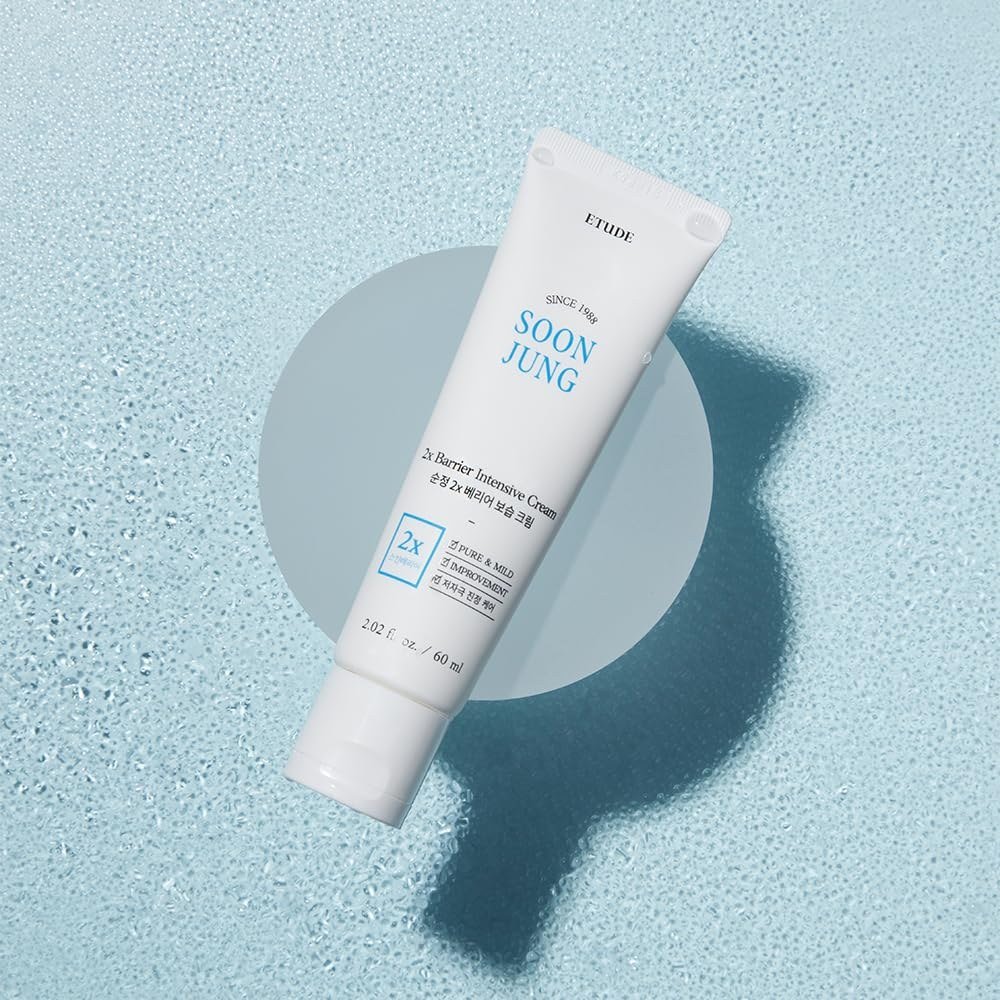
SoonJung is Etude’s line for skin that cannot tolerate much, and the 2x Barrier Intensive Cream is its anchor product: a low pH cream built on panthenol and madecassoside, the soothing pair the brand calls Panthensoside, with sunflower seed oil and shea in support. Despite the word intensive, the texture is a soft cream that oily, acne prone skin can use at night without waking up greasy, and it has become a standard recommendation for skin whose barrier has been damaged by over exfoliation or retinoid enthusiasm. The formula is fragrance free and made without the common irritants the line screens against, which suits reactive skin. For this guide it plays a specific role: it is the richest pick that still behaves on oily skin, the one to reach for in the weeks when treatments have left you flaking and sore, used at night in a thin layer. Used daily on truly oily skin in summer it can feel like too much, and the 60 ml tube is modest. It is also a single purpose product with no niacinamide and no oil control. Judged as a barrier rescue cream that oily skin can actually tolerate, it is one of the best formulated options in this list.
Specifications
60 ml tube
panthenol and madecassoside
low pH formula
fragrance free Korean barrier cream
Pros
Panthenol and madecassoside soothe stressed skin
Rich enough for barrier repair, light enough for oily skin at night
Fragrance free, low pH, minimal irritants
Cons
Can feel heavy on very oily skin in summer
Modest 60 ml tube
No niacinamide or oil control
Who should buyyour barrier is damaged from over treatment and you need a soothing night cream that will not clog oily skin
Who should skipyou want a daily morning moisturiser for very oily skin, where this cream’s richness works against you
Illiyoon is Amorepacific’s brand for sensitive skin, and its Ceramide Ato Lotion is a quiet staple in Korean pharmacies: a fragrance free lotion built around the brand’s Ceramide Skin Complex, sold in a generous 350 ml pump for face and body. The texture is a milky lotion, richer than the gel creams in this guide but far lighter than a barrier cream, and it absorbs without a sticky finish, which is why it suits oily, acne prone skin that needs barrier support over large areas, including acne prone backs and chests where per ounce cost matters. The formula keeps the ingredient list short and avoids fragrance and colourants, and the same lotion is marketed for babies through adults, which tells you where its priorities lie. For facial use, oily skin will prefer it at night or in drier months; as a body lotion for breakout prone skin it can be used freely all year. The compromises are the plain, fragrance free sensory experience, a finish that can feel like a film if over applied on the face, and import pricing that varies by seller on Amazon. If your acne prone skin extends beyond your face and you are tired of tiny tubes, this is the economical, gentle answer.
Specifications
350 ml pump bottle
ceramide skin complex
fragrance free face and body lotion
Korean pharmacy staple
Pros
Big 350 ml pump covers face and body
Ceramide complex in a short, gentle formula
Fragrance free and suitable for reactive skin
Cons
Can feel filmy on the face if over applied
Plain, unscented sensory experience
Import pricing varies between sellers
Who should buyyou need ceramide support for acne prone skin on your face and body and want pharmacy value per ounce
Who should skipyou want a facial moisturiser only, in a small tube, with oil control for daytime shine
Aestura is the dermatology leaning brand in Amorepacific’s portfolio, sold in Korean hospitals and pharmacies, and the Atobarrier 365 Lotion is its everyday barrier lotion. Its distinguishing technology is encapsulated ceramides, tiny capsules designed to stay longer in the skin’s surface layers and release gradually, paired with cholesterol and fatty acids in the ratio barrier formulas aim for. In use it is a smooth, mid weight lotion: more substantial than the CeraVe lotions, lighter than the SoonJung cream, with a clean finish that oily, acne prone skin can manage at night and combination skin can manage by day. It is fragrance free and built for sensitive skin, so it layers safely over acne treatments without stinging compromised areas. The honest drawbacks are availability and price: it is an imported product on Amazon, costs more per ounce than the domestic drugstore picks, and the 150 ml bottle sits between the small tubes and the big pumps here. Readers who have tried the standard ceramide lotions and found them either too light or too plain are the audience. As a step up in barrier technology without a step up in grease, it earns its place. The pump format also keeps the lotion hygienic across its months of daily use.
Specifications
150 ml pump bottle
encapsulated ceramide technology
fragrance free lotion
Korean dermatology brand
Pros
Encapsulated ceramides for longer barrier contact
Mid weight lotion, not greasy on oily skin
Fragrance free and made for sensitive skin
Cons
Imported, so pricing and stock vary
Costs more per ounce than drugstore picks
Less widely reviewed than the big brands
Who should buyyou want more advanced ceramide delivery than the basic lotions and your skin stays reactive on treatments
Who should skipyou are shopping strictly on price per ounce, where the CeraVe and Illiyoon pumps win easily
The INKEY List treats ceramides the way it treats every ingredient, as a named, dosed active, and its Ceramide Night Treatment states its numbers on the bottle: a 3% ceramide complex with 2.5% hyaluronic acid in an overnight formula. That format is the difference here. This is not a general moisturiser but a treatment layer, applied as the last step at night two or three times a week, or nightly for short repair periods, to rebuild the barrier while you sleep. The texture is a light lotion that sits comfortably over serums and under nothing else, and for oily, acne prone skin the appeal is getting concentrated ceramide support in a product used only at night, leaving daytime routines light and shine controlled. It is fragrance free and the brand’s labelling is admirably plain about what the product does and does not do. The limits follow from the format: at 30 ml it is the smallest bottle in this guide, it is not a substitute for a daily moisturiser if your skin is dry, and the treatment positioning can confuse buyers who simply want a cream. Used as intended, as a periodic repair step for treatment stressed skin, it is a precise and inexpensive tool.
Specifications
30 ml pump bottle
3% ceramide complex
2.5% hyaluronic acid
overnight treatment format
Pros
Stated 3% ceramide complex, no guesswork
Night treatment format keeps days light
Fragrance free and inexpensive for a treatment
Cons
Small 30 ml bottle
Not a full daily moisturiser on its own
Treatment format needs routine planning
Who should buyyou want a concentrated ceramide step a few nights a week to repair a treatment stressed barrier
Who should skipyou want one simple daily moisturiser, where the lotions above are the right shape of product
A family of lipids that form much of the skin barrier, used in moisturisers to repair and maintain it.
How it works: Ceramides rebuild the mortar between skin cells to hold water in.
Ceramides work best in company: formulas that combine them with cholesterol and fatty acids in sensible ratios mimic the barrier’s own composition better than ceramide alone. The ingredient suits skin stressed by retinoids, acids, weather or eczema tendencies. It is not an active that transforms; it restores the conditions in which skin calms and other treatments become tolerable. Texture ranges from light lotions to rich creams, so match richness to skin type rather than assuming repair must feel heavy.
Best for: Dry, sensitive and over treated skin needing barrier support.
In your routine: Apply morning and night, to damp skin, as the sealing step of the routine. During retinoid or acid adjustment, using it as a buffer layer before the active is a standard technique.
What Is Hyaluronic Acid?
A humectant molecule that holds water at the skin surface, used in serums and creams for hydration.
How it works: It binds water in the surface layers for a plumper feel.
Hyaluronic acid occurs naturally in skin and can bind many times its weight in water, which is the basis of its effect. Different molecular weights sit at different depths of the surface. The critical technique is water: applied to dry skin in a dry climate it has little to draw on and can even feel tightening, while applied to damp skin and sealed with moisturiser it performs exactly as advertised. It layers with almost everything and suits every skin type, including oily skin that needs weightless hydration.
Best for: Dehydrated skin of every type needing weightless hydration.
In your routine: Apply to damp skin after cleansing, morning or night, then moisturiser over it to seal. Judge hydration within days; it is one of the few products whose effect is immediate and short lived, renewed at each application.
The Downsides of Each
Ceramide Moisturizer: They repair rather than transform, and formula context matters. The commonest way people make it worse: expecting a barrier cream to treat acne or pigmentation directly, when its job is repair and tolerance
Hyaluronic Acid: It hydrates only; it does not firm or repair. The commonest way people make it worse: applying it to bone dry skin in winter heating and concluding it does not work
Verdict by Use Case
Choose Ceramide Moisturizer if dry, sensitive and over treated skin needing barrier support. That is the use case where its strengths matter most, and where its main downside, they repair rather than transform, and formula context matters.
Choose Hyaluronic Acid if dehydrated skin of every type needing weightless hydration. That is the use case where its strengths matter most, and where its main downside, it hydrates only; it does not firm or repair.
If your situation sits between the two, the deciding question is usually effort: which option fits the routine you will actually keep for the next three months? The better option on paper loses to the one you use consistently, in almost every skincare category.
Can You Use Both?
In many skincare routines the options complement each other: used at different times, on different days or for different areas, each covering the other’s weak ground. The cautions are overload and duplication: do not run both at full intensity in the same session, and do not pay twice for the same job. Introduce any combination gradually, one change at a time, so you can tell what each option is actually doing for you.
How to Decide
Work through three questions in order. First, which option matches your type: the table’s best for row is written for exactly this, and a mismatch there outweighs every other advantage. Second, which downside can you live with: every option in this comparison has one, and the right choice is usually the one whose downside does not touch your actual problem. Third, which fits the routine you already keep: the option that slots into your existing skincare habits will still be in use in three months, and consistency is what turns a reasonable choice into a good result. If the answers point different ways, weight them in that order: type, downside, routine.
Which is better overall, ceramide moisturizer or hyaluronic acid?
There is no universal winner: the better option is the one matching your skin or hair type, routine and the use cases in the verdict section above. The difference table shows where each one genuinely leads, and the downsides section shows what each one costs you.
Can I use both in the same routine?
In many skincare routines the two can complement each other, used at different times or for different areas, as long as the combination does not overload skin or hair. Introduce any combination gradually, and keep the total intensity at a level your routine can sustain.
Which is better for beginners?
Beginners usually do best with the option that has the gentler learning curve and the fewer downsides for their type, as set out in the table. Start there, and switch only if your needs change.
Which is better for sensitive skin?
The option with the shorter, gentler downside list for your type: compare the downsides row in the table first, start with the milder option, and patch test or trial at the lowest intensity before committing. If your skin or hair is under a clinician’s care, their sequencing comes first.
Which works out cheaper over time?
Compare total cost, not shelf price: how much product or how many consumables each option uses per month, how long a unit lasts in real use, and what you would otherwise spend on the alternative. In this category the cheaper option per use is often the one people abandon, which makes it the most expensive of all.
How do I decide if I can only choose one?
Match the option to your type first, using the best for row in the table, then check that its main downside does not overlap with the problem you are trying to solve. Finally, pick the one that fits the routine you already keep, because three months of consistent use with the second best option beats three weeks of the best one.
What is the best ceramide moisturizer for oily acne prone skin?
The buying guide Best Ceramide Moisturizer for Oily Acne Prone Skin compares the leading options for this exact need against the criteria that matter, with specifications, honest pros and cons, and a clear statement of who should skip each pick. It is linked from this page.
By Mirror & Glow Editorial Desk – November 23, 2026
The direct answer to how long does ceramide moisturizer take to work, with the background explained: a ceramide moisturiser is a moisturiser built around ceramides. Step by step method, routine placement and FAQs.
By Mirror & Glow Editorial Desk – November 23, 2026
Best Ceramide Moisturizer for Oily Acne Prone Skin: La Roche-Posay Toleriane Double Repair Matte Moisturizer leads the picks, each photographed and specced with honest pros and cons and a buy or skip verdict.
By Mirror & Glow Editorial Desk – November 23, 2026
How to Get Rid of Acne Scars on Back? The short answer first, then the detail: one active at a time, introduced over two weeks, judged at eight to twelve weeks, with timing, amounts and the errors that stop it working.