By Mirror & Glow Editorial Desk – November 23, 2026
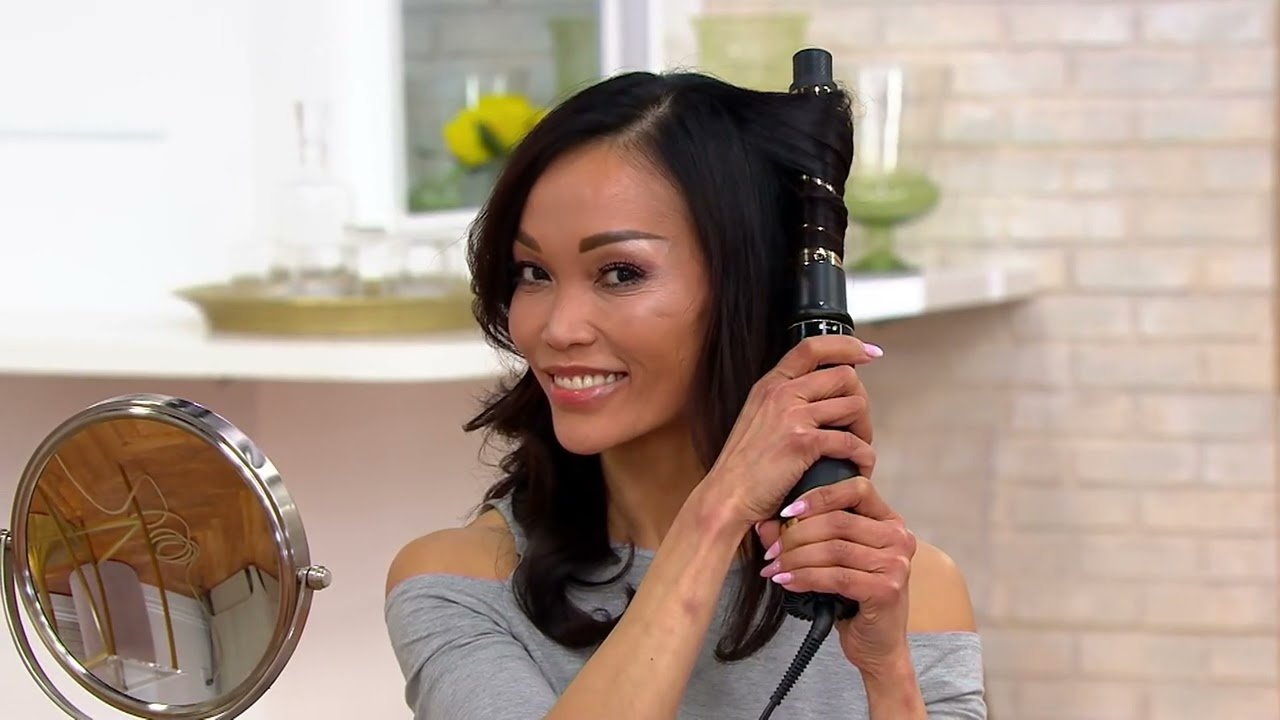
A flat-lay comparison of two hair styling tools on a chunky knit surface.
The short verdict on curling iron vs dyson airwrap: neither option wins for everyone. Curling Iron, Dyson Airwrap differ in how they work, who they suit and what they cost in effort and money terms. Each option is explained in depth below, the table sets the differences out plainly, and the verdict section matches each option to the readers it actually suits.
Curling Iron vs Dyson Airwrap Compared
Factor
Curling Iron
Dyson Airwrap
How it works
The clamp holds hair for even, lasting curls.
Its airflow wraps and dries hair around barrels using the Coanda effect, setting styles as it dries.
Best for
Structured curls and users who like clamp control.
Styling with less heat exposure, and versatile blowout and curl looks from one tool.
Routine fit
Work on fully dry hair with heat protectant, in sections no wider than the barrel. Hold each curl for seconds, not until it smokes, release it into your palm and let it cool in shape before dressing it out; cooling is what sets the curl.
Fits a standard hair tools routine; the matching buying guide below gives the step by step for this category.
Cost level
Varies by brand and format; judge by the criteria in this guide rather than headline prices.
Varies by brand and format; judge by the criteria in this guide rather than headline prices.
Downsides
Clamp can crease hair if used carelessly.
Premium pricing, a real learning curve, and curls that set softer than a curling iron’s.
The Products Behind This Comparison
Comparisons are settled by real products, so the full line up from the buying guide Best Curling Iron for Fine Thin Hair is set out here in the same detail: every product with its photo, full description, specifications, pros and cons, and who should buy or skip it.
Product
Standout Point
Key Specification
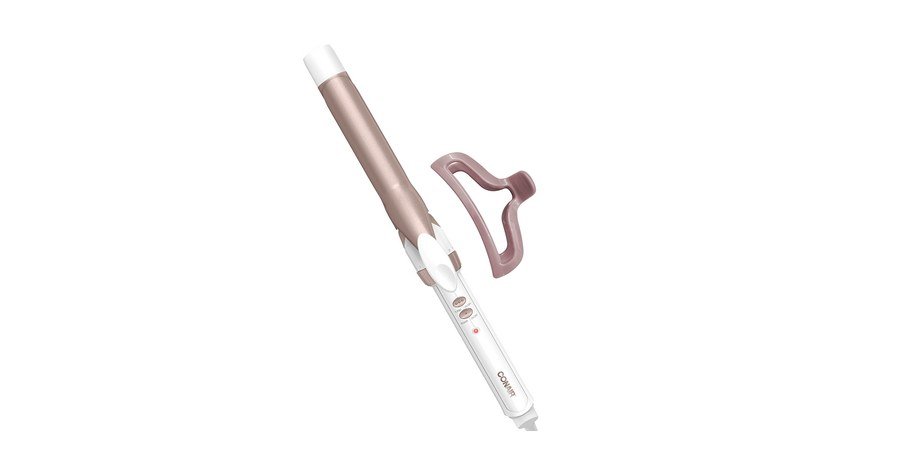
Conair Double Ceramic Curling Iron 1 InchTop Pick
30 settings allow genuinely low heat for fine hair
25 mm barrel – double ceramic coating – 30 heat settings up to 204 C per brand – turbo heat boost – dual voltage
Fine, thin hair needs two things from a curling iron above all: genuinely low heat settings and even heat, and this inexpensive Conair delivers both better than irons costing several times more. The double ceramic barrel spreads heat evenly so there are no hot spots quietly scorching the most fragile sections, and the dial runs through 30 settings, which means fine hair can start at the low end, around 120 to 150 C, and step up only until a curl holds, rather than being blasted at a fixed high temperature. The 25 mm barrel is the versatile middle size for fine hair, giving soft waves on longer hair and defined curls on shorter cuts. In use it is light, the clamp holds a small section without creasing it, and the turbo boost helps the barrel recover heat between sections. The honest limits are build and speed: the body feels like the budget tool it is, there is no digital display or automatic shut off timer worth relying on, and thick hair, which is not this guide’s audience, would find it slow. For fine hair on a budget, it remains the easiest recommendation in the category, and it leads this guide on merit, not price nostalgia.
Specifications
25 mm barrel
double ceramic coating
30 heat settings up to 204 C per brand
turbo heat boost
dual voltage
Pros
30 settings allow genuinely low heat for fine hair
Even double ceramic heat, no scorching hot spots
Light body is easy to handle in small sections
Cons
Budget build feel
No digital temperature display
Slow on thick hair, though that is not its audience
Who should buyyour hair is fine and thin and your budget is sensible
Who should skipyou want digital precision and premium build
The Hot Tools gold iron is the one working stylists reach for, and its case for fine hair rests on control rather than gentleness claims. The gold plated barrel holds a steady, even temperature, and the variable dial goes low enough for fine hair to curl at moderate heat, provided the user actually turns it down, because the top of the range, up to 218 C, is far beyond what thin hair should ever meet. Used with discipline, a few seconds per section at a modest setting, it produces curls that hold unusually well, which matters for fine hair whose curls usually fall by lunchtime; a curl set properly once beats a curl re fried three times. The clamp is smooth, the barrel glides, and the build survives daily professional use, let alone home use. The trade offs: it is a professional tool with a professional temperature range, so it demands respect and a heat protectant habit; there is no automatic temperature lock; and the cord and body are sized for salon work, slightly heavier in a small hand. For fine haired readers who style often and want one iron for years, this is the durable pick, bought for its steadiness and used at its lower settings.
Specifications
25 mm barrel
24K gold plated surface
variable heat up to 218 C per brand
pulse technology
professional salon staple
Pros
Exceptionally steady, even barrel heat
Curls hold well, so sections need fewer passes
Professional build lasts for years
Cons
Top temperatures are far too hot for fine hair
No temperature lock against accidental knocks
Slightly heavy, salon sized body
Who should buyyou style often and will use the low settings with discipline
Who should skipyou want a foolproof iron that cannot be set too hot
BaBylissPRO Nano Titanium Spring Curling Iron 1 Inch
BaBylissPRO’s nano titanium iron is the fast, slim professional option, and it needs the clearest warning label in this guide: titanium transfers heat aggressively, and its maximum of 232 C is a setting fine hair should never touch. Judged at the bottom of its range, though, it has real virtues. The barrel heats in seconds and recovers instantly between sections, the slim body and light weight make it the easiest iron here to manoeuvre around the back of the head, and the smooth titanium surface glides through fine hair without snagging, which is where fragile strands often break. The technique it rewards is speed: low setting, small sections, three to five seconds, move on. Readers who linger with an iron on the hair should choose ceramic instead, full stop. The clamp is firm and even, the cord is professional length, and the build quality is a clear step above the budget irons. This is the expert’s pick in the guide, included because experienced users with fine hair often prefer titanium’s speed, and because pretending the category’s most popular pro iron does not exist would help nobody. Buy it for control and pace, and respect the dial. In careful hands it is superb; in careless ones it is the fastest way to frazzle fine ends.
Specifications
25 mm barrel
nano titanium surface
heats up to 232 C per brand
turbo heat boost
slim professional design
Pros
Heats and recovers almost instantly
Slim, light body is easy to manoeuvre
Glides through fine hair without snagging
Cons
Titanium heat is unforgiving if you linger
Maximum temperature is dangerous for fine hair
Rewards experience, not beginners
Who should buyyou are an experienced user who works fast at low settings
Who should skipyou are a beginner or tend to hold the iron in place
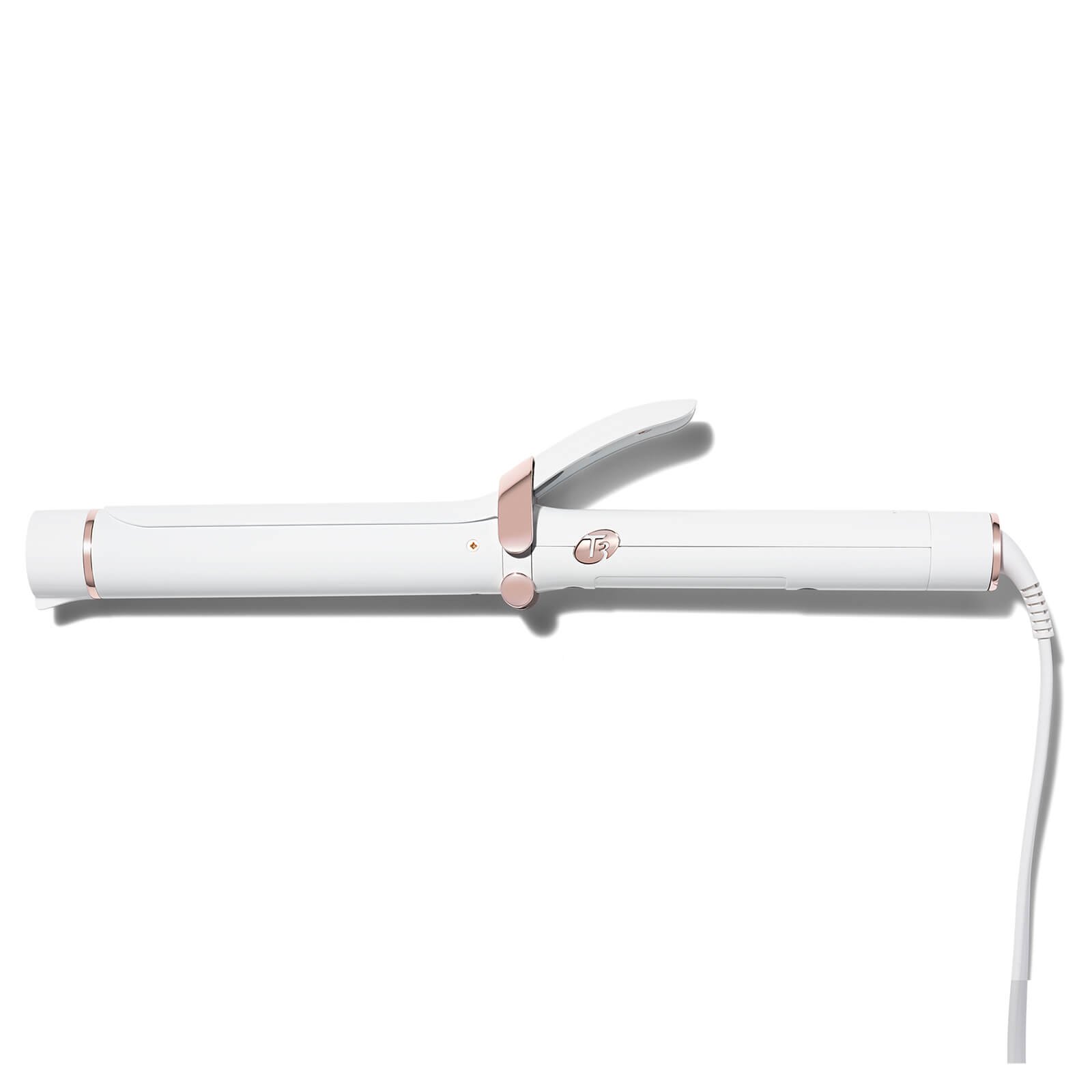
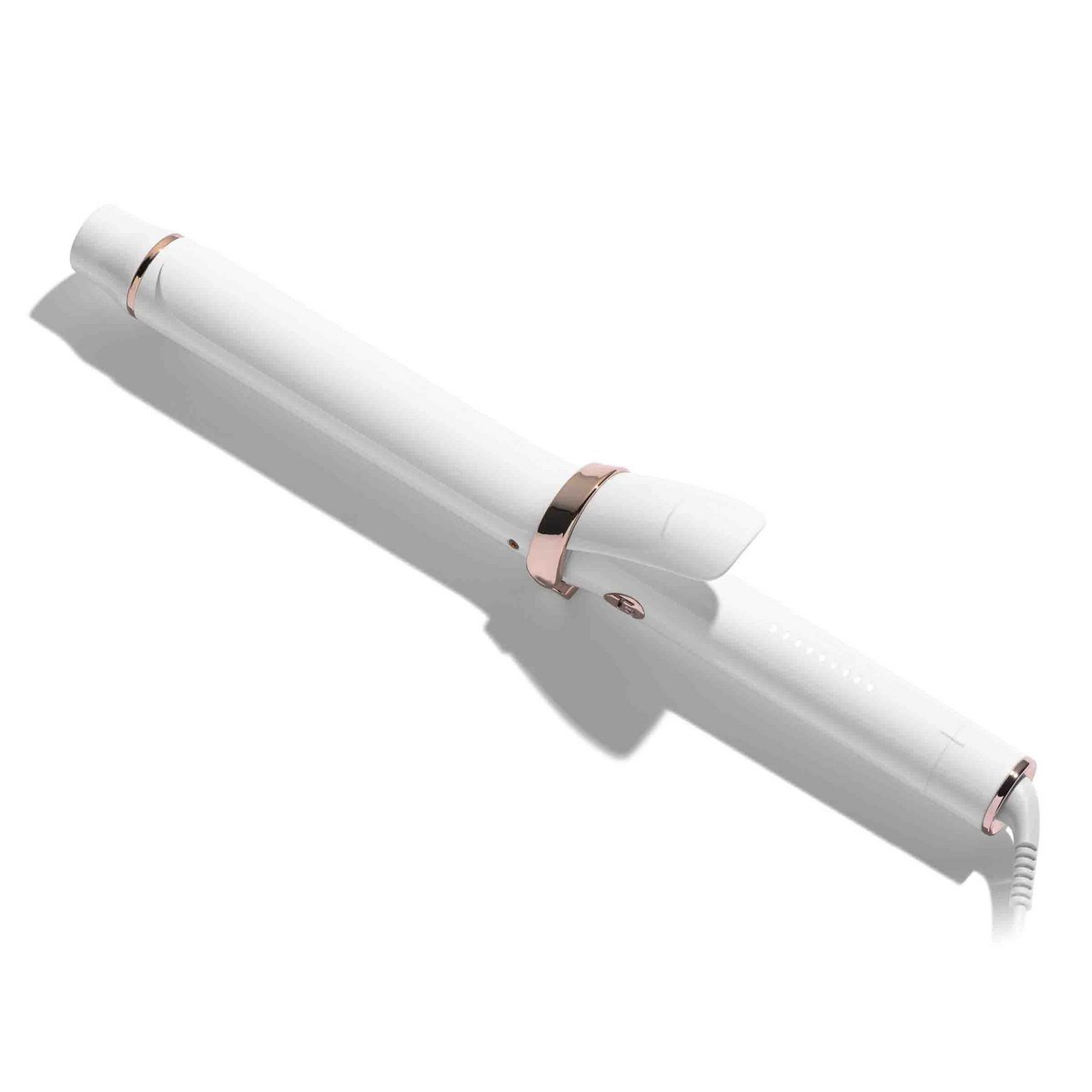
The small barrel T3 is the precision pick for fine hair, because barrel size matters more on thin hair than most guides admit. A 19 mm barrel gives fine and shorter hair a curl with actual structure, where a wide barrel produces a wave that falls out within the hour, and the ceramic surface keeps the heat even along its length. T3’s single pass positioning translates in practice to a barrel that holds its set temperature steadily, so the first section and the last get the same heat, and five settings keep the range sensible for fragile hair rather than offering dangerous extremes. The design is the most considered here, balanced in the hand, with a cool tip that genuinely stays cool and a stand that keeps it off the counter. Curls from this barrel on fine hair last, which reduces the restyling that damages thin hair most. The limits are the premium price, the fact that long hair takes real time in small sections on a slim barrel, and a control dial some users find easy to knock. For fine, short to medium hair that refuses to hold a curl, this is the guide’s specialist answer, and it earns its price on results.
Specifications
19 mm barrel
ceramic coated
five heat settings per brand
single pass technology positioning
slim barrel for fine and short hair
Pros
Slim barrel gives fine hair curls that hold
Steady temperature from first section to last
Considered design, cool tip and stand
Cons
Premium price
Slow on long hair in small sections
Dial can be knocked mid styling
Who should buyyour fine hair is short to medium and drops curls quickly
Who should skipyour hair is long and you want fast, loose waves
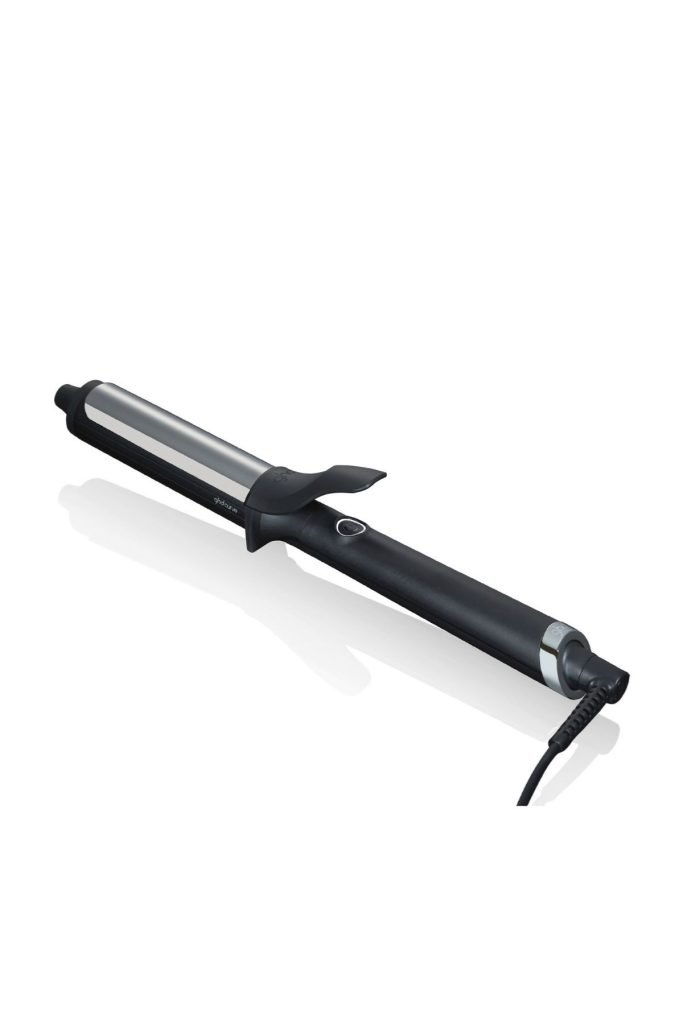
ghd removes the temperature decision entirely: the Classic Curl Tong runs at a fixed 185 C, the temperature the brand’s research settled on for styling without excessive damage, monitored constantly along the barrel. For fine hair that position deserves an honest discussion. 185 C is at the upper edge of what thin hair should meet regularly, and readers with very fragile, bleached hair may prefer the lower settings of the Conair or T3. For the larger group of fine haired users whose problem is curls that will not hold at low heat, though, the ghd’s consistency is the answer: every section gets exactly the same heat, the barrel has no cool or hot patches, and the curls set firmly and last. The clamp is the smoothest here, the body is beautifully balanced, and the automatic sleep mode after 30 minutes is a real safety virtue in a busy bathroom. There are no settings to learn and none to customise, which is either the appeal or the deal breaker. It is the premium, no decisions pick, and its results on fine hair that resists curling are the best in this guide. Buy it knowing exactly what its fixed heat means for your hair.
Specifications
26 mm barrel
ultra zone technology per brand
fixed optimal temperature of 185 C
ceramic coating
automatic sleep mode
Pros
Perfectly consistent heat along the whole barrel
Curls set firmly and last on resistant fine hair
Automatic sleep mode and premium build
Cons
Fixed 185 C cannot be lowered for very fragile hair
Premium price
No flexibility for different hair zones
Who should buyyour fine hair resists curling at low temperatures
Who should skipyour hair is bleached and fragile and needs heat below 185 C
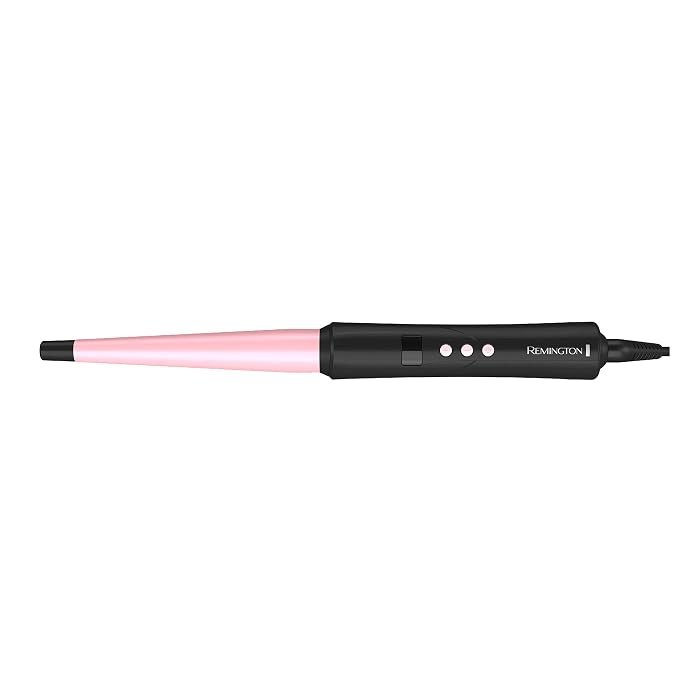
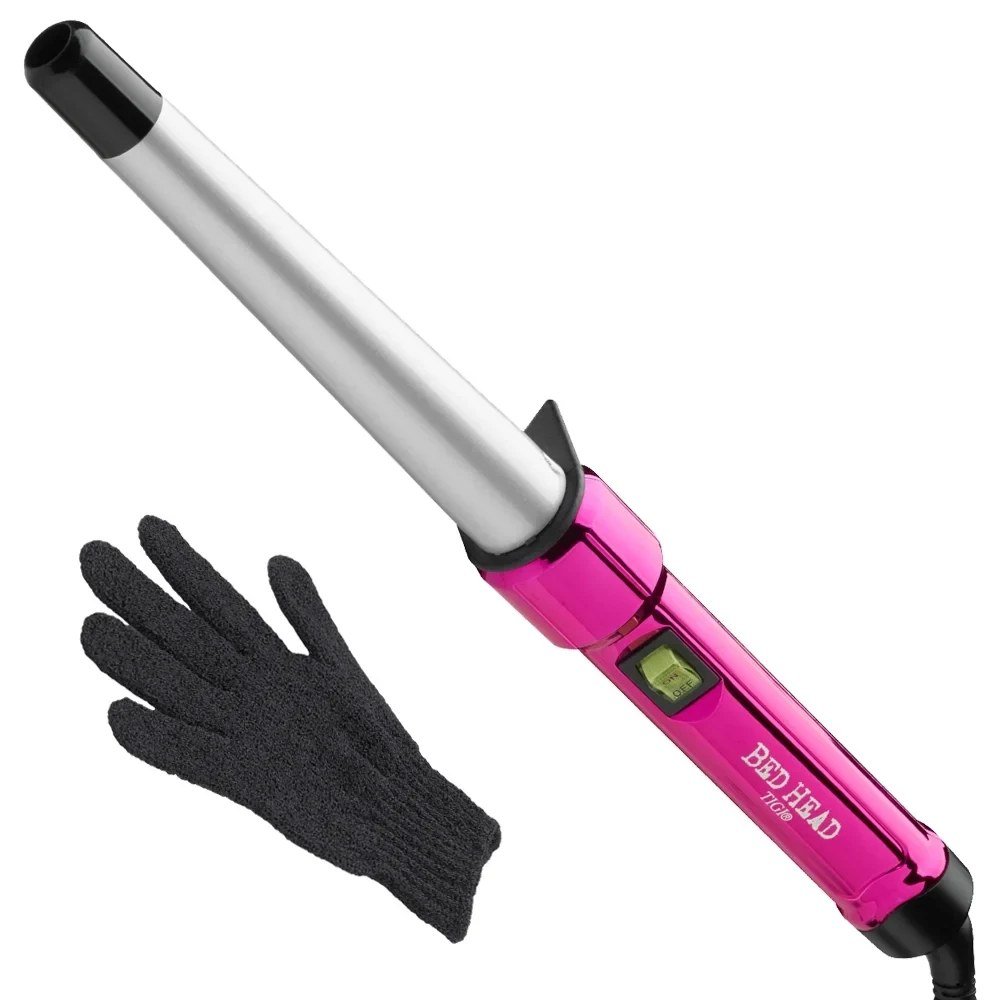
The wand option in this guide suits fine hair for a specific reason: no clamp means no clamp marks and no pressure point where thin hair gets crimped and weakened. The Remington Pearl is a tapered wand, wider at the base and narrower at the tip, so a single tool gives looser curls at the top of a section and tighter ones at the ends, the natural variation that makes waves look grown rather than manufactured. The pearl ceramic coating is smooth and even heating, the digital display shows the actual temperature, which fine hair users should keep in the lower half of the range, and a heat glove is included for the hand that wraps the hair. That wrapping is the trade off: wands demand technique, the first attempts are slow, and fingertips meet the barrel often enough that the glove is not optional. The price is gentle, the heat up is fast, and the results on fine hair, soft separated waves, are arguably the most modern finish in this guide. Readers who want clamp and go simplicity should stay with the irons above; readers willing to learn the wrap get the most versatile styling tool here for the least money.
Specifications
25 to 19 mm tapered wand
pearl ceramic coating
digital display up to 210 C per brand
clamp free styling
Pros
Clamp free, so no crimp marks on fragile hair
Tapered barrel gives naturally varied waves
Digital display keeps temperature honest
Cons
Technique takes practice
Heat glove is essential, not optional
Slower than a clamp iron at first
Who should buyyou want modern, varied waves and will learn wand technique
Who should skipyou want the simplest clamp and go styling
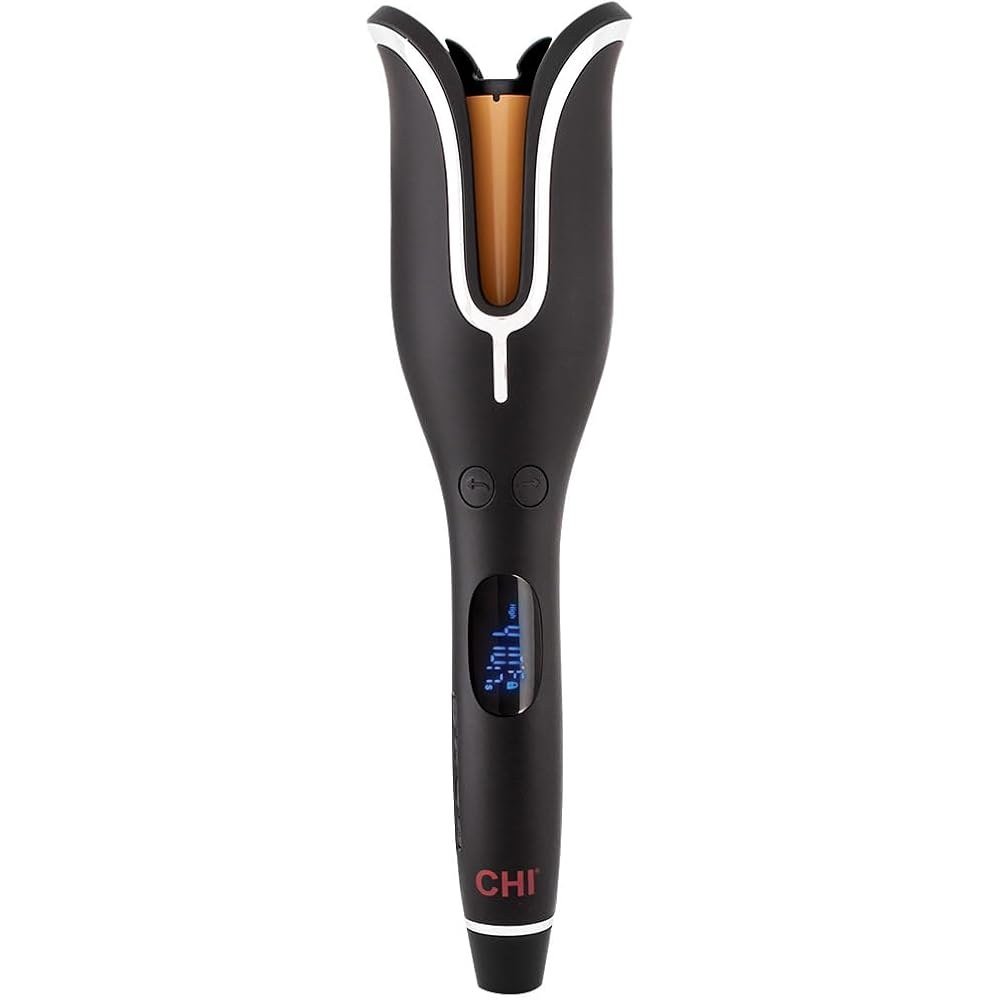
The Spin N Curl removes the two things that damage fine hair most: uneven technique and overlong heat contact. Hair is fed into a ceramic chamber, the device draws it in, heats it for a timed few seconds and beeps when the curl is done, then releases a consistent curl. Every section gets the same time at the same temperature, which is exactly the discipline fine hair needs and human hands rarely deliver. Temperature, timer and curl direction are adjustable, so fine hair can run the lowest heat and shortest time and still come out curled, because the chamber surrounds the hair with heat evenly. The tangle protection reverses if hair is fed badly, though fine hair should still be fed in small, clean, detangled sections, and very long hair can exceed the chamber’s comfort. The limits are real: it is bulky, it is slower per head than a skilled wand user, the curl style it makes is uniform rather than varied, and the price is mid premium. For beginners, for the heat anxious, and for anyone whose curls come out different on each side of the head, it is the most forgiving route to a full head of curls in this guide.
Specifications
25 mm chamber
automatic curl chamber
ceramic
adjustable temperature, time and direction per brand
tangle protection
Pros
Timed, even heat removes technique errors
Consistent curls on both sides of the head
Adjustable heat and time suit fine hair
Cons
Bulky and slower than a wand for skilled users
Uniform curl style only
Struggles with very long hair in one feed
Who should buyyou are a beginner or your curls come out unevenly by hand
Who should skipyou are fast and confident with a traditional iron
Curlipops is the playful budget wand, and it is included with the most specific caution in this guide: several Curlipops models run a single high heat rather than a dial, and fine hair users must check the exact model before buying, choosing only a version whose temperature their hair can take, or using the briefest contact times. With that said plainly, the wand itself is good fun and good value: a tourmaline ceramic tapered barrel that produces the loose, undone waves this brand is known for, heats quickly, and weighs almost nothing. On fine hair the tapered shape gives body at the root end of each section and a softer finish at the fragile ends, which is a flattering distribution. The finish it makes is deliberately messy, beachy rather than polished, and for many fine haired readers that texture is the point, because it makes thin hair look like more hair. The limits beyond the heat question are a shortish cord and a barrel that experienced users may find basic. Judged as an inexpensive route to textured waves, with the model check done first, it earns its place. Readers who want temperature certainty above all should take the Remington wand instead.
Specifications
Tapered wand
tourmaline ceramic coating
clamp free
single high heat style settings per model
budget price
Pros
Loose, textured waves make fine hair look fuller
Very light and quick to heat
Lowest priced wand in the guide
Cons
Some models have a single high heat, check before buying
Basic build and shortish cord
Finish is deliberately undone, not polished
Who should buyyou want beachy texture and volume on a budget
Who should skipyou need precise, adjustable low heat
BaBylissPRO Nano Titanium Long Barrel Curling Iron
Fine hair is not always short hair, and the long haired readers of this guide have a specific problem the standard barrels handle badly: a long section wrapped on a short barrel overlaps itself, so the outer layer insulates the inner one and the curl sets unevenly. This long barrel BaBylissPRO solves the geometry, giving a full long section a single layer wrap with even heat from root to tip. The same titanium cautions as its sibling apply in full: keep the setting at the low end, work quickly, never park the iron, and use heat protectant without exception. In return, long fine hair gets curls that are consistent along their whole length, in fewer, larger sections than a standard barrel allows, which reduces total heat exposure across the head. The build is professional, the heat recovery instant, and the extra length also keeps hands further from the face and neck, a small safety grace. It is a specialist tool and priced like one, pointless for short hair and transformative for the right reader. If your fine hair reaches well past the shoulders and your curls always set at the ends but not the middle, this is the iron designed for you.
Specifications
Extended length barrel
nano titanium surface
up to 232 C per brand
designed for long hair
professional build
Pros
Single layer wraps for even curls on long hair
Fewer sections means less total heat exposure
Professional build and instant recovery
Cons
Titanium demands low settings and fast work
Pointless expense for short hair
Long barrel needs storage space
Who should buyyour fine hair is long and curls set unevenly on standard barrels
Who should skipyour hair is short, or you are new to heat styling
The Curl X closes the guide as the long hair wave maker: a wide 32 mm ceramic barrel in an extra long length, built for loose, polished waves on long hair rather than tight curls. For fine long hair the wide barrel is a considered choice, because it styles in large sections with gentle bends, giving movement and body without the spiral set that can make thin hair look thinner once it drops. The ceramic surface and T3’s steady temperature control keep heat even along the extended barrel, and five settings keep the range within sane territory for fragile hair, with the lower two being where fine hair should live. The handling is balanced despite the length, the cool tip is generous, and the finish, smooth glossy waves, is the most editorial result in this guide. The trade offs are price, storage, and the fact that short hair simply cannot use a barrel this size. It also asks for heat protectant discipline like every iron here. Readers with long, fine hair who want waves rather than curls, and who found standard barrels slow and uneven, will recognise this as the tool the category made for them. It is a fitting premium close to the guide.
Specifications
32 mm barrel
extra long ceramic barrel
five heat settings per brand
for long hair and loose waves
Pros
Wide, long barrel makes loose waves on long hair fast
Even ceramic heat along the extended barrel
Gentle bends add body without tight spirals
Cons
Premium price
Unusable on short hair
Bulky to store and travel with
Who should buyyour fine hair is long and you want loose, glossy waves
Who should skipyour hair is short, or you want defined curls
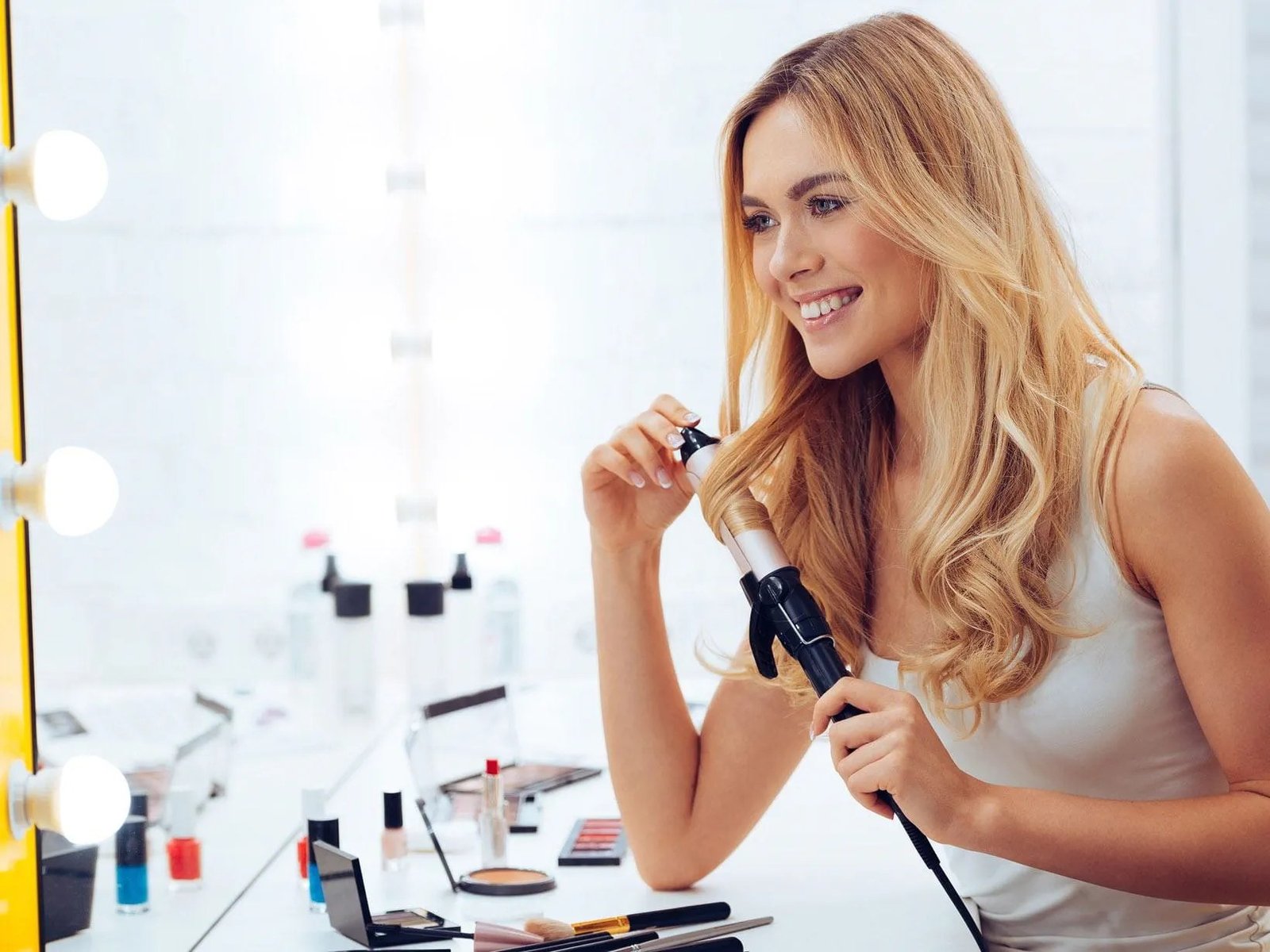
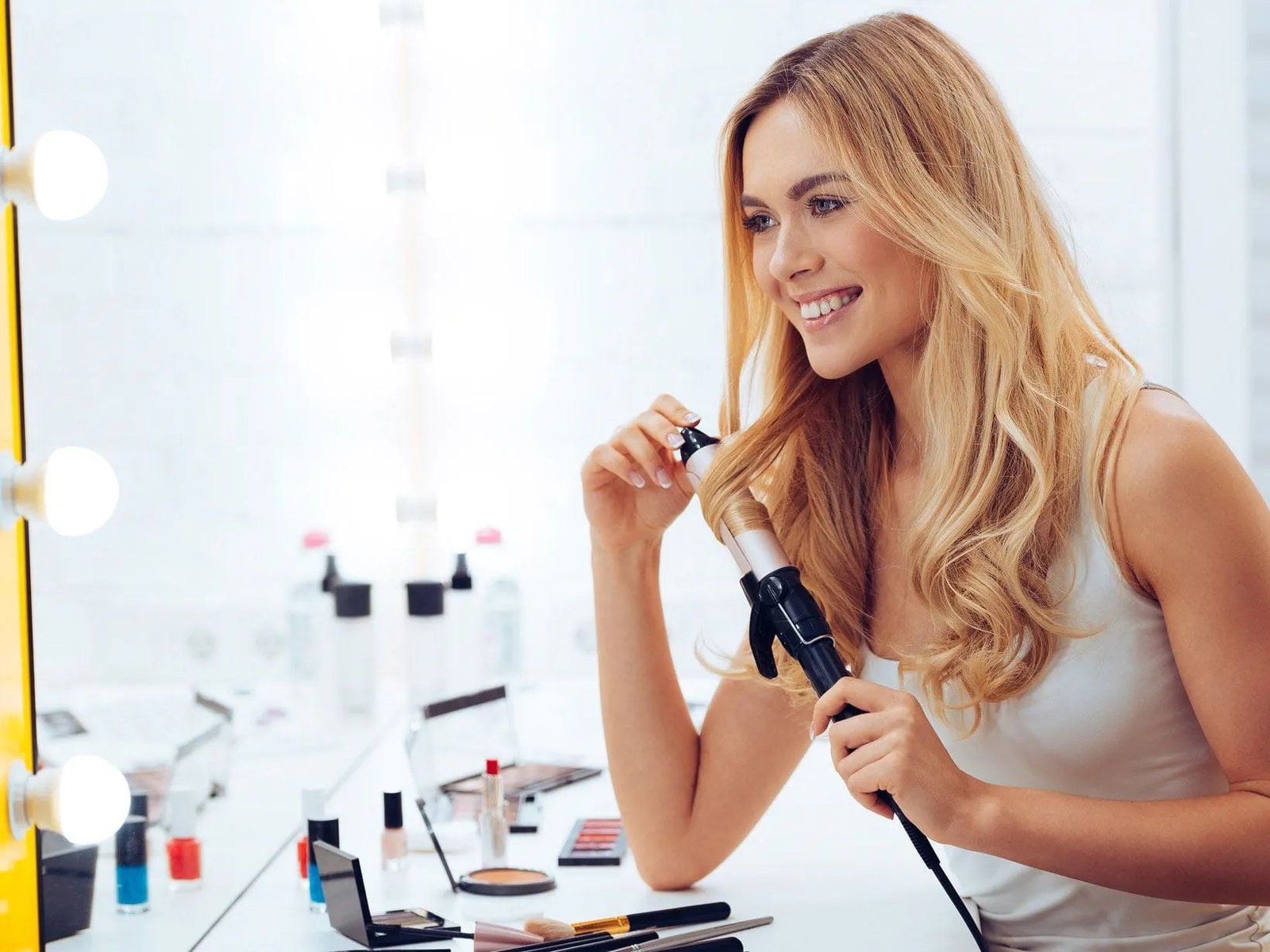
A clamped heated barrel that sets defined curls with a spring or Marcel clamp.
How it works: The clamp holds hair for even, lasting curls.
Look at the temperature range and how evenly the barrel heats, the barrel material (ceramic coatings distribute heat more gently than bare metal), and whether the clamp tension suits your hair thickness. Fine hair needs genuinely low settings, around the bottom of the dial; coarse hair needs sustained heat. A cool tip and swivel cord are small details that decide how usable the iron is at the back of the head.
Best for: Structured curls and users who like clamp control.
In your routine: Work on fully dry hair with heat protectant, in sections no wider than the barrel. Hold each curl for seconds, not until it smokes, release it into your palm and let it cool in shape before dressing it out; cooling is what sets the curl.
What Is Dyson Airwrap?
A branded multi styler that uses controlled airflow rather than extreme heat plates to curl, shape and smooth hair, with interchangeable barrels and brushes.
How it works: Its airflow wraps and dries hair around barrels using the Coanda effect, setting styles as it dries.
Best for: Styling with less heat exposure, and versatile blowout and curl looks from one tool.
The Downsides of Each
Curling Iron: Clamp can crease hair if used carelessly. The commonest way people make it worse: clamping the very ends first and cooking them longest, when ends are the oldest, driest hair
Dyson Airwrap: Premium pricing, a real learning curve, and curls that set softer than a curling iron’s.
Verdict by Use Case
Choose Curling Iron if structured curls and users who like clamp control. That is the use case where its strengths matter most, and where its main downside, clamp can crease hair if used carelessly.
Choose Dyson Airwrap if styling with less heat exposure, and versatile blowout and curl looks from one tool. That is the use case where its strengths matter most, and where its main downside, premium pricing, a real learning curve, and curls that set softer than a curling iron’s.
If your situation sits between the two, the deciding question is usually effort: which option fits the routine you will actually keep for the next three months? The better option on paper loses to the one you use consistently, in almost every hair tools category.
Can You Use Both?
In many hair tools routines the options complement each other: used at different times, on different days or for different areas, each covering the other’s weak ground. The cautions are overload and duplication: do not run both at full intensity in the same session, and do not pay twice for the same job. Introduce any combination gradually, one change at a time, so you can tell what each option is actually doing for you.
How to Decide
Work through three questions in order. First, which option matches your type: the table’s best for row is written for exactly this, and a mismatch there outweighs every other advantage. Second, which downside can you live with: every option in this comparison has one, and the right choice is usually the one whose downside does not touch your actual problem. Third, which fits the routine you already keep: the option that slots into your existing hair tools habits will still be in use in three months, and consistency is what turns a reasonable choice into a good result. If the answers point different ways, weight them in that order: type, downside, routine.
Which is better overall, curling iron or dyson airwrap?
There is no universal winner: the better option is the one matching your skin or hair type, routine and the use cases in the verdict section above. The difference table shows where each one genuinely leads, and the downsides section shows what each one costs you.
Can I use both in the same routine?
In many hair tools routines the two can complement each other, used at different times or for different areas, as long as the combination does not overload skin or hair. Introduce any combination gradually, and keep the total intensity at a level your routine can sustain.
Which is better for beginners?
Beginners usually do best with the option that has the gentler learning curve and the fewer downsides for their type, as set out in the table. Start there, and switch only if your needs change.
Which is better for delicate or damaged hair?
The option with the shorter, gentler downside list for your type: compare the downsides row in the table first, start with the milder option, and patch test or trial at the lowest intensity before committing. If your skin or hair is under a clinician’s care, their sequencing comes first.
Which works out cheaper over time?
Compare total cost, not shelf price: how much product or how many consumables each option uses per month, how long a unit lasts in real use, and what you would otherwise spend on the alternative. In this category the cheaper option per use is often the one people abandon, which makes it the most expensive of all.
How do I decide if I can only choose one?
Match the option to your type first, using the best for row in the table, then check that its main downside does not overlap with the problem you are trying to solve. Finally, pick the one that fits the routine you already keep, because three months of consistent use with the second best option beats three weeks of the best one.
What is the best curling iron for fine thin hair?
The buying guide Best Curling Iron for Fine Thin Hair compares the leading options for this exact need against the criteria that matter, with specifications, honest pros and cons, and a clear statement of who should skip each pick. It is linked from this page.
By Mirror & Glow Editorial Desk – November 23, 2026
How Long Should I Let My Curling Iron Heat Up? Work on fully dry hair with heat protectant, in sections no wider than the barrel. The full method, the mistakes to avoid, and where it fits in your routine.
By Mirror & Glow Editorial Desk – November 23, 2026
Look at the temperature range and how evenly the barrel heats. This guide applies that to how to curl hair with a large barrel curling iron: the method, the timing, and the traps to avoid.
By Mirror & Glow Editorial Desk – November 23, 2026
Is It Bad to Use a Curling Iron Everyday? Work on fully dry hair with heat protectant, in sections no wider than the barrel. The full method, the mistakes to avoid, and where it fits in your routine.