By Mirror & Glow Editorial Desk – November 23, 2026
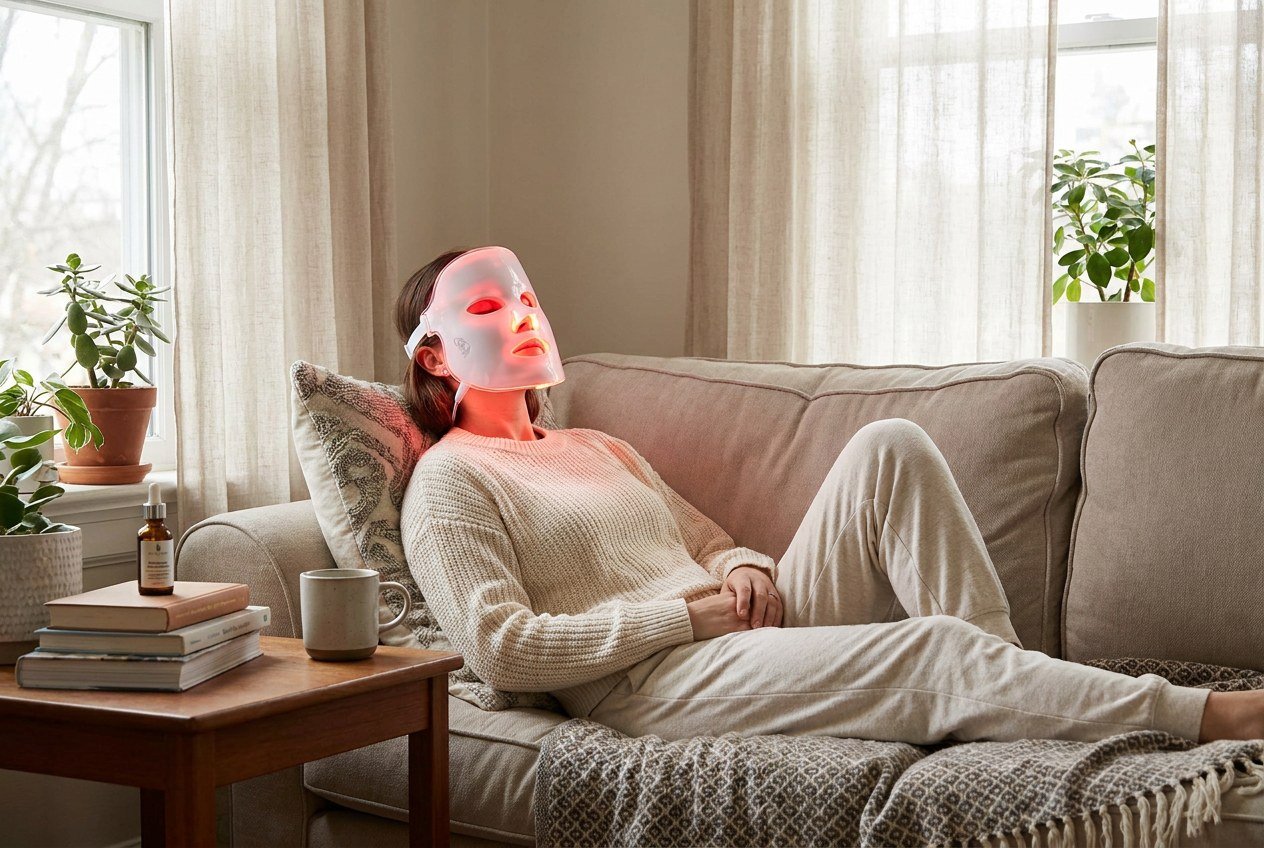
Woman reclining on a sofa wearing a glowing LED face and neck mask.
The short verdict on led face mask vs laser face mask: neither option wins for everyone. LED Face Mask, Laser Face Mask differ in how they work, who they suit and what they cost in effort and money terms. Each option is explained in depth below, the table sets the differences out plainly, and the verdict section matches each option to the readers it actually suits.
LED Face Mask vs Laser Face Mask Compared
Factor
LED Face Mask
Laser Face Mask
How it works
Lights held close to the skin deliver a repeatable dose per session.
Concentrated light diodes target small areas intensely.
Best for
Hands free, consistent light therapy as part of a long routine.
Readers comparing light therapy formats for home use.
Routine fit
Typical patterns are ten minute sessions, three to five times a week, on clean dry skin before serums. Consistency over eight to twelve weeks is the fair trial; photograph in the same light monthly rather than judging daily in the mirror.
Use one to three times a week according to type, on cleansed skin, before or instead of the serum step. Keep one mask that matches your main concern rather than a drawer of types used at random.
Cost level
Varies by brand and format; judge by the criteria in this guide rather than headline prices.
Varies by brand and format; judge by the criteria in this guide rather than headline prices.
Downsides
Gradual results over months, and not for every medical situation.
Less standardised, with safety and specification questions to check carefully.
The Products Behind This Comparison
Comparisons are settled by real products, so the full line up from the buying guide Best LED Face Mask for Acne and Anti Aging is set out here in the same detail: every product with its photo, full description, specifications, pros and cons, and who should buy or skip it.
Product
Standout Point
Key Specification
Dr Dennis Gross SpectraLite FaceWare ProTop Pick
Dedicated blue mode for breakouts beside red and infrared
Hard shell mask – red, infrared and blue light modes – 162 LEDs per brand – 3 minute sessions – FDA cleared per brand
For a guide that has to serve breakouts and fine lines at once, this is the mask built for the brief: it is the only design here with a dedicated blue mode for acne alongside red and infrared for the aging side, selectable separately or combined, so one device covers the two routines this page is about. The rigid shell sits off the skin on a strap, which matters for acne prone faces because nothing presses on active breakouts during a session, and the three minute treatment time is the shortest in the category, which is the real reason owners keep using it daily. The trade offs are honest ones: the shell fits some face shapes awkwardly and can feel front heavy, the off face design means light reaches the skin less directly than a contact mask, and it is among the most expensive masks in this guide. Readers whose acne is the main problem and aging the secondary one get the most from it; readers with no breakouts at all are paying for a blue mode they will rarely switch on, and the red only masks further down this list serve them for less. A practical routine note: the short sessions make it the easiest mask here to place after cleansing and before serums, and the brand’s guidance is to use it on clean, dry skin so nothing blocks the light. Keep the strap adjusted so the shell does not slide, since a moving mask changes the dose across the face.
Specifications
Hard shell mask
red, infrared and blue light modes
162 LEDs per brand
3 minute sessions
FDA cleared per brand
Pros
Dedicated blue mode for breakouts beside red and infrared
Shortest sessions here at 3 minutes
Shell sits off the skin, nothing presses on spots
Cons
Rigid shell fit divides opinion
Off face design delivers light less directly
Premium price for readers who may not need blue light
Who should buyyour skin breaks out and is also showing fine lines, and you want one device for both
Who should skipyou have no acne at all, where a red only mask does the aging job for less
CurrentBody’s mask has no blue light, so its place near the top of an acne and aging guide needs explaining: the red 633 nm and near infrared 830 nm pairing is the combination most studied for skin texture, tone and the look of fine lines, and red light is also the calming side of light therapy, the part of an acne routine concerned with the redness and recovery that follow breakouts rather than the bacteria behind them. The flexible silicone shell wraps close to the face, so light delivery is even, and the fit is the most comfortable here for lying down sessions. What it will not do is target acne bacteria, and readers whose breakouts are active and frequent should read it as the aging and recovery half of a routine, paired with their existing acne care, not as a breakout treatment in itself. Sessions run ten minutes, several times a week, and the controller is rechargeable. It leads this guide’s red only options on wavelength choice and fit, and for the many readers whose acne is occasional but whose lines are the daily concern, it is the more honest buy than a blue equipped mask bought for a mode used twice a month.
Specifications
Flexible silicone mask
red 633 nm and near infrared 830 nm
132 LEDs per brand
10 minute sessions
rechargeable handheld controller
Pros
The most studied wavelength pairing for texture and lines
Flexible shell gives close, even light contact
Red light suits the recovery side of an acne routine
Cons
No blue light, so no direct action on acne bacteria
Ten minute sessions, several times a week
Premium pricing beside budget colour masks
Who should buyyour breakouts are occasional and your main concern is lines, texture and post breakout redness
Who should skipyou want blue light aimed at active acne as part of the device itself
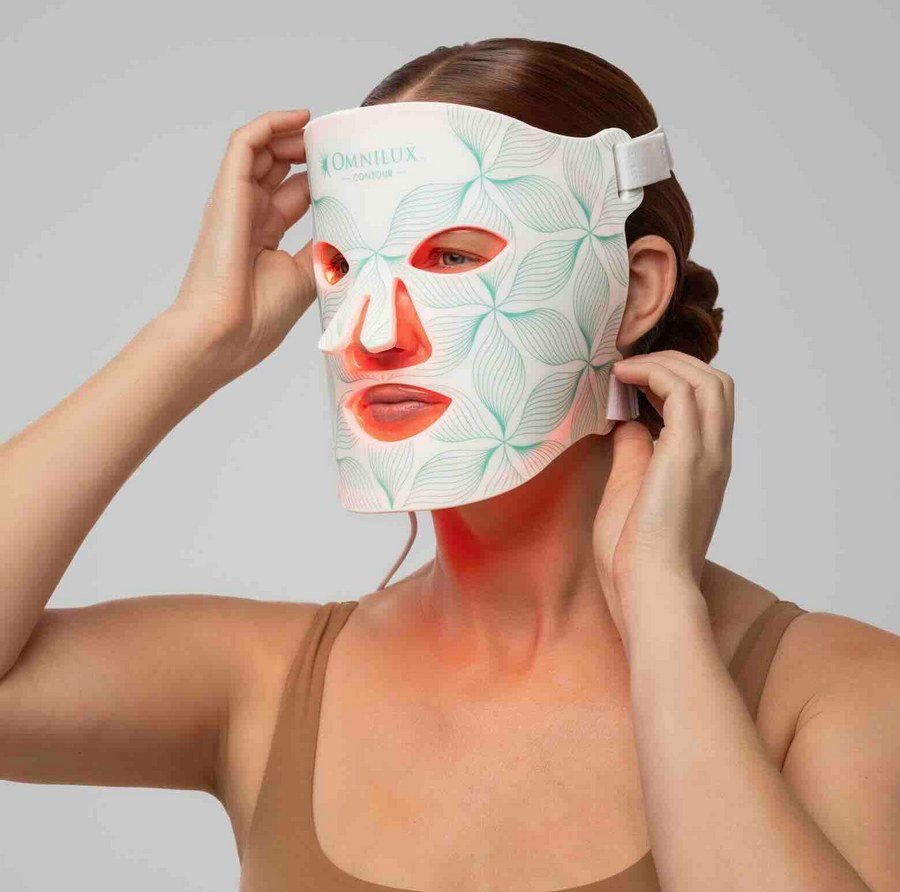
Omnilux comes from the professional light therapy world, and Contour Face applies the same red 633 nm and near infrared 830 nm pairing as the CurrentBody in a soft silicone mask with two straps and an automatic ten minute programme. Its case in this guide mirrors the CurrentBody’s: it is a red light device, so it works on the aging and recovery side of the acne and aging question, supporting skin through the marks and uneven tone breakouts leave behind rather than preventing the breakouts themselves. Owners rate the fit highly, the mask is light, the straps hold it without pressure points, and the single programme removes every decision, which suits readers who want a routine they cannot set up wrongly. The limits are the same as any single mode mask: no blue light, no adjustability, and a price in the clinical tier. Against the CurrentBody it is close to a coin toss decided by fit and which brand’s evidence base a reader trusts more; against blue equipped rivals it wins on wavelength discipline and loses on acne coverage. Judge it as a specialist, and it is an excellent one. Ownership details: the controller charges over USB, the mask wipes clean with a damp cloth, and the soft shell packs flat, which makes it the clinical option most likely to travel with its owner. Sessions sit comfortably at the end of an evening routine, and the automatic shut off means falling asleep in it wastes nothing but time.
Specifications
Flexible silicone mask
red 633 nm and near infrared 830 nm
132 LEDs per brand
10 minute automatic sessions
FDA cleared per brand
Pros
Professional light therapy heritage behind the home mask
Same studied red and near infrared pairing as the leader
One automatic programme, nothing to set up wrongly
Cons
No blue mode for active breakouts
No settings to adjust as skin changes
Clinical tier pricing
Who should buyyou want a clinically grounded red light mask and your acne is managed by the rest of your routine
Who should skipyou need the device itself to work on active acne
Shark’s entry is the appliance maker’s answer to this guide’s double brief: named programmes on a display controller separate the blemish routine from the aging routine, so blue light days and red light days are chosen for you rather than guessed, and its signature extra, chilled under eye pads, depuffs the area where tired, aging skin shows first. For acne and aging readers that structure is genuinely useful, because the common failure of multi mode masks is owners running everything at once on no schedule; CryoGlow’s programmes impose the schedule. The hard shell is heavier than the silicone masks and the fit suits some faces better than others, the cooling pads are a comfort feature rather than a treatment, and Shark is newer to light therapy than the clinical brands, so its evidence base is thinner even where its engineering is strong. It earns its place here as the most guided route into dual concern light therapy, and for readers who know they will not research protocols, the guidance is worth more than a spec sheet advantage they would never configure. Two routine points complete the picture. The controller display counts sessions and programme progress, which helps owners actually alternate the blemish and firming programmes instead of defaulting to one, and the cooling pads remove and rinse clean. Store the mask on its stand rather than in a drawer, since the shell and pads keep their shape better out of a pile.
Specifications
Hard shell mask
red, blue and infrared LED programmes per brand
under eye cooling pads
programme controller with display
Pros
Named programmes separate blemish and aging routines
Blue and red modes both present for the dual brief
Under eye cooling tackles the puffiness aging shows first
Cons
Hard shell is heavier than silicone rivals
Cooling is comfort, not treatment
Newer to light therapy than the clinical brands
Who should buyyou want the device to organise your blue and red sessions for you
Who should skipyou prefer a light flexible mask you can wear while moving around
Qure starts from the observation that a face with acne and aging rarely has both in the same place: the chin breaks out while the forehead lines and the cheeks lose firmness. The Q-Rejuvalight Pro therefore splits the mask into zones set from a phone app, with five light modes assigned area by area, so blue can run on the chin while red runs everywhere else in the same short session. For this guide’s exact reader that zoning is the most tailored answer available, and no other mask here attempts it. The costs of the cleverness are real: the app is one more thing to maintain and charge around, zone boundaries are approximate on a flexible mask, and a smaller brand means a thinner long term support picture than the clinical names. Sessions are short and daily, which suits the zoning idea. Readers with genuinely different concerns in different zones get something here that exists nowhere else in the list; readers whose concerns are evenly spread are paying for complexity a simpler dual mode mask covers. Setup takes a few minutes the first time: map your zones honestly, because the temptation is to assign blue everywhere a spot has ever appeared rather than where breakouts actually recur. After that the daily sessions are short, the mask charges over USB, and the app keeps the zone plan until you change it. Recheck the map every month or so, since breakouts migrate and last season’s chin plan may not match this season’s forehead.
Specifications
Flexible mask
five light modes including red and blue per brand
app controlled treatment zones
short daily sessions per brand
Pros
Zone control matches different concerns in different areas
Red and blue among five modes
Short daily sessions fit a routine
Cons
App dependence for full control
Zone edges are approximate on a soft mask
Smaller brand, thinner support history
Who should buyyour breakouts and your lines live in different zones of your face
Who should skipyou want one programme and no app between you and the session
Therabody built its name on percussive therapy and brought the same more is more thinking to light: a substantial hard shell combining red, blue and infrared light with gentle vibration around the eye and scalp contact points, organised into a guided nine minute routine that moves through the modes in sequence. For the acne and aging reader the light trio covers both concerns without choosing settings, and the vibration makes the routine the most relaxing here, which is not a trivial benefit in a category where consistency decides results. The honest debits: it is the heaviest style of mask in this guide, the vibration is a comfort feature with no skin outcome claimed for it, the guided routine cannot be shortened to a blue only day when a breakout flares, and the price sits at the top of the category. It suits readers who want a single fixed ritual that covers everything and who find a substantial device reassuring rather than cumbersome; everyone else can cover the same light with lighter, cheaper masks. Routine placement is the end of the day, since the guided sequence is long enough to double as a wind down, and the mask’s weight makes lying back the natural position rather than walking around. The contact points wipe clean, the battery covers several full routines per charge, and owners who wear it while reading should expect the vibration to be felt more than the light, which is invisible in use apart from the glow at the edges.
Specifications
Hard shell mask
red, blue and infrared light per brand
vibration therapy at the eyes and scalp line
guided 9 minute full routine per brand
Pros
Red, blue and infrared in one guided routine
Nothing to configure, the sequence is built in
Vibration makes sessions genuinely relaxing
Cons
Heaviest mask style in this guide
Routine cannot be split into single mode days
Top of category pricing
Who should buyyou want one fixed nine minute ritual covering breakouts and lines together
Who should skipyou want short sessions or single mode days aimed at one concern
HigherDOSE is the wellness brand’s take on the red light mask: flexible silicone, red at 630 nm with near infrared at 850 nm, the slightly deeper reaching infrared wavelength, a cordless controller and the most complete strap set here, including a chin strap that keeps the mask seated through a moving morning routine. In this guide it is firmly an aging side device: there is no blue light, so its acne contribution is limited to the general red light role in calm, recovery and tone. What it does better than the other red only masks is fit security and wearability while doing other things, and for readers whose sessions happen while making tea rather than lying down, that decides whether the habit survives. The wavelength pair is marginally less studied than the 633 and 830 pairing at the top of this list, the bright blue shell is a love it or leave it look, and the price is premium for a single mode device. A strong lifestyle fit, honestly labelled as half of this guide’s brief. The chin strap earns its mention: it is the difference between a mask that stays dosed evenly across the jaw and one that slides down it mid session, and jaw coverage is where aging routines are won or lost. The controller is pocket sized, a charge lasts through a week of sessions, and the silicone shell tolerates being wiped down daily without the finish degrading.
Specifications
Flexible silicone mask
red 630 nm and near infrared 850 nm per brand
cordless with handheld controller
adjustable straps including a chin strap
Pros
Chin strap keeps it seated during moving routines
Cordless controller, no tether to a socket
Near infrared at 850 nm reaches slightly deeper
Cons
No blue light for the acne side of the brief
Wavelength pair less studied than 633 and 830 nm
Premium price for a single mode mask
Who should buyyour sessions happen on your feet during a morning routine, and aging is the priority
Who should skipyou are buying primarily to treat active breakouts
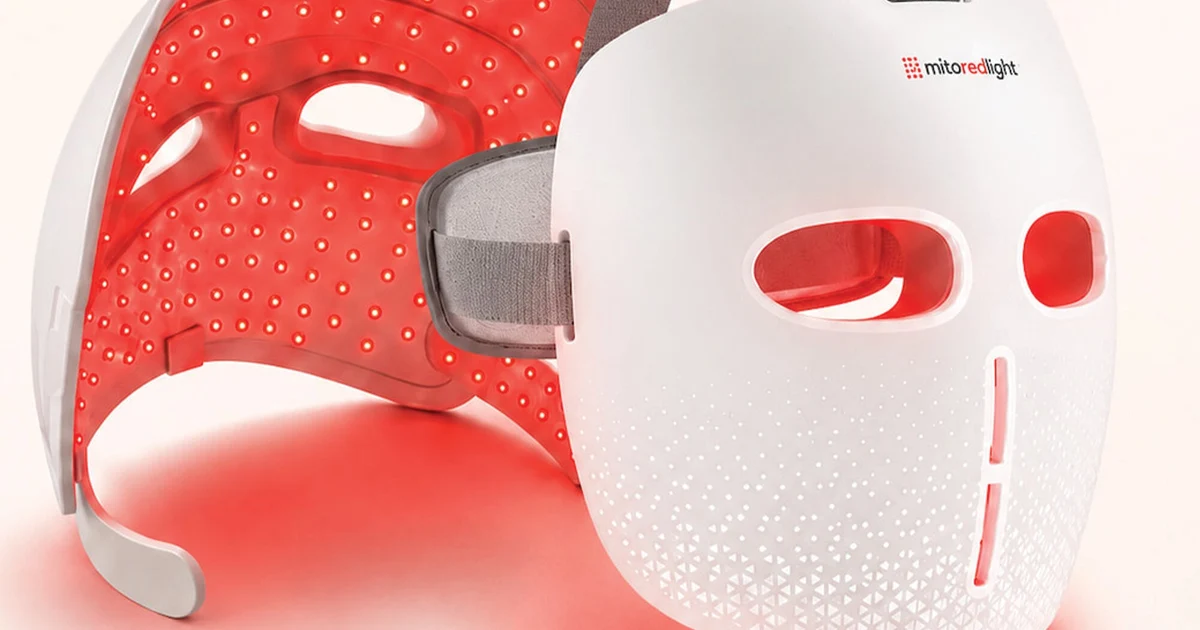
Mito Red Light Therapy built its reputation on panels and on publishing its numbers, and MitoGLOW carries that approach into a mask: the wavelength pairing is the talking point, red at 660 nm rather than the 630 nm most masks use, with near infrared at 850 nm, a combination aimed at depth. Like the other red only entries it serves the aging and recovery side of this guide and offers nothing aimed at acne bacteria. The hard shell is a plainer, more utilitarian object than the lifestyle masks, the controller is wired, and the brand’s strength is specification transparency rather than design polish. Its buyers are readers who cross check wavelengths before they buy and who are comfortable that the evidence for 660 over 633 is a reasonable bet rather than a settled result. For everyone else the clinical pair at the top of the list carry the stronger published base. It earns its place as the specification led alternative, priced below the big names, with the acne caveat stated as plainly as for every red only mask here. Practical ownership: the wired controller sets session length and starts the timer, the shell sits on a strap that adjusts at the back, and the plain finish shrugs off daily handling. Readers comparing panels from the same brand should note the mask’s job is convenience and coverage of the face’s curves, not raw output, and judged on that job its price makes sense beside the design led rivals.
Specifications
Hard shell mask
red 660 nm and near infrared 850 nm per brand
wired controller with timer
adjustable head strap
Pros
Published wavelengths, a transparency first brand
660 nm red aimed at deeper reach
Priced below the clinical leaders
Cons
No blue mode, aging side only
Wired controller
Utilitarian shell, minimal comfort features
Who should buyyou shop by published specification and want the deeper red wavelength
Who should skipyou want blue light included for breakouts
The budget route into genuine dual concern coverage: Project E Beauty’s shell runs seven colours, and the two that matter here, red for the aging side and blue for breakouts, are both present, at a price far below the clinical brands. It also treats the neck as standard with a shaped chest and neck piece, the area where aging shows and most masks stop at the jaw. The compromises are the expected ones at the price: output is modest beside the leaders, the wired remote feels dated, the fit is one size optimism, and the extra colours beyond red and blue rest on thin evidence and should be read as decoration. Judged strictly on this guide’s question, though, it is the cheapest honest way to own both relevant lights, and for a reader deciding whether light therapy fits their life at all, a season with this answers the question before a clinical priced commitment. That trial role is a legitimate reason to buy it, stated without pretending it matches the leaders’ output. A season of honest use looks like this: three to five sessions a week, red on most days and blue on breakout days, with the neck piece fitted whenever the face is treated, since the neck shows age in parallel and costs no extra time. The wired remote keeps it a lie down device, and the shell benefits from being stored on a hook rather than stacked under other kit. At this price, that routine is the value case in full.
Specifications
Hard shell mask with neck attachment
seven colour light modes per brand
wired remote with timer
sized for face and neck coverage
Pros
Red and blue both included at a budget price
Neck and chest piece included as standard
A low cost way to trial light therapy
Cons
Modest output beside the clinical masks
Wired remote and basic fit
Extra colours rest on thin evidence
Who should buyyou want both lights and neck coverage without clinical pricing
Who should skipyou want the strongest output and the most studied wavelengths
Aphrona’s Moonlight has been the inexpensive doorway into LED masks for years: a rigid white shell, three colours chosen on a wired remote, red for the aging side of this guide, blue for breakouts, and yellow as the brand’s tone mode. It covers the dual brief on paper at the lowest price here, and its long sales history means its limitations are well documented rather than discovered: the shell is basic, the fit is unforgiving on smaller and larger faces, the remote is wired, and light output is gentle beside everything above it on this page. It is best understood as a first mask, bought to learn whether the routine suits you, with the honest expectation that regular users graduate to better fitting, stronger devices. Readers who already know they will use light therapy several times a week should start higher up this list and spend once. Readers genuinely unsure get a fair trial here, with both of the colours this guide cares about included, which is more than some mid priced single mode masks offer. Usage guidance for buyers: keep sessions to the timer rather than doubling them to compensate for the gentle output, since consistency across weeks is what light therapy rewards, and alternate red and blue days instead of stacking colours in one sitting. The shell wipes clean, the remote’s buttons are large enough to use without sitting up, and a spare drawer hook keeps the wired lead untangled. As a learning device it teaches the routine cheaply, which is its whole purpose.
Specifications
Hard shell mask
three light colours, red, blue and yellow per brand
wired remote control
the long running budget option
Pros
Lowest price here with red and blue both included
Simple remote, nothing to learn
Long running model with well known limits
Cons
Basic rigid shell with an unforgiving fit
Gentle output beside the rest of the guide
Wired remote feels dated
Who should buyyou want the cheapest trial of red and blue light before committing
Who should skipyou already know light therapy suits you and want a mask for years
A wearable mask using red, near infrared and sometimes blue LEDs at stated wavelengths for skin support over a course of sessions.
How it works: Lights held close to the skin deliver a repeatable dose per session.
Wavelength and irradiance are the published specs to compare: red light around the 630s nanometres and near infrared in the 800s are the commonly studied ranges for skin, and blue light targets breakout bacteria at the surface. What matters is that the mask states its wavelengths and sits close to the skin; light dose falls fast with distance. Eye protection and contraindications in the manual, such as light sensitive medication, are part of the product, not fine print.
Best for: Hands free, consistent light therapy as part of a long routine.
In your routine: Typical patterns are ten minute sessions, three to five times a week, on clean dry skin before serums. Consistency over eight to twelve weeks is the fair trial; photograph in the same light monthly rather than judging daily in the mirror.
What Is Laser Face Mask?
A mask format claiming laser or laser like light diodes, a rarer and less standardised category than LED masks.
How it works: Concentrated light diodes target small areas intensely.
Sheet masks deliver a single heavy dose of water based essence under occlusion, which plumps temporarily and photographs well. Cream and gel masks soothe and hydrate without the sheet. Overnight masks are rich moisturisers by another name. What masks share is transience: effects last hours to a day or two, which is why they suit pre event preparation and weekly maintenance rather than fixing concerns, which daily actives do.
Best for: Readers comparing light therapy formats for home use.
In your routine: Use one to three times a week according to type, on cleansed skin, before or instead of the serum step. Keep one mask that matches your main concern rather than a drawer of types used at random.
The Downsides of Each
LED Face Mask: Gradual results over months, and not for every medical situation. The commonest way people make it worse: expecting visible change in two weeks and abandoning a device whose timeline is a full course
Laser Face Mask: Less standardised, with safety and specification questions to check carefully. The commonest way people make it worse: masking daily with exfoliating types and irritating the barrier in the name of self care
Verdict by Use Case
Choose LED Face Mask if hands free, consistent light therapy as part of a long routine. That is the use case where its strengths matter most, and where its main downside, gradual results over months, and not for every medical situation.
Choose Laser Face Mask if readers comparing light therapy formats for home use. That is the use case where its strengths matter most, and where its main downside, less standardised, with safety and specification questions to check carefully.
If your situation sits between the two, the deciding question is usually effort: which option fits the routine you will actually keep for the next three months? The better option on paper loses to the one you use consistently, in almost every beauty devices category.
Can You Use Both?
In many beauty devices routines the options complement each other: used at different times, on different days or for different areas, each covering the other’s weak ground. The cautions are overload and duplication: do not run both at full intensity in the same session, and do not pay twice for the same job. Introduce any combination gradually, one change at a time, so you can tell what each option is actually doing for you.
How to Decide
Work through three questions in order. First, which option matches your type: the table’s best for row is written for exactly this, and a mismatch there outweighs every other advantage. Second, which downside can you live with: every option in this comparison has one, and the right choice is usually the one whose downside does not touch your actual problem. Third, which fits the routine you already keep: the option that slots into your existing beauty devices habits will still be in use in three months, and consistency is what turns a reasonable choice into a good result. If the answers point different ways, weight them in that order: type, downside, routine.
Which is better overall, led face mask or laser face mask?
There is no universal winner: the better option is the one matching your skin or hair type, routine and the use cases in the verdict section above. The difference table shows where each one genuinely leads, and the downsides section shows what each one costs you.
Can I use both in the same routine?
In many beauty devices routines the two can complement each other, used at different times or for different areas, as long as the combination does not overload skin or hair. Introduce any combination gradually, and keep the total intensity at a level your routine can sustain.
Which is better for beginners?
Beginners usually do best with the option that has the gentler learning curve and the fewer downsides for their type, as set out in the table. Start there, and switch only if your needs change.
Which is better for sensitive skin?
The option with the shorter, gentler downside list for your type: compare the downsides row in the table first, start with the milder option, and patch test or trial at the lowest intensity before committing. If your skin or hair is under a clinician’s care, their sequencing comes first.
Which works out cheaper over time?
Compare total cost, not shelf price: how much product or how many consumables each option uses per month, how long a unit lasts in real use, and what you would otherwise spend on the alternative. In this category the cheaper option per use is often the one people abandon, which makes it the most expensive of all.
How do I decide if I can only choose one?
Match the option to your type first, using the best for row in the table, then check that its main downside does not overlap with the problem you are trying to solve. Finally, pick the one that fits the routine you already keep, because three months of consistent use with the second best option beats three weeks of the best one.
What is the best led face mask for acne and anti aging?
The buying guide Best LED Face Mask for Acne and Anti Aging compares the leading options for this exact need against the criteria that matter, with specifications, honest pros and cons, and a clear statement of who should skip each pick. It is linked from this page.
By Mirror & Glow Editorial Desk – November 23, 2026
The direct answer to when to use led face mask in routine for wrinkles, with the background explained: an LED face mask is a wearable light therapy device using red. Step by step method, routine placement and FAQs.
By Mirror & Glow Editorial Desk – November 23, 2026
Can You Use LED Face Mask While Using Tretinoin? An LED face mask is a wearable light therapy device using red — the guide explains the why, the step by step how, and what to do when it does not work.
By Mirror & Glow Editorial Desk – November 23, 2026
Can You Use LED Face Mask with Wet Hair? An LED face mask is a wearable light therapy device using red — the guide explains the why, the step by step how, and what to do when it does not work.