By Mirror & Glow Editorial Desk – November 23, 2026
Woman with a towel on her head applying deodorant in front of a bathroom mirror.
The short verdict on natural deodorant vs aluminum free: neither option wins for everyone. Natural Deodorant, Aluminum Free differ in how they work, who they suit and what they cost in effort and money terms. Each option is explained in depth below, the table sets the differences out plainly, and the verdict section matches each option to the readers it actually suits.
Natural Deodorant vs Aluminum Free Compared
Factor
Natural Deodorant
Aluminum Free
How it works
It limits the bacteria that make sweat smell, without blocking sweat.
Without aluminium there is no sweat gland blocking action.
Best for
Odour control for people avoiding antiperspirant ingredients.
Shoppers specifically avoiding aluminium in their routine.
Routine fit
Apply to clean, completely dry underarms, a thin layer, and let it settle before dressing. Reapply after exercise if needed. If a rash appears, stop and switch the active base rather than pushing through, since underarm skin does not toughen up.
Fits a standard body care routine; the matching buying guide below gives the step by step for this category.
Cost level
Varies by brand and format; judge by the criteria in this guide rather than headline prices.
Varies by brand and format; judge by the criteria in this guide rather than headline prices.
Downsides
It does not reduce wetness at all.
It is a description, not a performance advantage, and says nothing about irritation.
The Products Behind This Comparison
Comparisons are settled by real products, so the full line up from the buying guide Best Natural Deodorant for Women Who Sweat a Lot is set out here in the same detail: every product with its photo, full description, specifications, pros and cons, and who should buy or skip it.
Product
Standout Point
Key Specification
Lume Whole Body Deodorant Invisible Cream (Lavender Sage)Top Pick
Strongest odour control claim in the guide
85 g tube – mandelic acid formula – aluminium free and baking soda free – cream rubbed in with fingertips – whole body use
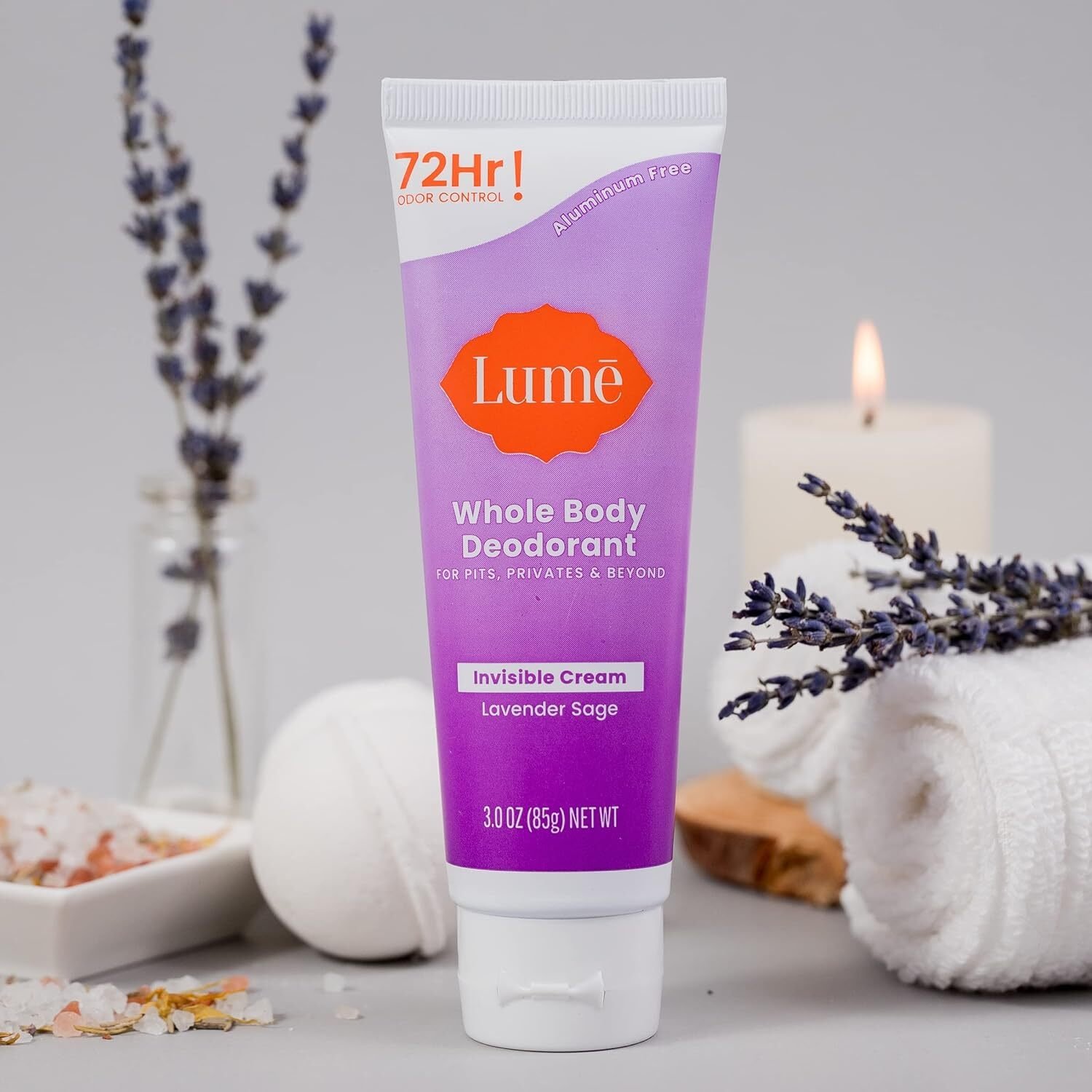
Lume Whole Body Deodorant Invisible Cream (Lavender Sage)
Start with the honest frame for this whole guide: no natural deodorant stops sweat, because stopping sweat is what aluminium antiperspirants do. What separates the options for a heavy sweater is how long odour stays controlled while the sweat flows, and that is where Lume has the strongest case. Its cream is powered by mandelic acid, which lowers skin pH so odour causing bacteria struggle to grow, and the brand built its name on clinical testing behind a 72 hour odour control claim that no stick here attempts. The cream format helps heavy sweaters specifically: rubbed in with fingertips, it coats the whole underarm surface evenly, including the edges sticks miss, and it can go anywhere sweat gathers, under the bust or in skin folds, not just the pits. The Lavender Sage scent is soft and herbal rather than sweet. The downsides are real. Application with fingers puts some people off, the cream must dry before dressing or it can transfer, the price per tube is high, and mandelic acid on freshly shaved underarms can sting sharply. There is also an adjustment week for many switchers. For the reader whose priority is maximum hours of odour control without aluminium, it is still the one to beat.
Specifications
85 g tube
mandelic acid formula
aluminium free and baking soda free
cream rubbed in with fingertips
whole body use
Pros
Strongest odour control claim in the guide
Cream covers the full underarm, and works body wide
No baking soda, so fewer soda rashes
Cons
Finger application is not for everyone
Must dry before dressing
Stings on freshly shaved skin
Who should buyyou sweat heavily and want the longest odour control a natural formula offers, anywhere on the body
Who should skipyou want a stick you can apply in seconds, or your underarms are shaved daily and acid sting is a deal breaker
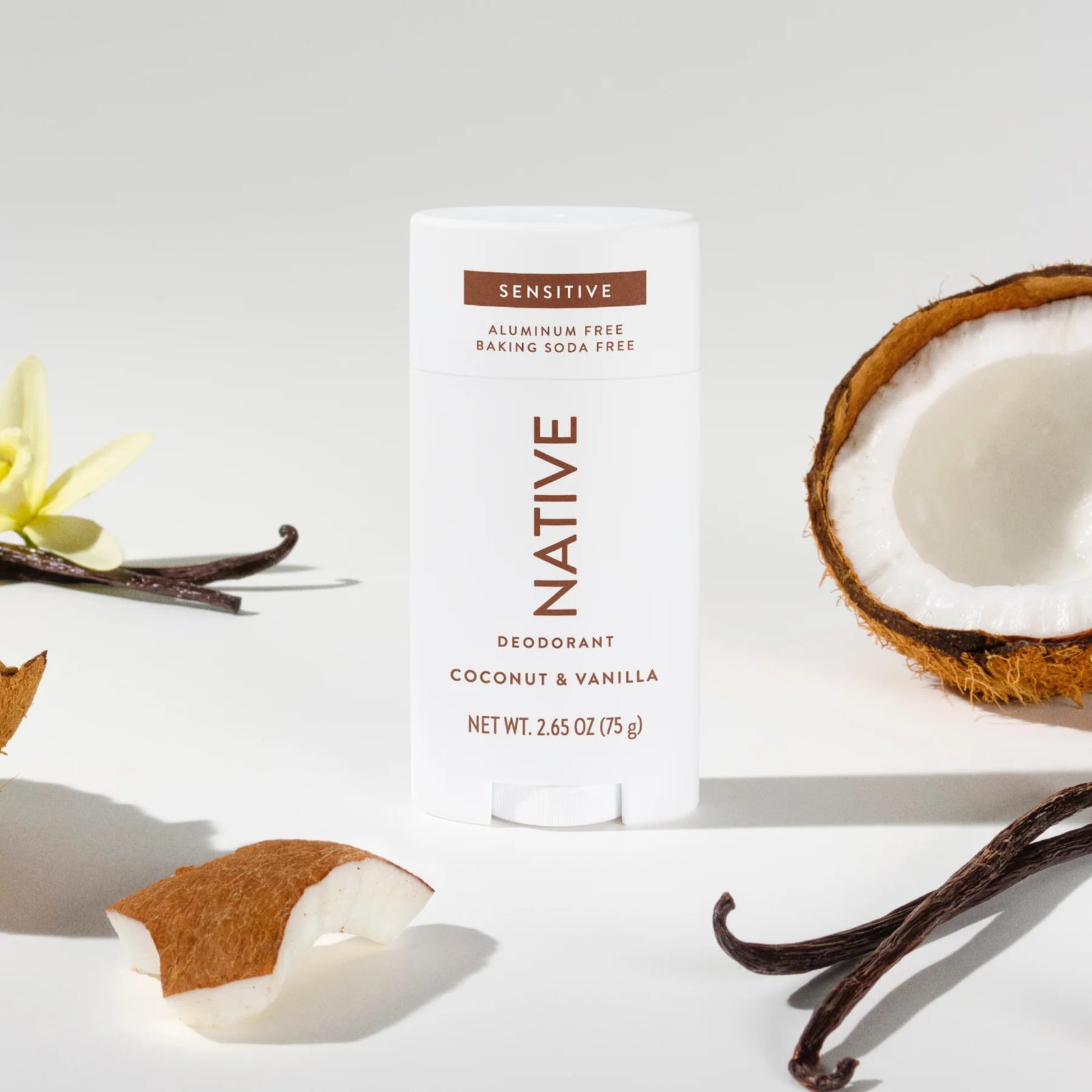
Native is the natural deodorant most switchers start with, and this Sensitive version is the one heavy sweaters with reactive underarms should pick. The standard Native formula leans on baking soda, which is an effective odour neutraliser and also the commonest cause of the red, itchy rash that makes people abandon natural deodorant in week two. The Sensitive line removes it, relying on tapioca starch to take the edge off wetness feel, magnesium hydroxide for odour, and a coconut oil and shea butter base that glides without dragging. Coconut & Vanilla is the signature scent, warm and sweet without turning sugary, and it holds up respectably through a working day. Respectably is the honest word for performance: for a heavy sweater this is a reapply at midday product in summer, not an apply and forget one, and the creamy base can leave marks on dark fabrics if you dress before it settles. It is also one of the pricier drugstore sticks. What it offers in return is the smoothest on ramp in the guide: no rash roulette, no gritty texture, a scent people genuinely like, and availability everywhere. For many heavy sweaters, a comfortable stick they reapply beats a stronger one they quit.
Specifications
75 g stick
baking soda free and aluminium free
coconut oil and shea butter base
tapioca starch for wetness feel
naturally derived fragrance
Pros
Baking soda free, so kind to reactive underarms
Glides smoothly and smells genuinely good
Tapioca starch softens the wet feeling
Cons
Heavy sweaters will reapply on hot days
Creamy base can mark dark clothes
Premium price for a drugstore stick
Who should buyyou sweat a lot and have reacted to baking soda deodorants before, or you are switching from antiperspirant for the first time
Who should skipyou need one morning application to survive a long, hot, physical day untouched
Schmidt’s Charcoal + Magnesium is the heavy duty formula of the natural stick world, built for people whose main problem is odour breaking through by early afternoon. The charcoal is there to absorb moisture and odour at the surface, the magnesium and baking soda neutralise the acids bacteria produce, and arrowroot powder adds dry matter against the wet feeling. It is a dense, committed formula, and in wear it behaves like one: this is the stick heavy sweaters most often name as the natural option that got them through a full day. The scent is a clean, slightly mineral freshness rather than a perfume, which suits readers who find sweet natural deodorants cloying by midday. The trade offs are texture and tolerance. The stick is firm and can feel gritty if applied heavily, it needs a few strokes warmed against the skin to spread, and the baking soda content makes it one of the likelier formulas here to irritate sensitive underarms, especially after shaving. It can also leave greyish residue on black tops if over applied. Used with a light hand on tolerant skin, though, it delivers the closest thing to antiperspirant confidence the natural shelf offers. A few seconds held against the warmth of the skin makes the first strokes smoother.
Specifications
92 g stick
activated charcoal and magnesium hydroxide
baking soda based
arrowroot powder
EcoCert Cosmos Natural certified
Pros
Strongest stick formula here for odour
Charcoal and arrowroot fight the wet feeling
Clean, neutral scent that does not turn sweet
Cons
Baking soda can irritate sensitive underarms
Firm, gritty feel if over applied
Can leave residue on dark fabrics
Who should buyodour breakthrough is your main problem and your underarm skin is not sensitive
Who should skipyou have reacted to baking soda before, or you shave daily and need a gentler formula
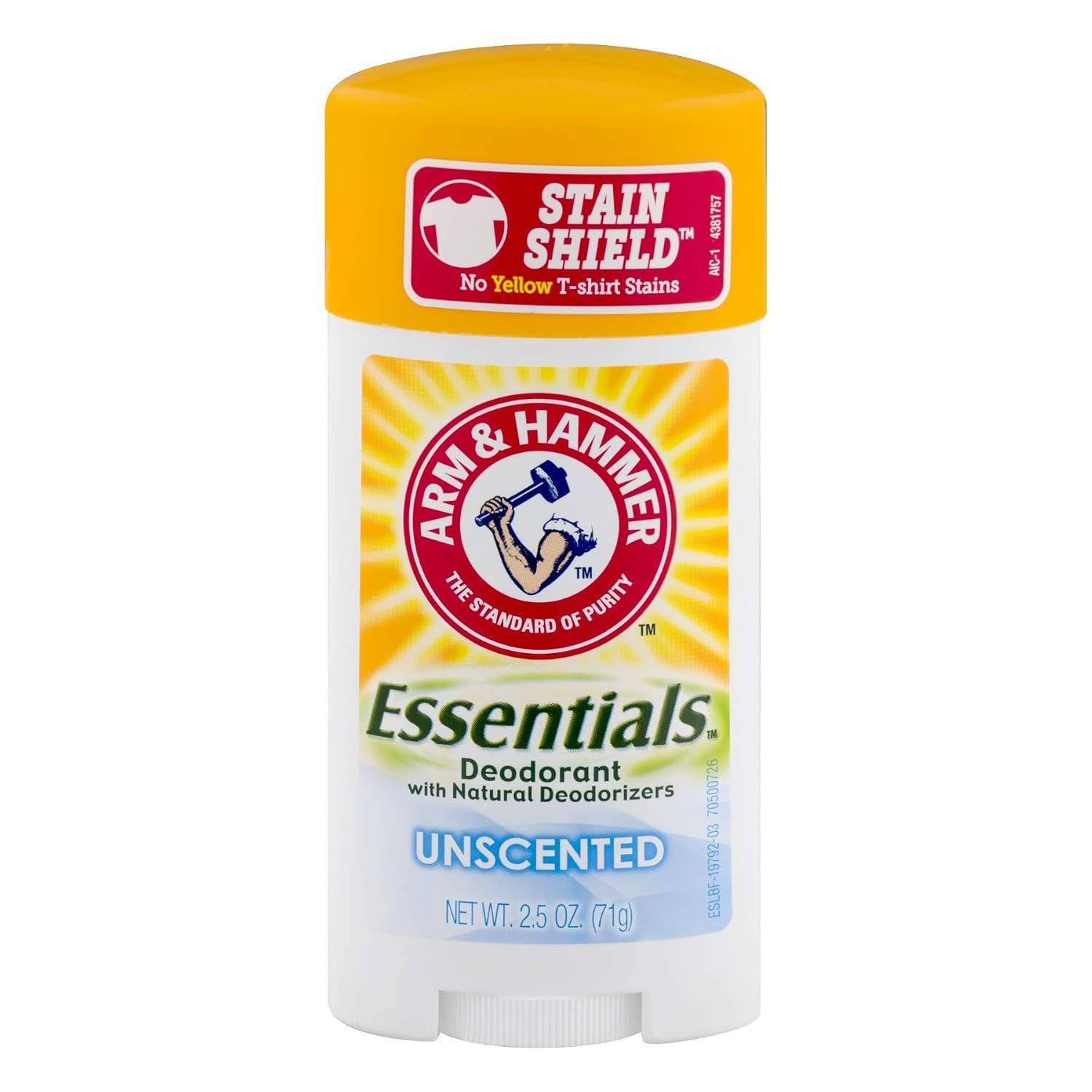
ARM & HAMMER Essentials Deodorant with Natural Deodorizers (Unscented)
The budget pick of this guide is also one of its most practical. Arm & Hammer built the Essentials line on the ingredient the brand owns in the public mind, baking soda, supported by natural plant extracts as deodorizers, in a straightforward stick that costs a fraction of the boutique naturals. The Unscented version is the one to choose for this guide’s reader: heavy sweating plus added fragrance is the combination most likely to end in a sour clash by afternoon, and an unscented neutraliser avoids the problem entirely while suiting fragrance free workplaces and sensitive noses. In wear it is a competent, no drama deodorant: odour is handled well for a normal day, the stick is firm and clean applying, and the stain shield positioning reflects a formula designed not to yellow white shirts. It is not the strongest option here for extreme days, and heavy sweaters will find its ceiling on a hot commute sooner than the Schmidt’s or the Lume cream. Baking soda also means the usual sensitivity caveat applies. But judged as the affordable, everywhere available baseline that outperforms its price, it embarrasses several sticks costing three times as much. It is also sold in multipacks, which brings the cost per stick down lower still.
Specifications
71 g stick
baking soda with natural plant extracts
aluminium and paraben free
unscented
stain shield cap claim
Pros
Unscented, so no fragrance clash when sweat builds
A fraction of the boutique sticks’ price
Designed to avoid yellow shirt stains
Cons
Odour ceiling shows on very hot days
Baking soda base can irritate some skin
Basic texture, no luxury feel
Who should buyyou want natural deodorant at a supermarket price, unscented and easy to replace anywhere
Who should skipyou need maximum endurance for long hot days, where the stronger formulas earn their price
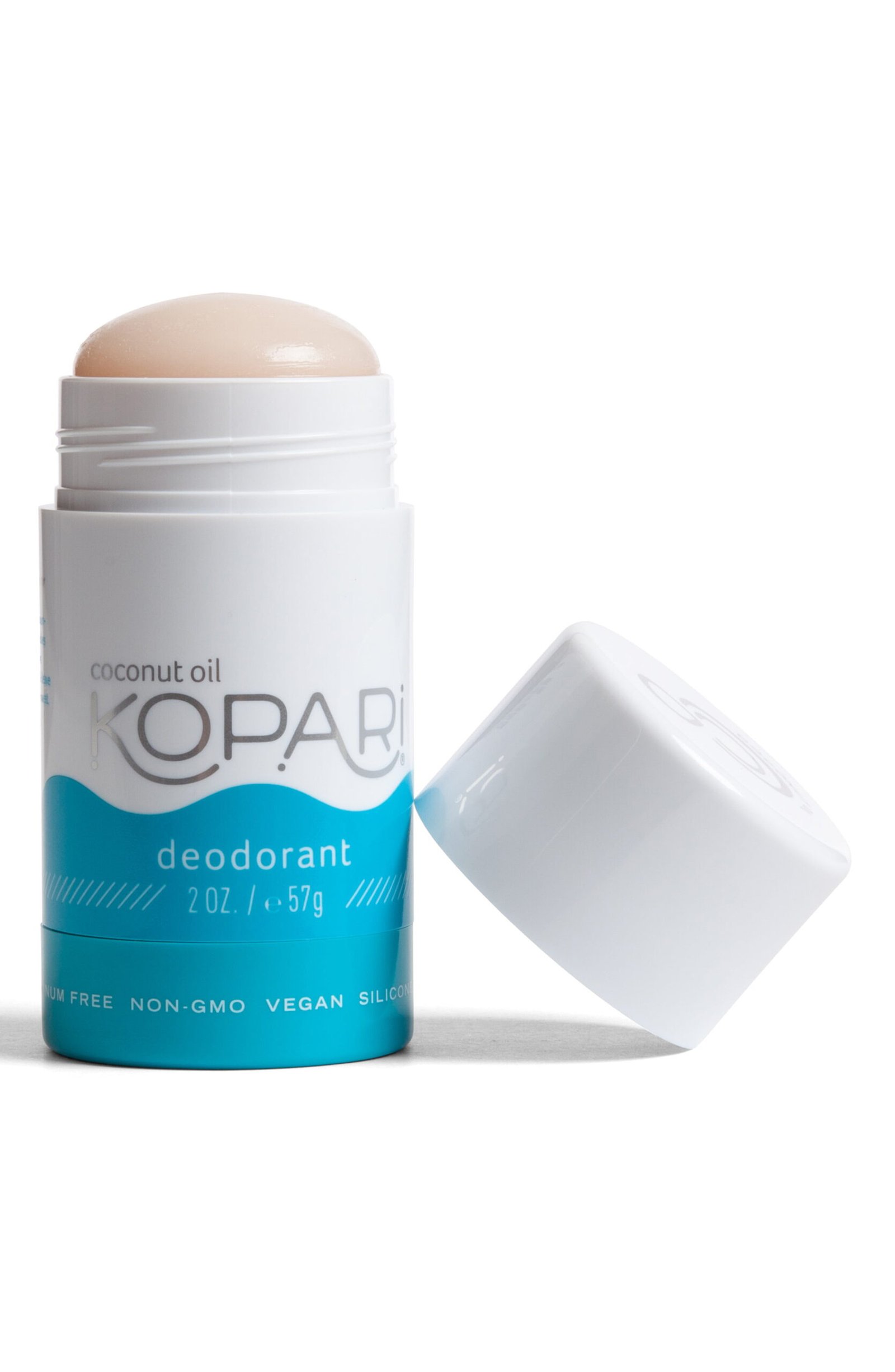
Kopari’s deodorant is the comfort pick: a clear, coconut oil based stick that glides on like a gel, leaves no white cast and no gritty residue, and treats the underarm skin itself as part of the brief. Coconut oil is naturally antibacterial, which is the odour strategy here, supported by sage oil, while the base conditions skin that shaving leaves dry and reactive. The baking soda free formula removes the commonest irritant in natural deodorant, and the light coconut scent reads as clean rather than tropical cocktail. For heavy sweaters, honesty about the ceiling matters: this is a moderate odour performer, best on ordinary days, at a desk, in cooler weather, or as the comfortable daily stick for someone whose sweat is heavy but whose odour is not extreme. On a humid August commute it will need help by mid afternoon. The stick is also small at 57 g, and priced like a beauty product rather than a drugstore staple. What it does better than anything else in this guide is feel pleasant every single day, and for readers who abandoned natural deodorant over texture and rashes rather than performance, that is the deciding factor. It is also one of the few natural sticks that genuinely leaves dark clothing unmarked.
Specifications
57 g stick
coconut oil and sage oil
aluminium and baking soda free
clear gliding gel stick
vegan
Pros
Clear gel glide, zero white marks
Baking soda free and gentle on shaved skin
Conditions underarms while it deodorises
Cons
Moderate odour control on the hottest days
Small stick at a beauty counter price
Coconut scent will not suit everyone
Who should buytexture, comfort and no white marks matter most, and your heavy sweat days are not extreme odour days
Who should skipyou need the strongest possible odour control for long, hot, physical days
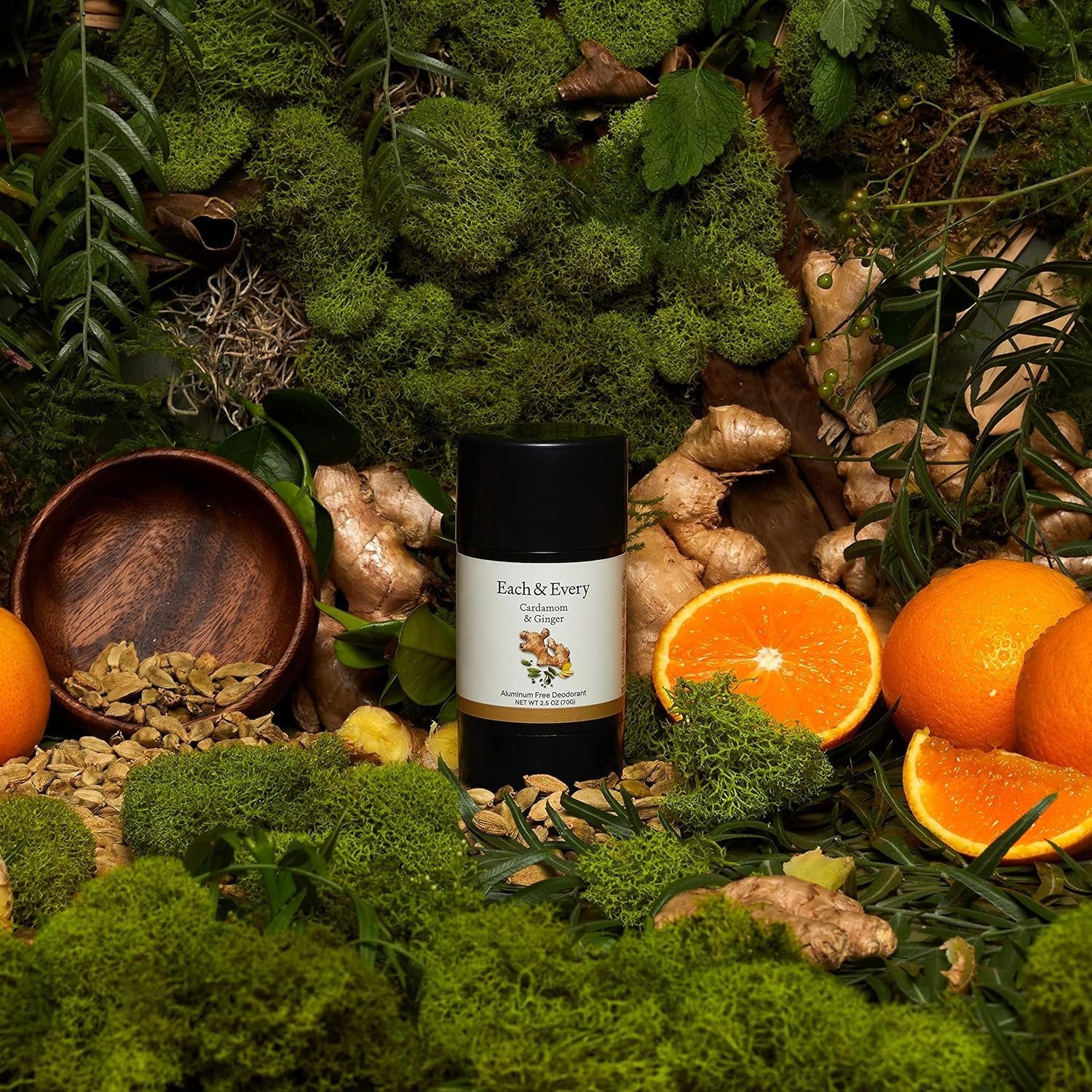
Each & Every Aluminum-Free Deodorant (Cardamom & Ginger)
Each & Every takes the ingredient transparency route: a short, readable formula built on coconut oil and tapioca starch for wetness feel, Dead Sea minerals in place of baking soda for odour control, and fragrance that comes only from essential oils, with every scent in the range built like a perfume rather than a masking blast. Cardamom & Ginger is the standout for this guide’s reader, warm and spiced, sophisticated in a way natural deodorant rarely manages, and it holds its character as the day warms up instead of collapsing into sweetness. The stick applies smoothly, does not crumble, and the baking soda free base keeps it in the gentle camp for daily use on shaved skin. Performance sits in the honest middle: a solid workday for most, with heavy sweaters in heat likely to reapply, which the slim stick at least makes easy to carry. The costs are literal, this is a premium priced stick, and essential oil fragrance, while natural, can still irritate very reactive underarms and is not the choice for readers who need fully unscented. As the option for someone who wants natural deodorant to feel like a considered beauty product rather than a compromise, it leads the guide.
Specifications
70 g stick
tapioca starch and Dead Sea minerals
coconut oil base
essential oil fragrance only
no baking soda
Pros
Essential oil scents built like real fragrance
Baking soda free, gentle daily formula
Short, transparent ingredient list
Cons
Premium price per stick
Essential oils can still irritate reactive skin
Mid level endurance in serious heat
Who should buyyou want a natural deodorant whose scent feels adult and considered, with a gentle daily formula
Who should skipyou need unscented, or the strongest odour control available at any price
Megababe built its reputation on products for the body problems beauty brands used to ignore, and Rosy Pits is its everyday deodorant: a cornstarch based stick with sage and green tea extracts for odour, vitamin E for the skin, and a soft rose scent that made it a word of mouth success. The formula skips aluminium and parabens and goes on smoothly without the drag or crumble of firmer natural sticks, and the rose fragrance is genuinely pretty rather than powdery, which matters for a product worn against the skin all day. For this guide’s reader the fit is specific: Rosy Pits is a comfort and scent pick with moderate odour machinery underneath. Cornstarch softens wetness feel without absorbing like the charcoal formulas, so on heavy sweat days it reaches its limit sooner, and a midday reapplication is a fair expectation in summer. The brand’s own answer to that, a detox mask for underarms, sits in our Also Considered thinking rather than this pick list. What Rosy Pits does deliver is a daily stick people enjoy using, from a brand that understands underarm skin, at a fair price. For moderate sweat with high scent standards, it is the one. One extra swipe at midday is a fair trade for a scent this likeable.
Specifications
75 g stick
cornstarch based
sage, green tea and vitamin E
aluminium and paraben free
rose scent
Pros
Soft rose scent people genuinely love
Smooth application, no drag or crumble
Skin friendly extras like vitamin E
Cons
Moderate odour control for heavy sweaters
Expect a midday reapply in summer
Rose scent is a commitment
Who should buyyour sweat is moderate and a beautiful scent plus comfortable wear top your list
Who should skipyou sweat heavily and need endurance first, where the charcoal or acid formulas do more
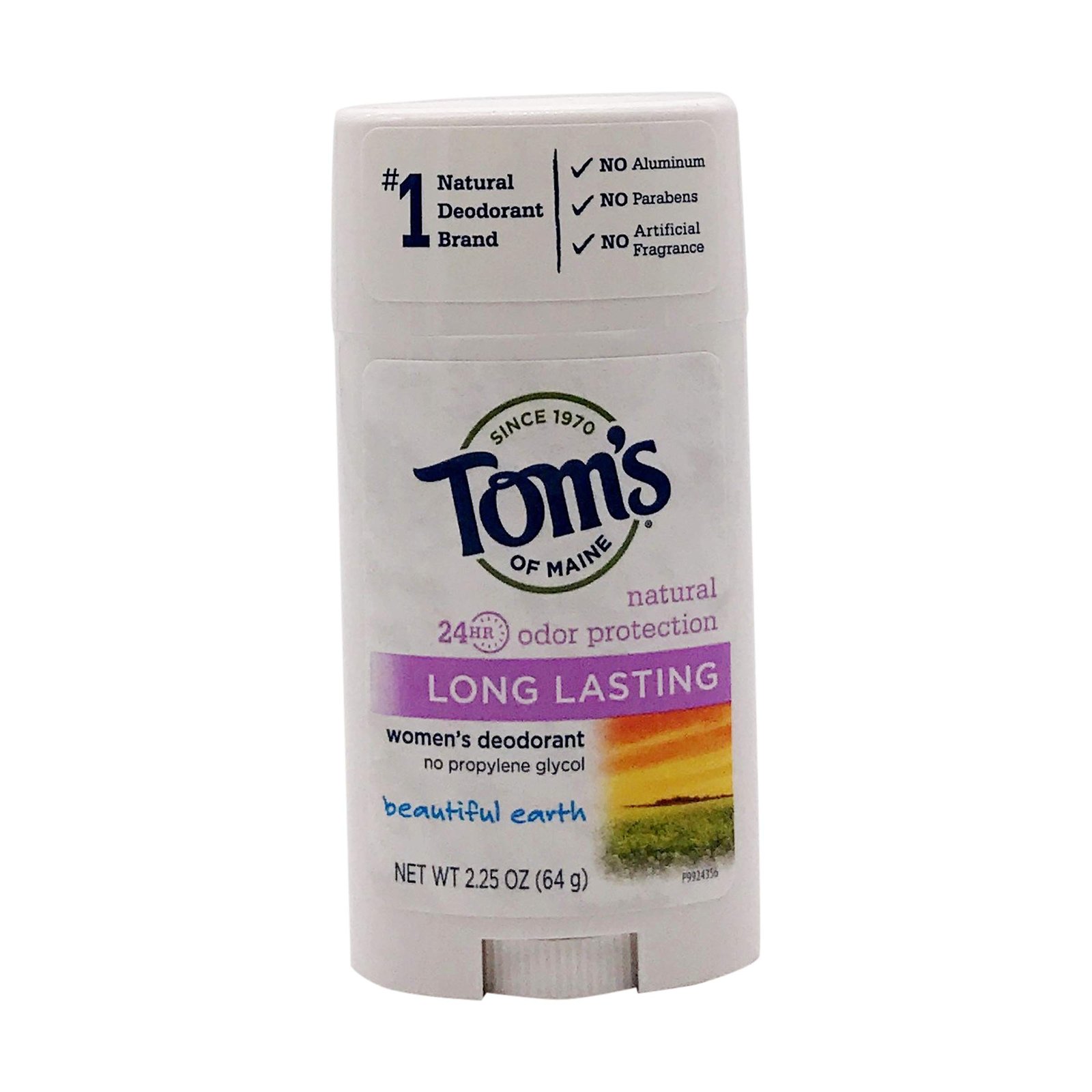
Tom’s of Maine Long Lasting Deodorant (Beautiful Earth)
Tom’s of Maine is the original natural deodorant brand, and its Long Lasting line uses a different odour technology from most of this guide: hops extract, a traditional antibacterial, plus zinc ricinoleate, an ingredient that traps and neutralises odour molecules rather than perfuming over them. That matters for heavy sweaters, because masking fragrance is what fails first when sweat volume rises, while neutralisation keeps working underneath. The Beautiful Earth scent is a light, green floral that stays quiet. The formula leaves out aluminium, parabens, artificial fragrance and propylene glycol, and the stick applies cleanly without residue drama. The realistic assessment is that Tom’s sits in the dependable middle: the 24 hour claim is optimistic for a heavy sweater in summer, and plan on it as a strong morning to evening performer with an occasional reapply, rather than a full day guarantee. It is also frequently reformulated and repackaged, so check the label of the stick in hand against the claims. What never changes is the value: this is one of the cheapest credible naturals, available in every supermarket, from the brand that has made nothing else for fifty years. As the reliable default, it is hard to argue with. Supermarket multipacks bring the per stick cost down further.
Specifications
64 g stick
hops extract and zinc ricinoleate
no aluminium, parabens or propylene glycol
24 hour odour protection claim
Pros
Odour neutralising technology, not just fragrance
Supermarket price and availability
Clean application, no residue issues
Cons
24 hour claim is optimistic for heavy sweaters
Formulas and packaging change often
Scent range is quiet rather than distinctive
Who should buyyou want the dependable, affordable default from the original natural deodorant brand
Who should skipyou want a distinctive scent or maximum strength odour control for extreme days
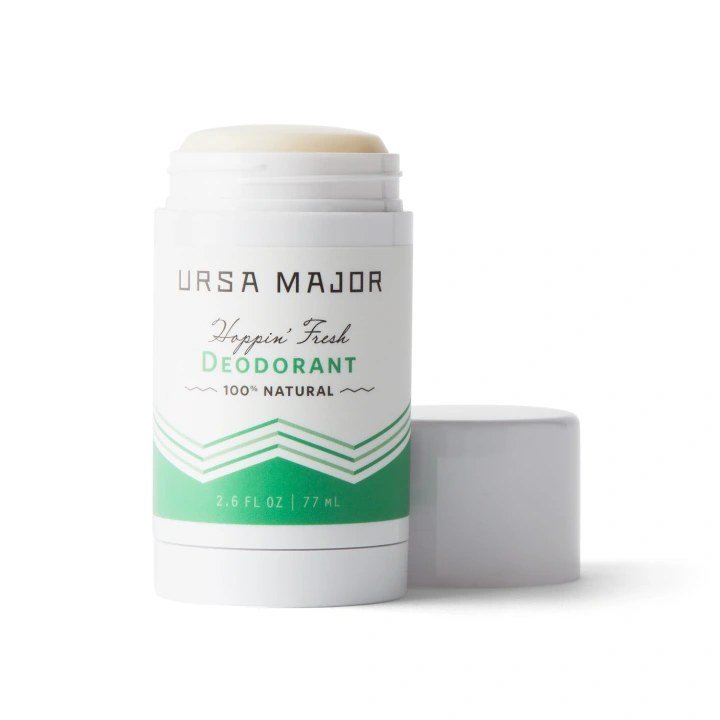
Hoppin’ Fresh is the outdoorsy, unisex leaning entry in this guide, and its formula balances the two camps the other sticks split into. Kaolin clay and arrowroot absorb at the surface, a measured amount of baking soda does the heavy odour work, and a blend of eucalyptus, peppermint and rosemary oils gives it a cool, herbal scent that reads fresh rather than fragranced, with a genuine cooling feel on application that heavy sweaters appreciate in summer. The texture is a smooth cream stick that applies without grittiness and, used in the recommended two to three swipes, does not cake or stain. In performance terms it is a strong natural: not the ceiling of the Schmidt’s charcoal formula, but close, and noticeably kinder in feel. The cautions are the baking soda, present if moderated, which keeps it off the list for the truly soda reactive, and a price that sits in the premium tier alongside a smaller brand’s distribution, so it is an online order rather than a supermarket grab. The scent, while widely liked, is distinctly herbal and will not suit readers who want something soft or sweet. For active women who live in sportswear and want a natural stick that feels made for movement, this is the guide’s recommendation.
Specifications
77 ml stick
kaolin clay and arrowroot
baking soda in a balanced base
eucalyptus, peppermint and rosemary oils
100% natural positioning
Pros
Cooling, herbal scent suited to active days
Clay and arrowroot genuinely help wetness feel
Smooth cream stick, no grit or cake
Cons
Contains baking soda, moderately dosed
Premium price, mostly online
Herbal scent is a specific taste
Who should buyyou are active, sweat through workouts and gym commutes, and like a cool herbal scent
Who should skipyou are baking soda reactive, or you want a soft, sweet fragrance instead
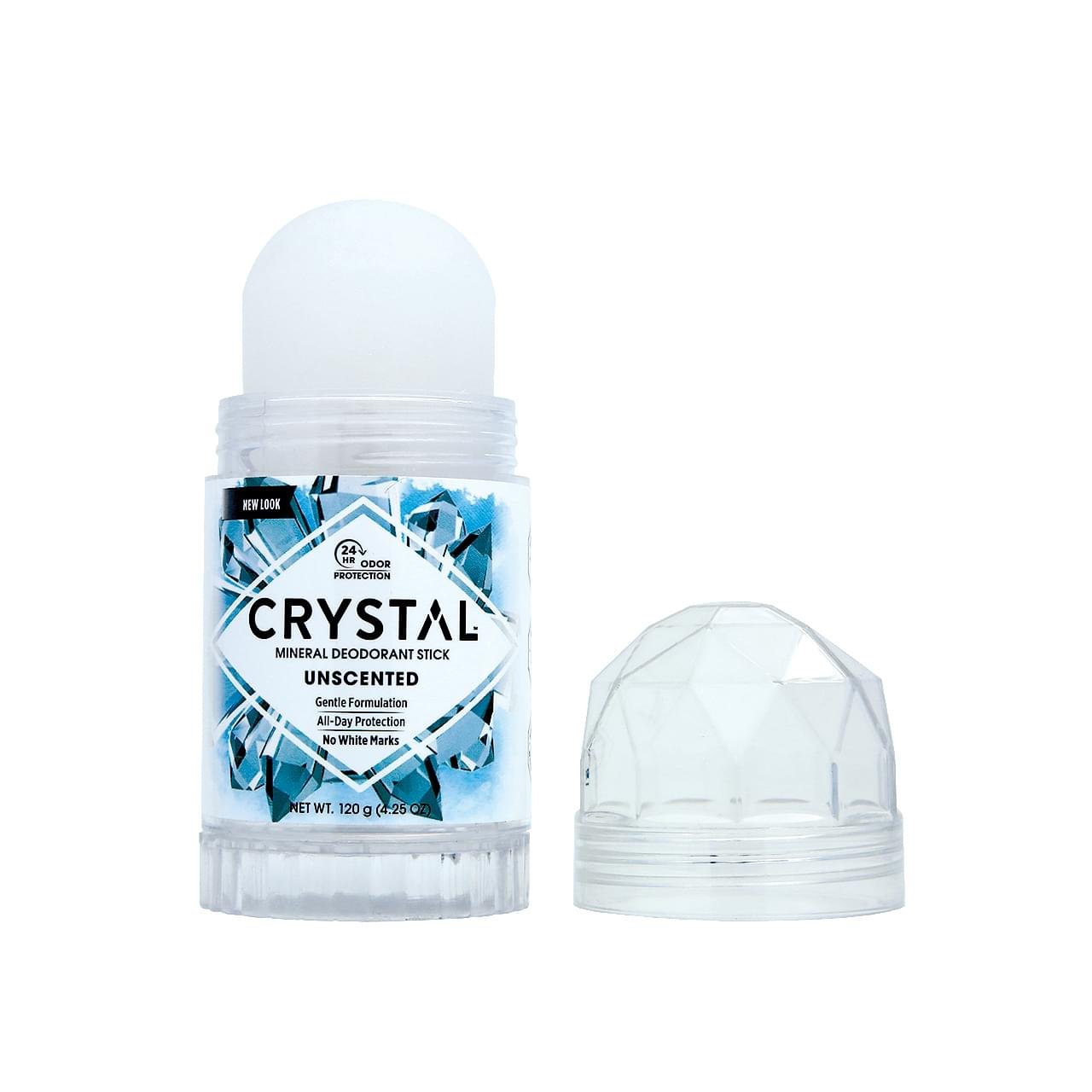
The Crystal stick is the minimalist extreme of natural deodorant: one ingredient, potassium alum, a mineral salt used for this purpose for centuries, formed into a smooth solid stone. Wet it, glide it over clean underarms, and it leaves an invisible layer of mineral salt that makes the skin surface inhospitable to odour bacteria. There is no fragrance, no residue, no white marks, no sticky film, and a single stick famously lasts the better part of a year, making it the cheapest per month option in this guide by a wide margin. For heavy sweaters the assessment needs care. The salt layer is genuinely effective against odour on clean skin, and many heavy sweaters swear by it, but it does nothing at all about wetness feel, it must be applied to freshly washed skin to work properly, and it cannot rescue a day that started unwashed. The stone is also fragile: drop it on a tiled floor and it can shatter, and it needs a moment’s drying routine that a stick does not. As the purist’s choice, for readers reacting to everything else or wanting zero scent and zero marks, nothing else in the guide does what it does. Travel is the one place it wins outright, since a single stone passes every liquid restriction.
Specifications
120 g solid stick
single ingredient potassium alum mineral salt
applied to wet skin after showering
unscented
no white marks
Pros
One ingredient, nothing to react to
Zero marks, zero scent, zero residue
One stick lasts for months
Cons
Must be applied to freshly washed skin
No help with wetness feel
Stone shatters if dropped
Who should buyyou react to fragrances and formulas generally, and want the simplest odour protection that exists
Who should skipyou need wetness management or a product that works applied any time of day
A deodorant without aluminium salts that controls odour with magnesium, zinc, baking soda or plant antimicrobials.
How it works: It limits the bacteria that make sweat smell, without blocking sweat.
Odour comes from bacteria breaking down sweat, so deodorant works by limiting bacteria and absorbing some moisture. Baking soda formulas are effective but are the common irritant, causing rashes in the warm, thin underarm skin; magnesium and zinc based formulas are the gentler modern alternative. The much discussed adjustment period is mostly your routine changing, not detox; odour control typically settles within a couple of weeks of consistent use.
Best for: Odour control for people avoiding antiperspirant ingredients.
In your routine: Apply to clean, completely dry underarms, a thin layer, and let it settle before dressing. Reapply after exercise if needed. If a rash appears, stop and switch the active base rather than pushing through, since underarm skin does not toughen up.
What Is Aluminum Free?
The label claim that a deodorant contains no aluminium salts, meaning it is a deodorant only, not an antiperspirant.
How it works: Without aluminium there is no sweat gland blocking action.
Best for: Shoppers specifically avoiding aluminium in their routine.
The Downsides of Each
Natural Deodorant: It does not reduce wetness at all. The commonest way people make it worse: expecting dryness from a product category that only addresses odour
Aluminum Free: It is a description, not a performance advantage, and says nothing about irritation.
Verdict by Use Case
Choose Natural Deodorant if odour control for people avoiding antiperspirant ingredients. That is the use case where its strengths matter most, and where its main downside, it does not reduce wetness at all.
Choose Aluminum Free if shoppers specifically avoiding aluminium in their routine. That is the use case where its strengths matter most, and where its main downside, it is a description, not a performance advantage, and says nothing about irritation.
If your situation sits between the two, the deciding question is usually effort: which option fits the routine you will actually keep for the next three months? The better option on paper loses to the one you use consistently, in almost every body care category.
Can You Use Both?
In many body care routines the options complement each other: used at different times, on different days or for different areas, each covering the other’s weak ground. The cautions are overload and duplication: do not run both at full intensity in the same session, and do not pay twice for the same job. Introduce any combination gradually, one change at a time, so you can tell what each option is actually doing for you.
How to Decide
Work through three questions in order. First, which option matches your type: the table’s best for row is written for exactly this, and a mismatch there outweighs every other advantage. Second, which downside can you live with: every option in this comparison has one, and the right choice is usually the one whose downside does not touch your actual problem. Third, which fits the routine you already keep: the option that slots into your existing body care habits will still be in use in three months, and consistency is what turns a reasonable choice into a good result. If the answers point different ways, weight them in that order: type, downside, routine.
Which is better overall, natural deodorant or aluminum free?
There is no universal winner: the better option is the one matching your skin or hair type, routine and the use cases in the verdict section above. The difference table shows where each one genuinely leads, and the downsides section shows what each one costs you.
Can I use both in the same routine?
In many body care routines the two can complement each other, used at different times or for different areas, as long as the combination does not overload skin or hair. Introduce any combination gradually, and keep the total intensity at a level your routine can sustain.
Which is better for beginners?
Beginners usually do best with the option that has the gentler learning curve and the fewer downsides for their type, as set out in the table. Start there, and switch only if your needs change.
Which is better for sensitive skin?
The option with the shorter, gentler downside list for your type: compare the downsides row in the table first, start with the milder option, and patch test or trial at the lowest intensity before committing. If your skin or hair is under a clinician’s care, their sequencing comes first.
Which works out cheaper over time?
Compare total cost, not shelf price: how much product or how many consumables each option uses per month, how long a unit lasts in real use, and what you would otherwise spend on the alternative. In this category the cheaper option per use is often the one people abandon, which makes it the most expensive of all.
How do I decide if I can only choose one?
Match the option to your type first, using the best for row in the table, then check that its main downside does not overlap with the problem you are trying to solve. Finally, pick the one that fits the routine you already keep, because three months of consistent use with the second best option beats three weeks of the best one.
What is the best natural deodorant for women who sweat a lot?
The buying guide Best Natural Deodorant for Women Who Sweat a Lot compares the leading options for this exact need against the criteria that matter, with specifications, honest pros and cons, and a clear statement of who should skip each pick. It is linked from this page.
By Mirror & Glow Editorial Desk – November 23, 2026
Everything behind can i put natural deodorant on day after miradry treatment: odour comes from bacteria breaking down sweat, set out as a clear step by step with the mistakes and questions readers raise most.
By Mirror & Glow Editorial Desk – November 23, 2026
Everything behind can i use natural deodorant after laser hair removal: odour comes from bacteria breaking down sweat, set out as a clear step by step with the mistakes and questions readers raise most.
By Mirror & Glow Editorial Desk – November 23, 2026
Odour comes from bacteria breaking down sweat. This guide applies that to can i use natural deodorant before a mammogram: the method, the timing, and the traps to avoid.