Can I Use Night Cream During the Day with Sunscreen
By Mirror & Glow Editorial Desk – November 23, 2026
Woman holding a tube of face cream and smiling in a bathroom mirror.
The direct answer: in most cases yes, with conditions. Whether you can use night cream during the day with sunscreen depends on the products involved, your skin or hair type, and how you layer or time them. The guide below gives the conditions, the safe way to do it, and the situations where the answer becomes no.
Night Cream Explained
A night cream is a richer moisturiser designed for the overnight hours, when skin is not under sunscreen or makeup and can carry a heavier texture. Many carry the routine’s active ingredients too, since night is when retinoids and acids are used.
The honest difference from a day cream is weight and the absence of SPF, not magic repair cycles. Rich occlusives and lipids suit the long, undisturbed wear time. Where a night cream contains retinol or acids, it is a treatment product and follows those rules: gradual introduction, and not layered with other strong actives casually. Dry and mature skin gains most from the category; oily skin often finds a night cream unnecessary weight.
Using Night Cream During the Day and Sunscreen Together
Night Cream During the Day: A night cream is a richer moisturiser designed for the overnight hours, when skin is not under sunscreen or makeup and can carry a heavier texture. Many carry the routine’s active ingredients too, since night is when retinoids and acids are used.
Sunscreen: A sunscreen using zinc oxide and titanium dioxide that sits on skin and reflects and absorbs UV.
Whether the combination works comes down to three things: whether the two products compete for the same job, whether one changes how strongly the other acts, and whether your skin or hair has the tolerance for both at once. As a rule, water based products go on before oil based ones, treatments go on before moisturisers, and two strong actives are introduced on alternate days or nights until you know how the pairing behaves on you. If either product is new to you, establish it alone for a week first; combining two new products makes every reaction a mystery with two suspects.
The answer becomes no, or at least not yet, when both products are strong exfoliants or retinoids in the same session, when one is a medication your clinician has sequenced for you, or when your skin or hair is currently irritated, sunburnt or freshly treated. In those cases the pairing is not wrong in principle; the timing is.
Step by Step: Night Cream
The method below is the standard technique for this category, in the order that makes each step work. Adapt the amounts to your own skin or hair, and keep the order. If you still need the product itself, the buying guide Best Cream for Acne Scars and Dark Spots compares the current options for this exact need.
Start with clean, dry or slightly damp skin as the product type directs
Apply the amount stated on the product, usually a pea sized amount or two finger lengths for sunscreen
Introduce one new active at a time and give it at least two weeks before judging
Use the product at the time of day it is designed for, and always finish morning routines with sunscreen
Note any stinging, breakouts or dryness in the first week and adjust frequency before giving up
Getting Night Cream Right in Your Routine
Fit matters more than intensity with night cream. Build the habit at the gentlest effective level first: the right product amount, the right frequency for your type, and one change at a time so you can see what is actually helping. Keep the rest of your skincare routine stable while you judge the change, and give the routine the full period the product guidance describes before deciding it does not work.
Keep notes for the first two weeks: what you used, how much, and how your skin or hair felt the next day. That simple record answers most follow up questions, including whether a reaction came from the new step or from something layered with it.
Apply as the last step at night, over serums, in a slightly more generous layer than the morning moisturiser. If it carries an active, introduce it on alternate nights first.
Where the CeraVe lotion in this guide is the light daily option, this cream is the same system at full strength: three ceramides and hyaluronic acid in a petrolatum containing cream that the brand’s MVE technology releases gradually, so one thorough application keeps working for hours. The texture is a proper cream, thick enough to stay where it is put on heels, elbows and shins, yet it rubs down without the greasy residue of a pure ointment, which makes it the middle path for readers who find lotions too weak and ointments too much. It is fragrance free and non comedogenic, and the large tub format makes it economical at whole body scale, which matters for a product dermatologists suggest using daily and generously. It is also the most versatile format here: face in winter, body all year, hands overnight. The limits are format and weight. A tub means fingers in the product unless a spatula or the pump version is chosen, and on humid days or under tight synthetic clothing the richness can feel like a layer too many. For established dry skin that needs more than a lotion but balks at an ointment, this is the guide’s centre of gravity.
Specifications
Rich ceramide cream often used as a night cream; fine in the day too, as long as a separate sunscreen goes over it
Pros
Cream strength with the same ceramide system as the lotion
Lasts for hours from one application
Large tub is economical for whole body use
Cons
Tub format is less hygienic without a spatula
Can feel heavy in humid weather
Richness is wasted on only mildly dry skin
Who should buya lotion is not quite enough for your dry skin but an ointment feels like too much.
Who should skipyour skin is normal to slightly dry, where the lighter lotion version is the better match.
Vanicream is the formula dermatologists reach for when the brief is to remove variables: a petrolatum based cream deliberately free of fragrance, dyes, lanolin, parabens and the other common sensitisers its maker lists and excludes. Petrolatum is the most effective occlusive in routine skincare, forming the barrier that stops water escaping while the skin underneath recovers, which is why this plain cream outperforms more elaborate formulas on genuinely compromised dry skin. The pump tub format matters more than it sounds, because it keeps fingers out of the product and dispenses a thick cream that a standard pump bottle could not move. It is frequently recommended after procedures and for eczema prone skin precisely because there is so little in it to react to. The trade off is elegance. It is thick, slow to rub in and leaves a definite film, so it suits evenings, targeted areas and winter far better than a quick morning application under fitted clothes. It also contains no exfoliating or brightening actives, so rough texture needs a separate product on calmer days. For sensitive, reactive dry skin, though, boring is the highest compliment a moisturiser can earn, and this one earns it. It is also one of the easiest creams to combine with prescription dry skin care, since nothing in the formula competes with topical treatments used alongside it.
Specifications
Fragrance free rich cream for sensitive skin, day or night; it contains no SPF, so daytime use always needs sunscreen on top
Pros
The shortest, plainest ingredient list in this guide
Petrolatum base gives the strongest moisture barrier here
Pump tub keeps a thick cream hygienic and usable
Cons
Thick and slow to absorb, with a lasting film
No actives for rough texture or dullness
Best suited to evenings and targeted areas
Who should buyyour dry skin is sensitive or reactive and fragranced, active laden lotions have stung or flared it.
Who should skipyou want a light, fast, elegant lotion for quick morning use.
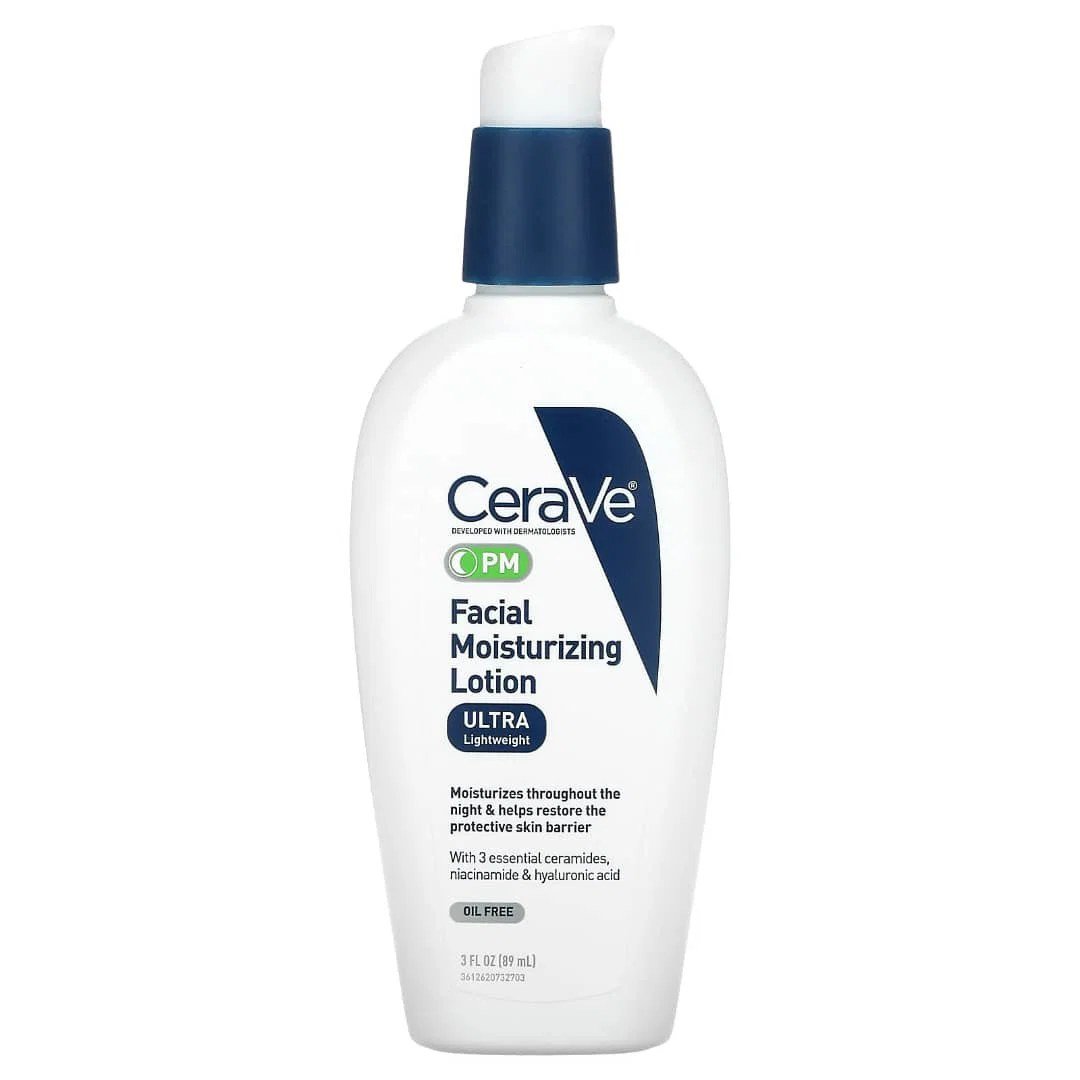
CeraVe PM is the night half of the drugstore answer: the same ceramide and niacinamide logic as the Oil Control gel cream in a light lotion made for evening use, when acne treatments are applied and the barrier does its repair work. Its role in this guide is the routine anchor. Men on adapalene, tretinoin or benzoyl peroxide need a night moisturiser that buffers without interfering, and PM has become the default recommendation in acne forums and dermatology offices alike because it does exactly that, cheaply, in a pump bottle that doses cleanly. It can be layered over a retinoid to soften its first month, or under it for the most reactive skin, and its niacinamide content suits the redness that healing breakouts leave behind. The honest limits: despite the PM name nothing stops it being used in the morning, and despite the light texture, very oily skin may still prefer the gel cream above for daytime shine. It also contains no sunscreen, so a morning routine still needs its own SPF step. As the night moisturiser of an acne routine at a drugstore price, it is the guide’s most proven product. Keep the pump’s cap on between uses and store it out of the steamy shower zone, and the formula stays clean to the last dose, a small hygiene point that matters on skin whose whole problem is what grows in its pores.
Specifications
Light night lotion with niacinamide; despite the PM name nothing in it is sun sensitive, but it has no SPF for daytime wear
Pros
The default night partner for retinoid and peroxide routines
Ceramides and niacinamide in a clean pump bottle
Buffers treatments without interfering with them
Cons
No sunscreen, so mornings need a separate SPF
Very oily skin may prefer the gel cream full time
Light texture underwhelms men expecting a rich cream
Who should buyyou use a retinoid or benzoyl peroxide at night and need a proven buffer moisturiser
Who should skipyou want one product with SPF for a one step morning
CeraVe took its barrier first moisturiser formula and gave it chemical sun protection and a matte finish, which makes this the pick for acne prone skin that is also dry in patches or easily irritated by stronger sunscreens. The base carries the brand’s three ceramides and hyaluronic acid, so it moisturises as it protects, and the finish is genuinely matte rather than the satin sheen most moisturiser SPFs leave behind. For combination, acne prone skin that flakes around breakouts while shining on the forehead, that combination is hard to find elsewhere at this price. The texture is a light lotion that absorbs quickly and wears under makeup without drama. The limitations are the SPF 30 ceiling, which suits daily wear rather than intense sun, the small 50 ml tube, and the fact that the matte finish can emphasise very dry patches if you skip moisturiser underneath on a dry day. It is also worth knowing the filters are chemical, so it needs the standard twenty minutes before exposure. Judged as the morning moisturiser and sunscreen in one for temperamental, breakout prone skin, it is one of the most sensible buys in this guide. One practical note: because it is a moisturiser first, very dry skin may want it over a plain cream in winter, while oily and combination skin can treat it as the only morning layer they need.
Specifications
The daytime partner to the creams above: light ceramide lotion with broad spectrum SPF 30 for the sunscreen layer
Pros
Moisturiser and sunscreen in one with ceramides
Matte finish suits combination, acne prone skin
Gentle, fragrance free CeraVe formula discipline
Cons
SPF 30 suits daily wear, not intense sun
Small 50 ml tube
Matte finish can catch on very dry patches
Who should buyyour acne prone skin is combination or easily irritated and you want one morning step
Who should skipyou need high SPF or long water resistance
Starting three new actives in the same week, which makes reactions impossible to trace
Using more product than directed, which increases irritation without improving results
Skipping sunscreen while using brightening or exfoliating products, which undoes their work
Expecting visible change in days when most skincare actives need weeks of consistent use
Paying a large premium for the word night when your day cream’s texture already suits your skin
Layering an active night cream over separate acid and retinoid serums and over treating the skin
When to See a Professional
See a dermatologist or qualified professional if the concern is painful, spreading, bleeding, not improving after a consistent routine of several weeks, or if it appeared suddenly and severely. Nail changes such as thickening, colour change with pain, or separation from the nail bed also deserve professional assessment rather than cosmetic treatment. Buying guides support everyday care; they do not diagnose or treat medical conditions.
Can I Use Night Cream During the Day with Sunscreen – what is the most important thing to get right?
Consistency at the right level for your type. With night cream, the correct amount and frequency used steadily will outperform an intense routine used occasionally, and it avoids most of the irritation that makes people abandon the routine.
How long does it take to see a difference?
Most skincare routines show their direction within two to four weeks of consistent use, with fuller results over two to three months for concerns involving skin renewal or hair growth cycles. Judge on that timeline, not on single days.
What if my skin or hair reacts badly?
Stop the new step, return to your simplest routine until things settle, and reintroduce only one product at a time if you try again. Persistent pain, swelling or spreading irritation is a reason to seek professional advice rather than push through.
What is the biggest mistake people make with night cream?
Paying a large premium for the word night when your day cream’s texture already suits your skin A close second: layering an active night cream over separate acid and retinoid serums and over treating the skin
What should I check before starting with night cream?
The honest difference from a day cream is weight and the absence of SPF, not magic repair cycles. Beyond that, check the product’s own directions against your skin or hair type, start at the gentle end of any range, and change nothing else in your routine for the first two weeks so the result is readable.
Can You Use Eye Cream on Other Parts of Your Face?
The companion how-to guide, Can You Use Eye Cream on Other Parts of Your Face, covers this in full: the step by step method, the right amounts and frequency for your type, and the mistakes that stop it working. It is linked from the routine sections of this page, and it is the right next read once you have chosen a product.
By Mirror & Glow Editorial Desk – November 23, 2026
How to Get Rid of Acne Scars on Back? The short answer first, then the detail: one active at a time, introduced over two weeks, judged at eight to twelve weeks, with timing, amounts and the errors that stop it working.
By Mirror & Glow Editorial Desk – November 23, 2026
Hydrocolloid is a wound dressing material: it draws out fluid and turns white as it works. This guide applies that to how often to use pimple patches on a single spot: the method, the timing, and the traps to avoid.
By Mirror & Glow Editorial Desk – November 23, 2026
Retinoids work at the cell level, which is why timelines are months. This guide applies that to how long does it take for adapalene gel to work: the method, the timing, and the traps to avoid.