By Mirror & Glow Editorial Desk – November 23, 2026
A person using a heat gun to shape black EVA foam sheets on a light-colored table.
The direct answer: in most cases yes, with conditions. Whether you can use hair dryer on eva foam depends on the products involved, your skin or hair type, and how you layer or time them. The guide below gives the conditions, the safe way to do it, and the situations where the answer becomes no.
Hair Dryer Explained
A hair dryer dries with moving heated air rather than pressing heat, which makes it the gentlest full styling tool and the base step for almost every style. Attachments decide its personality: a concentrator for smooth blowouts, a diffuser for curls, a comb for textured hair.
Wattage is a weak guide; airflow design, heat settings and a true cool shot matter more. Ionic models aim to reduce static and drying time, and brushless motors are lighter and quieter. For curly hair the diffuser size and prong length decide whether curls dry defined or blown apart. Weight matters more than people expect, because a full dry of thick hair is a ten minute hold.
Putting It Into Practice
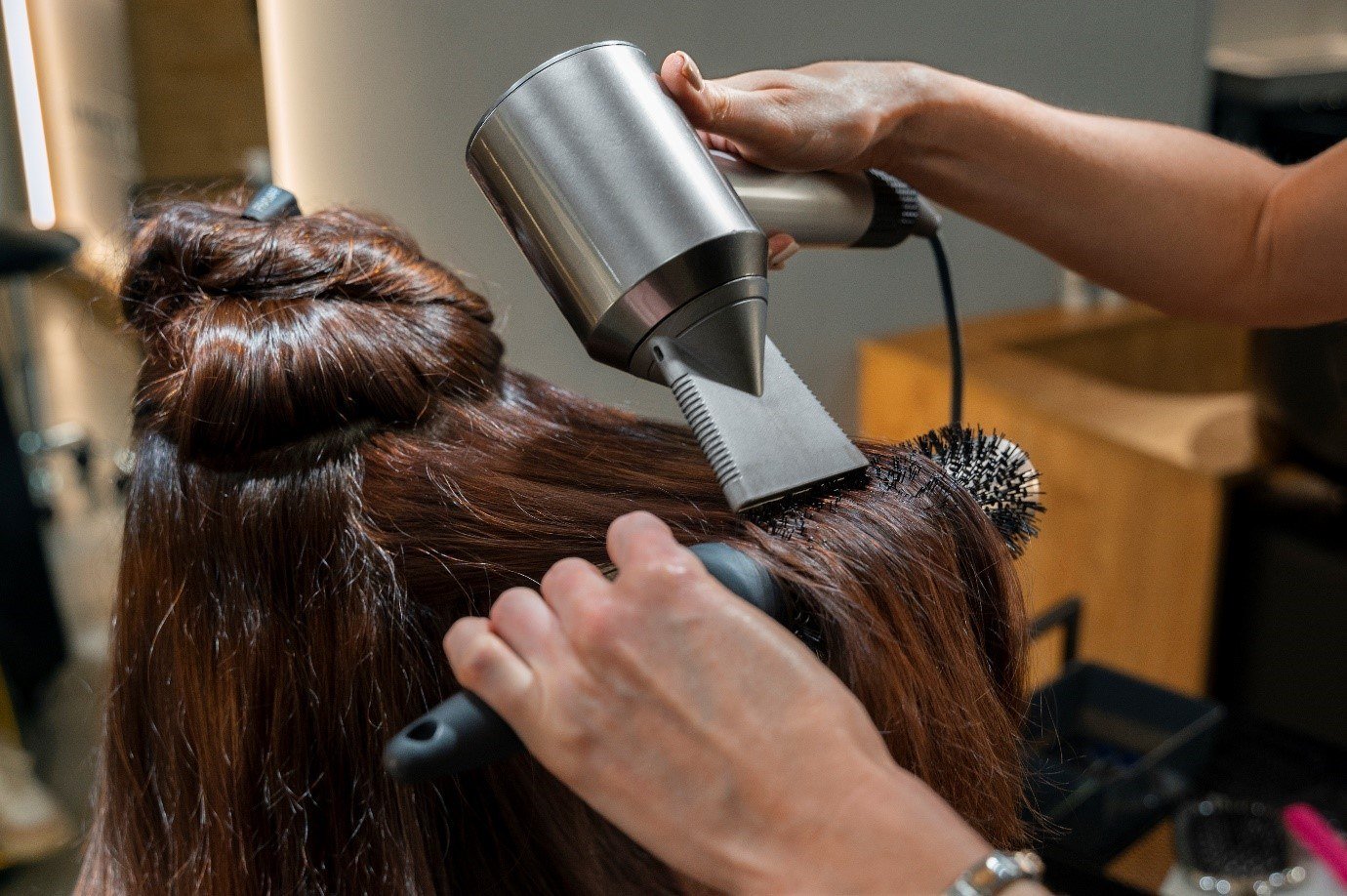
Rough dry to about eighty percent first, then style in sections with the attachment. Keep the nozzle moving and pointed down the hair shaft for smoothness, and finish with the cool shot to set the style and calm frizz.
Build the habit at the gentlest effective level first and attach it to something you already do, after a shower, before bed, with your morning routine, because techniques attached to existing habits survive. Keep the rest of your hair tools routine stable while you judge the change, and give the routine the full period the product guidance describes before deciding it does not work.
Step by Step: Hair Dryer
The method below is the standard technique for this category, in the order that makes each step work. Adapt the amounts to your own skin or hair, and keep the order. If you still need the product itself, the buying guide Best Hair Dryer for Fine Hair to Add Volume compares the current options for this exact need.
Start with clean, fully detangled hair and apply heat protectant evenly
Dry hair completely before using irons, unless the tool is designed for wet to dry use
Work in small sections, no wider than the plate or barrel
Use the lowest temperature that achieves the style in one or two passes
Let each section cool in shape before touching it, which is what sets the style
Getting Hair Dryer Right in Your Routine
Fit matters more than intensity with hair dryer. Build the habit at the gentlest effective level first: the right product amount, the right frequency for your type, and one change at a time so you can see what is actually helping. Keep the rest of your hair tools routine stable while you judge the change, and give the routine the full period the product guidance describes before deciding it does not work.
Keep notes for the first two weeks: what you used, how much, and how your skin or hair felt the next day. That simple record answers most follow up questions, including whether a reaction came from the new step or from something layered with it.
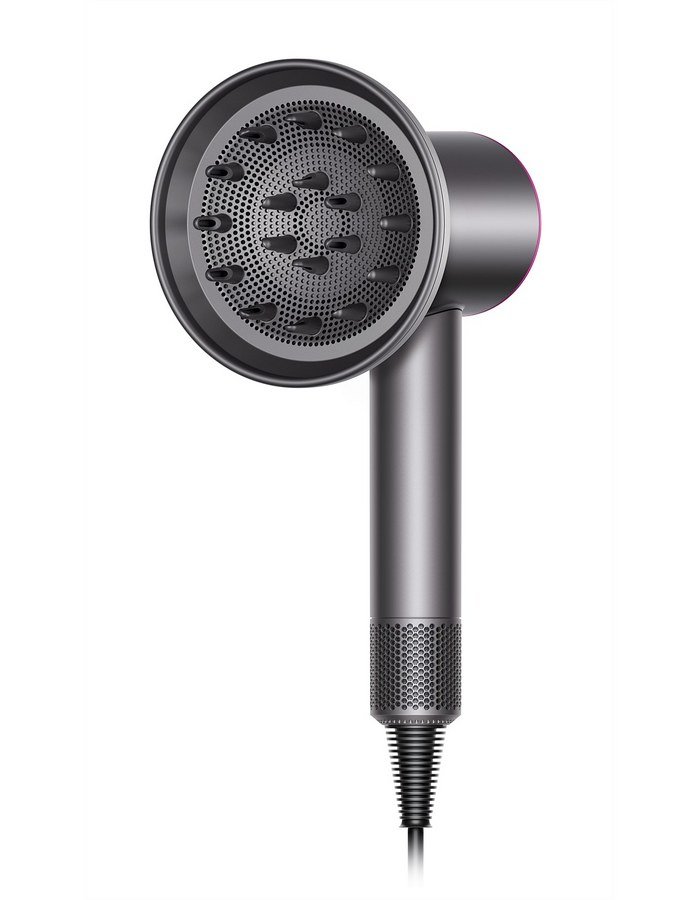
Fine hair has two enemies in a dryer: heat, which it damages under faster than any other hair type, and weight, because heavy tools and heavy airflow flatten the very volume the blowout is meant to create. The Supersonic answers both more completely than anything else here. Its intelligent heat control measures the airstream temperature 40 times a second and regulates the element so the air never spikes into the scorching range that roughens fine strands and kills shine, while the small digital motor in the handle keeps the balance in your palm instead of your wrist, which matters when you are holding a brush in the other hand and working section by section. For volume specifically, the combination of fast, focused air and the styling concentrator lets you lift roots vertically and set them with the cold shot before they cool flat, and the Flyaway Smoother attachment tames the halo of broken fine hairs that makes a blowout look fuzzy by evening. The compromises are famous: it is the most expensive dryer in this guide by a distance, its top airflow is strong rather than hurricane force, so very thick hair dries slower than with the big AC salon dryers, and the attachments are proprietary. For fine hair that needs volume without damage, it remains the benchmark.
Specifications
Precise heat and speed settings
heat forming EVA foam needs the controlled warmth this article describes
Pros
Heat control protects fine hair from spikes
Balanced in hand for brush work
Flyaway Smoother polishes fine hair’s halo
Cons
Most expensive dryer in this guide
Airflow strong, not the fastest for thick hair
Proprietary magnetic attachments only
Who should buyyour fine hair damages easily and you want maximum volume with minimum heat risk
Who should skipyou dry very thick hair daily and need raw salon power instead
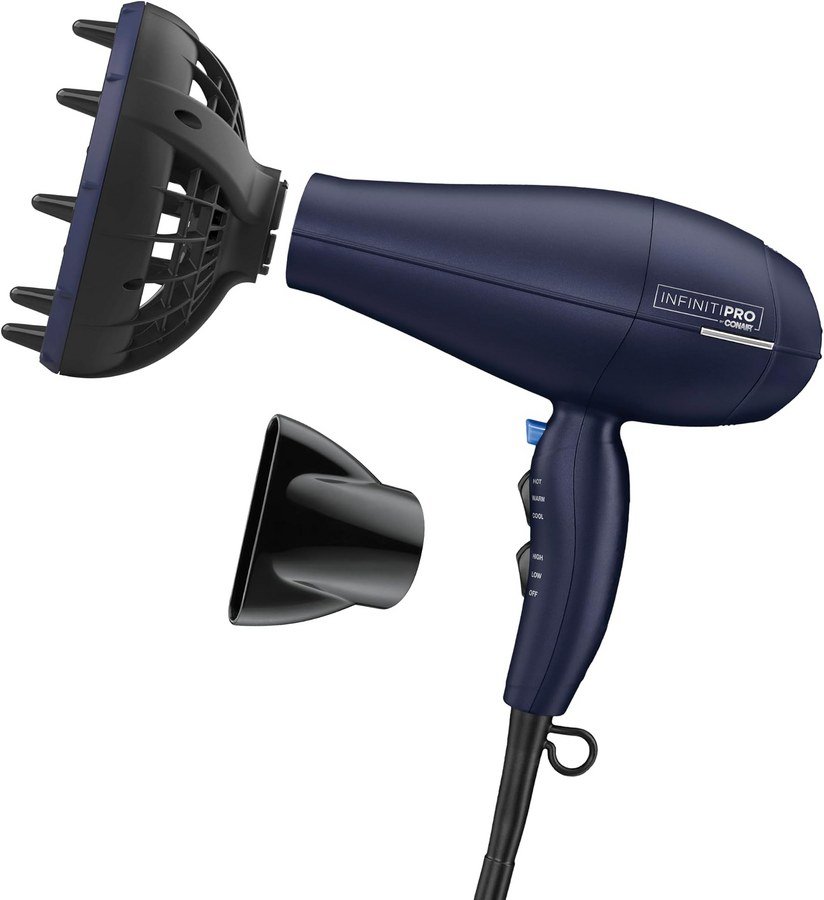
The InfinitiPro is the budget reality check of this guide, and it earns its place on a simple fact: the diffuser is in the box. Conair’s long running 1875W AC motor model pairs tourmaline ceramic heat with ionic conditioning, three heat and two speed settings and a cold shot, and includes both a concentrator and a finger diffuser, which makes it the cheapest complete curl drying kit here by a wide margin. The diffuser is a classic shallow finger design; used on low speed and medium heat with a hover then cup technique, it dries curls respectably, and the AC motor gives it more durability than the price suggests. It is also sold in every drugstore and supermarket, so a replacement is never a shipping wait away. The compromises are what the price predicts: the body is heavier and louder than the premium dryers, the plastics feel their cost, the diffuser bowl is too shallow for very long curls to sit inside, and heat evenness is a step behind the regulated dryers, so the low settings matter. As a first diffuser dryer, a guest bathroom spare, or the honest minimum spend for defined curls, it does the titled job without embarrassment.
Specifications
3 heat and 2 speed settings
low heat passes seal and shape foam without scorching it
Pros
Diffuser included at a drugstore price
AC motor durability for the money
Sold everywhere, easy to replace
Cons
Heavier and louder than premium dryers
Shallow diffuser bowl for long curls
Heat evenness a step behind regulated models
Who should buyyou want a complete diffusing kit for the least money that works
Who should skipyou diffuse long, dense curls and need a deep bowl and a light body
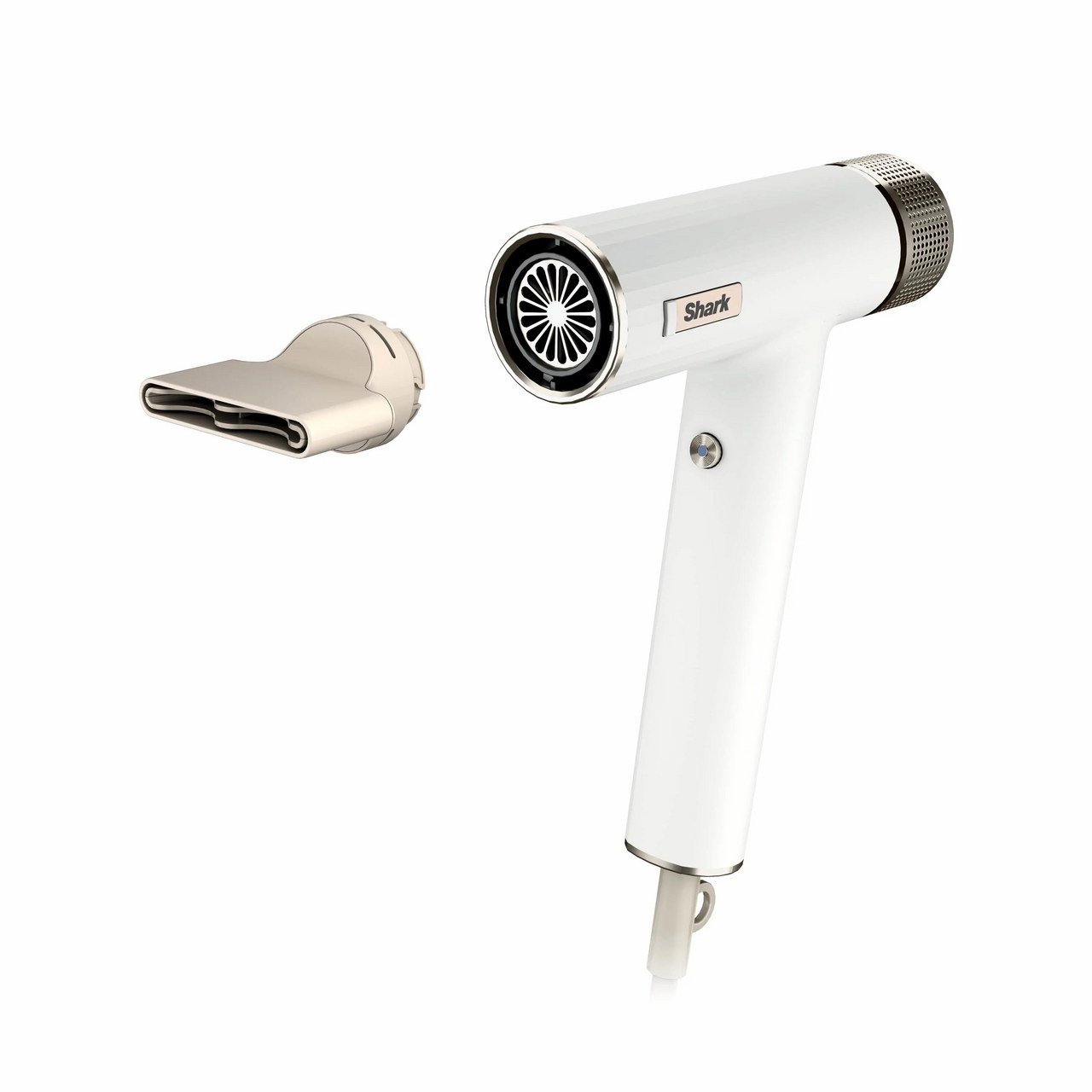
The SpeedStyle is Shark’s challenge to Dyson, and for fine hair its headline is temperature discipline: the dryer measures and regulates its heat a claimed 1000 times a second and is designed never to exceed 230°F in the airstream, the threshold Shark sets for heat damage. Fine hair, which damages at temperatures thicker hair shrugs off, is exactly the hair that benefits. The HD331 set pairs the compact body with the RapidGloss Finisher, which polishes the surface for shine, and the QuickSmooth Brush, a powered brush attachment that dries and smooths a section in one hand, a genuinely easier route to a lifted, finished blowout for anyone whose brush and dryer coordination is still developing. The body is small and light, the attachments click on intelligently and the dryer recognises them, adjusting settings to suit. The compromises are a smaller attachment ecosystem than Dyson’s, a finish quality a notch below the very best here, and top end drying speed that suits fine to medium hair better than very thick hair. It is also, notably, hundreds less than the Supersonic while chasing the same reader. For fine hair that wants protection, polish and an easier one handed blowout at a fairer price, the SpeedStyle is the smart value challenger in this guide.
Specifications
1700W
temperature regulated 1000 times per second per brand
even heat for foam sealing work
Pros
Regulated heat designed to stay below damage threshold
Brush attachment makes one handed blowouts easy
Much cheaper than the Dyson it challenges
Cons
Smaller attachment range than Dyson
Best on fine to medium hair thickness
Finish quality a notch below the leaders
Who should buyyou want Dyson style heat protection and attachments for considerably less money
Who should skipyou need a full professional dryer for very thick hair
Using maximum heat by default instead of the lowest effective setting
Passing the iron repeatedly over the same section
Styling damp hair with a flat iron, which boils water inside the hair shaft
Taking sections too large, which leaves the inside under styled and the outside over heated
Holding the nozzle against one spot on maximum heat, which scorches that section while the rest stays damp
Skipping attachments and blasting curls with open airflow, then blaming the hair for frizz
When to See a Professional
See a trichologist, dermatologist or experienced stylist if you notice sudden shedding, patchy loss, scalp pain, sores or breakage that continues despite gentle care. Those signs point beyond product choice, and professional assessment comes before further buying.
Deciding between options? The comparison Hair Dryer vs Blow Dryer Brush sets out the differences, downsides and verdicts for this topic.
Frequently Asked Questions
Can You Use Hair Dryer on Eva Foam – what is the most important thing to get right?
Consistency at the right level for your type. With hair dryer, the correct amount and frequency used steadily will outperform an intense routine used occasionally, and it avoids most of the irritation that makes people abandon the routine.
How long does it take to see a difference?
Most hair tools routines show their direction within two to four weeks of consistent use, with fuller results over two to three months for concerns involving skin renewal or hair growth cycles. Judge on that timeline, not on single days.
What if my skin or hair reacts badly?
Stop the new step, return to your simplest routine until things settle, and reintroduce only one product at a time if you try again. Persistent pain, swelling or spreading irritation is a reason to seek professional advice rather than push through.
What is the biggest mistake people make with hair dryer?
Holding the nozzle against one spot on maximum heat, which scorches that section while the rest stays damp A close second: skipping attachments and blasting curls with open airflow, then blaming the hair for frizz
What should I check before starting with hair dryer?
Wattage is a weak guide; airflow design, heat settings and a true cool shot matter more. Beyond that, check the product’s own directions against your skin or hair type, start at the gentle end of any range, and change nothing else in your routine for the first two weeks so the result is readable.
What is the best hair dryer for fine hair to add volume?
The buying guide Best Hair Dryer for Fine Hair to Add Volume compares the leading options for this exact need against the criteria that matter, with specifications, honest pros and cons, and a clear statement of who should skip each pick. It is linked from this page.
By Mirror & Glow Editorial Desk – November 23, 2026
Can You Use Hair Dryer Instead of Heat Gun for Resin? A hair dryer dries with moving heated air rather than pressing heat — the guide explains the why, the step by step how, and what to do when it does not work.
By Mirror & Glow Editorial Desk – November 23, 2026
How to Use Hair Dryer to Remove Water from Ear? Rough dry to about eighty percent first, then style in sections with the attachment. The full method, the mistakes to avoid, and where it fits in your routine.
By Mirror & Glow Editorial Desk – November 23, 2026
Can You Use Hair Dryer for Heat Shrink Tubing? A hair dryer dries with moving heated air rather than pressing heat — the guide explains the why, the step by step how, and what to do when it does not work.