By Mirror & Glow Editorial Desk – November 23, 2026
Woman smoothing cream through her dark curly hair against a yellow wall.
The short verdict on bond repair treatment vs hair mask: neither option wins for everyone. Bond Repair Treatment, Hair Mask differ in how they work, who they suit and what they cost in effort and money terms. Each option is explained in depth below, the table sets the differences out plainly, and the verdict section matches each option to the readers it actually suits.
Bond Repair Treatment vs Hair Mask Compared
Factor
Bond Repair Treatment
Hair Mask
How it works
Bond building chemistry supports the hair’s internal structure.
Rich conditioners coat and hydrate hair beyond a daily conditioner’s effect.
Best for
Bleached, coloured and heat damaged hair that breaks easily.
Weekly deep conditioning for dry, dull or coarse hair.
Routine fit
Use as directed, often as a pre shampoo or in shower step weekly or per wash for damaged hair, and keep a moisture product in the same routine. Judge by breakage and elasticity over a month, not by first day softness.
After shampooing, squeeze out excess water, apply from mid lengths to ends, leave for the stated time, rinse cool. Weekly suits most hair; very damaged hair may use it each wash for a period.
Cost level
Varies by brand and format; judge by the criteria in this guide rather than headline prices.
Varies by brand and format; judge by the criteria in this guide rather than headline prices.
Downsides
It does not moisturise, and overuse can leave hair feeling stiff.
Too rich for fine hair if used often, and it cannot repair internal damage.
The Products Behind This Comparison
Comparisons are settled by real products, so the full line up from the buying guide Best Bond Repair Treatment for Low Porosity Hair is set out here in the same detail: every product with its photo, full description, specifications, pros and cons, and who should buy or skip it.
Product
Standout Point
Key Specification
K18 Leave-In Molecular Repair Hair MaskTop Pick
Light leave in format that does not coat low porosity hair
50 ml pump bottle – K18PEPTIDE molecular repair – leave in, no rinse – four minute treatment
K18 is the bond treatment that suits low porosity hair best, because of what it is not: it is not a heavy cream, a butter mask or an oil. The formula is a light leave in built around the K18PEPTIDE, a peptide the brand says works at the molecular level to reconnect broken keratin chains, the deepest bonds damaged by bleach, colour, heat and chemical services. For low porosity hair, whose tightly closed cuticle resists absorbing product, the format matters as much as the chemistry: a small amount of this fluid worked through damp, freshly washed hair sits in a thin film rather than a coating layer, and there is no rinsing, so nothing depends on the hair drinking in a thick mask during a short shower window. The routine is specific: shampoo, skip conditioner, towel dry, apply one to three pumps in sections, wait four minutes before styling or layering anything else. Used that way, the improvements owners describe are elasticity and reduced breakage rather than surface softness, which is exactly the low porosity complaint when hair is damaged but product just sits on it. The compromises are the price per millilitre, which is the highest here, and the discipline the method asks: apply it to hair loaded with conditioner or styling cream first and you blunt the very access the peptide needs.
Specifications
50 ml pump bottle
K18PEPTIDE molecular repair
leave in, no rinse
four minute treatment
Pros
Light leave in format that does not coat low porosity hair
Peptide repair aimed at internal keratin chains
No rinse step, four minutes and done
Cons
Highest cost per millilitre in this guide
Method is strict: conditioner first blunts it
Small 50 ml bottle on long, thick hair
Who should buyyour hair is damaged but heavy masks sit on it, and you want the strongest repair in the lightest format
Who should skipyou want a rich, conditioning mask feel, where the Verb and Curlsmith picks below fit better
Epres takes the opposite route to almost every bond product here: it is a water light spray, mixed at home from concentrate vials into a reusable spray bottle, and sprayed onto dry hair where it works in about ten minutes before you wash or style as normal. The brand’s Biodiffusion technology is acid free, which matters for low porosity hair in two ways. First, a spray of near water consistency cannot build up the way creams and masks do on hair that already repels product, so the treatment reaches the strand instead of filming it. Second, acid free positioning makes it gentle enough for frequent use, and consistency is what bond maintenance on resistant hair actually needs. The spray on dry hair step is also the most forgiving format in this guide for readers whose wash day is already long: no extra shower step, no timing a mask while water runs. The trade offs are real. The kit format means mixing and an ongoing concentrate refill purchase, the per bottle story is less proven than Olaplex or K18, which have a decade of salon use behind them, and because it is so light, hair that is severely damaged may still need a richer treatment in rotation. As the low effort, low residue bond step, though, nothing else here is simpler to keep using.
Specifications
Spray kit with concentrate vials
acid free bond repair
water light spray
no rinse, works in 10 minutes
Pros
Water light spray cannot film or coat resistant hair
Works on dry hair in about ten minutes
Acid free, gentle enough for frequent use
Cons
Kit format means mixing and refill vials
Shorter track record than Olaplex or K18
Very damaged hair may still need a richer treatment
Who should buyyou want bond care with zero residue risk and the shortest possible routine step
Who should skipyour hair is severely damaged and needs the heaviest repair chemistry available
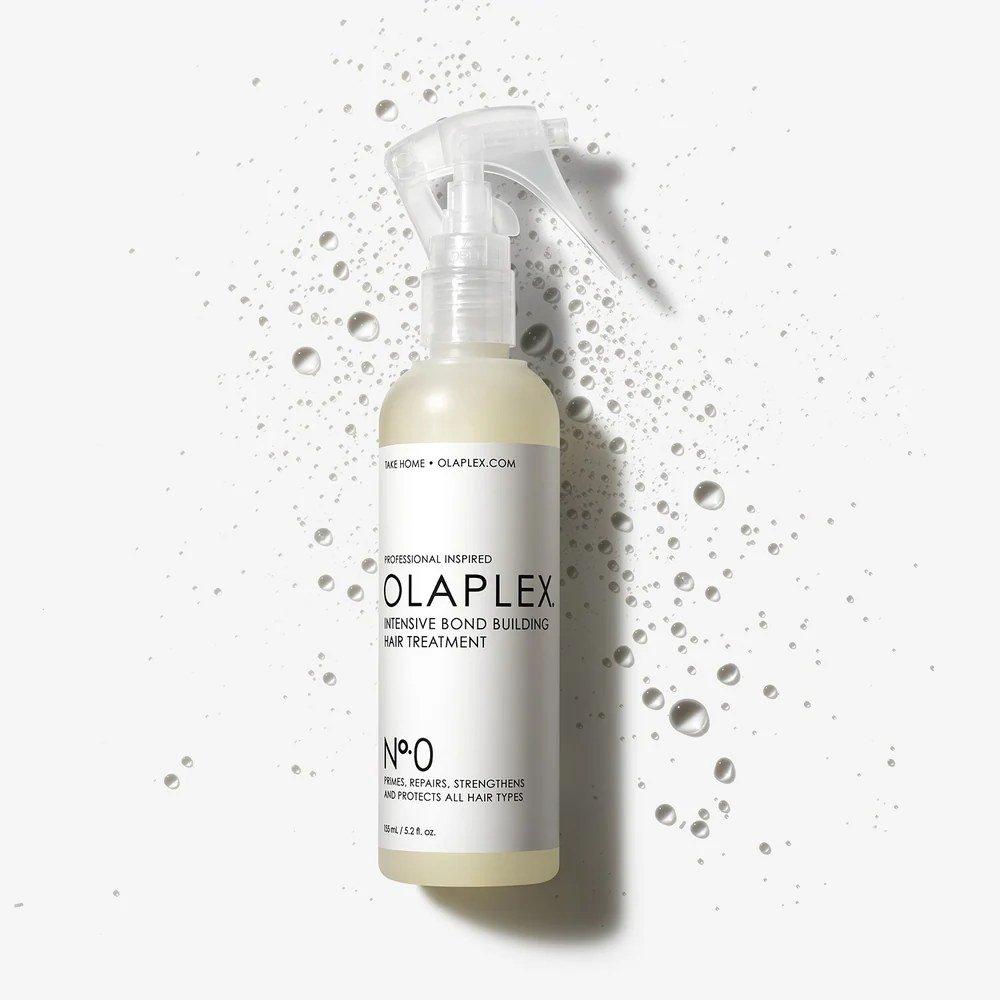
No. 0 is Olaplex in its most low porosity friendly form: a liquid primer with the highest concentration of the brand’s bis-aminopropyl diglycol dimaleate bond building chemistry, sprayed onto dry hair until damp, left for ten minutes, then layered with No. 3 before shampooing. The reason it earns its place in this specific guide is delivery. Low porosity hair absorbs slowly and unevenly, and a watery primer wets the strand and begins the bond work before any cream is asked to penetrate, which is why Olaplex itself directs the pairing for hair that is hard to saturate, including resistant and low porosity types. Used alone it is a meaningful treatment; used as designed, under No. 3, the pair is the closest thing the brand has to a salon strength home service. The honest limits: it is a two product system, so the real cost is No. 0 plus No. 3 together, the spray bottle can feel wasteful on short hair, and the ten plus ten minute timing makes it a planned treatment rather than a quick fix. The chemistry is also repair only, adding no moisture, so low porosity hair that is dry as well as damaged still needs its usual hydrating conditioner after the wash that follows.
Specifications
155 ml spray bottle
highest Olaplex bond concentration
primer for No. 3
apply to dry hair
Pros
Liquid format wets resistant hair better than creams
Highest concentration of Olaplex bond chemistry
Designed to prime No. 3 for hard to saturate hair
Cons
Full effect needs No. 3 bought as well
Twenty minutes of treatment time before washing
Adds no moisture, only bond repair
Who should buyyour hair is low porosity and damaged, and creams have failed to make a difference so far
Who should skipyou want a single product with no pairing or timing steps
No. 3 is the original home bond builder and still the reference point every other product in this guide is compared with: a pre shampoo cream treatment carrying Olaplex’s patented bond building molecule, applied to damp hair for at least ten minutes, then rinsed, shampooed and conditioned as normal. For low porosity hair it sits in the middle of this line up. The cream is thinner than a mask and spreads well through towel dried hair, especially if you work in sections and add a little warmth, a shower cap and body heat help resistant cuticles take in any treatment. Its record is its strength: it has been the salon recommended take home since 2014, the instructions are foolproof, and it suits every damage source from bleach to flat irons. The limitations are equally established. It is a bond treatment only, with no conditioning richness, so hair can feel straw like if you skip conditioner afterwards. The 100 ml bottle empties quickly on long hair, pushing regular users to the 250 ml size. And on truly low porosity hair the cream format asks more patience than the liquid No. 0 or the epres spray. As the proven, single bottle starting point for bond repair, it remains the safest first purchase here.
Specifications
100 ml bottle
bis-aminopropyl diglycol dimaleate
pre shampoo treatment
10 minutes on damp hair
Pros
The original, best documented home bond builder
Simple pre shampoo routine, hard to misuse
Works on damage from bleach, colour and heat
Cons
Cream format absorbs slowly on resistant hair
No conditioning benefit, conditioner still needed
100 ml bottle runs out fast on long hair
Who should buyyou want the most proven bond treatment in a single bottle and your porosity is only mildly low
Who should skipyour hair is strongly low porosity and needs a liquid or spray format instead
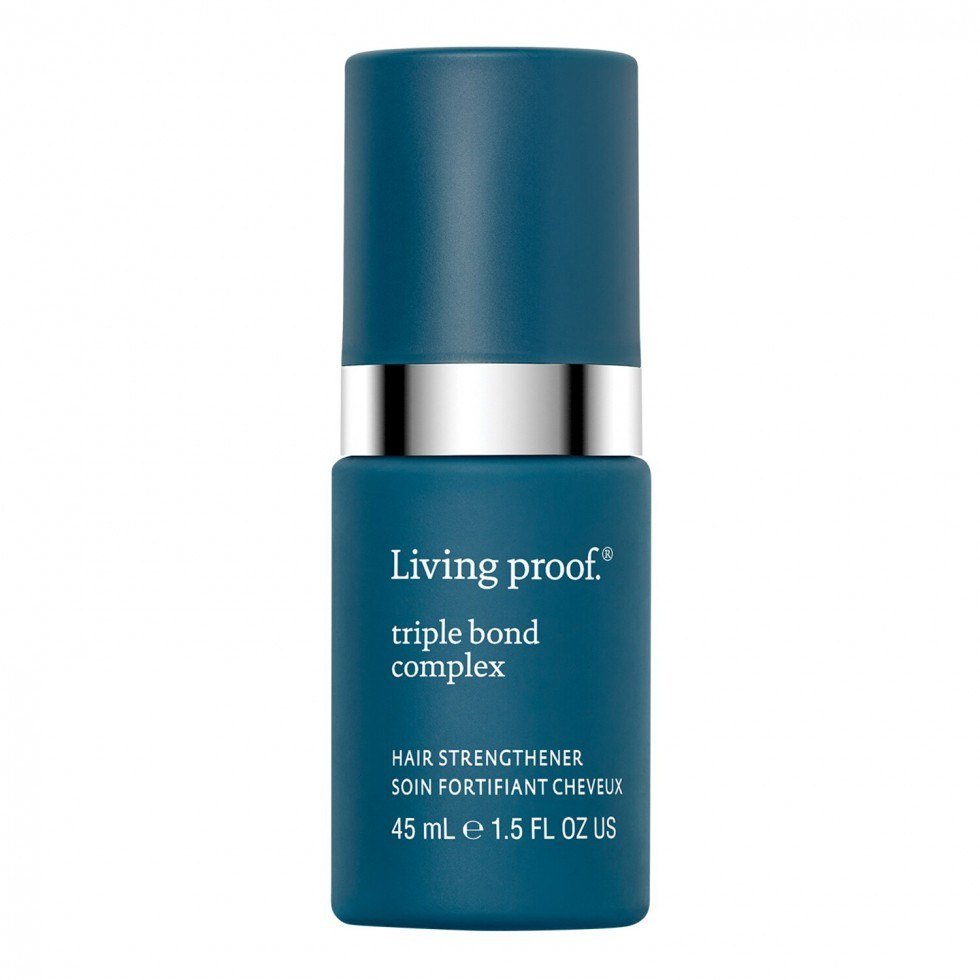
Triple Bond Complex is Living Proof’s entry in the bond category, and its pitch is breadth: where most bond builders target one bond type, this weekly leave in is formulated to build hydrogen, ionic and covalent bonds, the three bond types in hair, in a single step that needs no rinsing. The format is a light cream gel dispensed in pumps, applied to damp hair after washing, and it is heat friendly, so it folds into a blow dry routine rather than adding a separate treatment session. For low porosity hair the appeal is the dose size and texture: two pumps spread thin, absorb without a film, and the no rinse design means the treatment stays on the hair for days instead of depending on a ten minute shower window that resistant cuticles often waste. Living Proof also positions it for all hair types and for use on damp hair before styling, which keeps the routine honest and short. The costs are the small 45 ml bottle at a premium price, and a subtler result than K18 or Olaplex on severely compromised hair, since this is a maintenance strength treatment rather than a rescue product. For damaged but not destroyed low porosity hair, it is the easiest bond step here to actually sustain weekly.
Specifications
45 ml pump
weekly leave in treatment
builds three bond types
heat activated, no rinse
Pros
Leave in, no extra treatment session needed
Targets all three bond types in hair
Thin dose absorbs without filming the surface
Cons
Maintenance strength, not a rescue treatment
Small 45 ml bottle at a premium price
Results build gradually over weeks
Who should buyyou want bond care built into your normal blow dry routine with no extra steps
Who should skipyour hair is severely bleached or breaking and needs rescue strength repair first
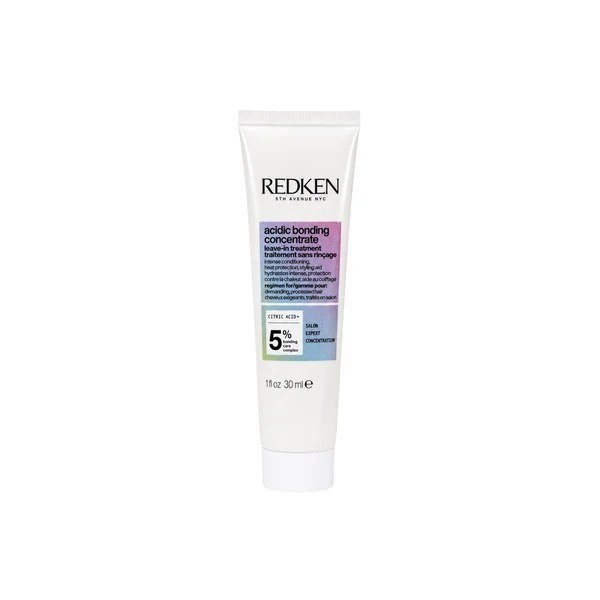
Redken’s Acidic Bonding Concentrate line is the salon system’s answer to bond care, and the leave in treatment is its most practical bottle: a conditioning leave in carrying the line’s citric acid and bonding care complex, with heat protection up to 450 degrees Fahrenheit and a pH balanced acidic formula designed to counter the alkalinity damage leaves behind. In this guide it plays a specific role. It is the bond product most likely to already fit a low porosity routine, because it replaces your usual leave in conditioner rather than adding a treatment day, and its texture is a midweight cream that distributes in a thin layer if you apply it to soaking wet hair in sections, the standard trick for getting any cream past a resistant cuticle. Redken publishes the line’s testing against breakage and split end appearance, and the tube is the generous 150 ml size at a salon brand price below K18. The cautions: it is a leave in conditioner first and a bond treatment second, so the repair depth is shallower than the dedicated treatments above it, the formula is fragranced like most Redken products, and layering it over other leave ins on low porosity hair is a reliable route to build up and dullness.
Specifications
150 ml tube
citric acid bonding care complex
leave in conditioner format
heat protection to 450F
Pros
Replaces your leave in, no extra routine step
Bond care plus heat protection in one tube
Generous 150 ml salon size
Cons
Repair depth shallower than dedicated treatments
Fragranced formula
Easy to over layer on low porosity hair
Who should buyyou heat style often and want bond care and heat protection in the leave in you already use
Who should skipyou need intensive repair for serious breakage, where K18 or the Olaplex pair go further
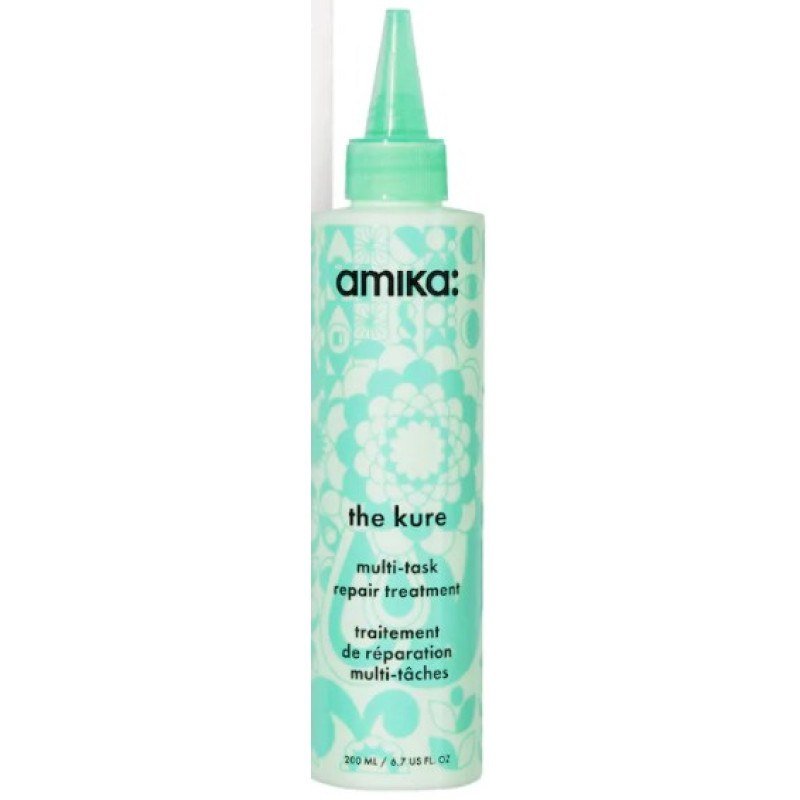
The Kure Multi-Task is the fastest treatment in this guide: a nozzle tipped bottle you apply to damp hair after shampooing, leave for just sixty seconds, then either rinse out or leave in for a stronger effect. Amika builds it on its bond cure technology with vegan proteins, sea buckthorn and plant butters including shea and borage, and the brand publishes clinical style claims for repair and breakage reduction after a single use. The low porosity logic is the contact time and the choice. Sixty seconds is too short for resistant hair to absorb much of anything, so the honest way to use this product on low porosity hair is as a leave in on the lengths, where the thin lotion texture can sit and work without the weight of a mask, reserving the rinse out mode for finer or less resistant hair. The nozzle applicator genuinely helps, laying the product at the root of each section rather than in a palmful that coats the top layer only. The downsides are the fragrance, amika’s signature scent is strong, the butter content means heavy handed leave in use can still build up over a week of styling, and its repair chemistry is proprietary and less independently documented than the patented molecules above it in this list.
Specifications
200 ml nozzle bottle
bond cure technology
60 second rinse out or leave in
vegan proteins and plant butters
Pros
Sixty second format, or leave in for resistant hair
Nozzle tip applies product section by section
Large 200 ml bottle, good value per use
Cons
Strong signature fragrance
Butters can build up if used heavily as a leave in
Proprietary chemistry, less documented than rivals
Who should buyyou want a bond treatment that fits an ordinary wash, with the option to leave it in for more effect
Who should skipyou are fragrance sensitive or need the deepest documented repair chemistry
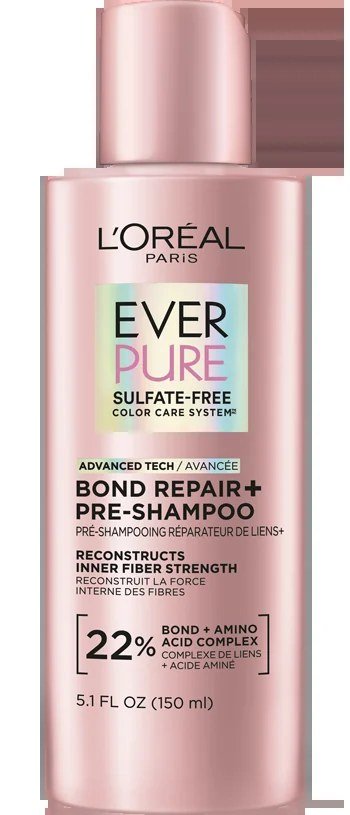
L’Oréal Paris EverPure Bond Repair Pre-Shampoo Treatment
EverPure’s bond pre shampoo is the drugstore route into this category, and it is better engineered for the job than its price suggests. The formula is built on citric acid, the same acid family Redken uses in its salon line, in a stated bond and amino acid complex, and it is used as a pre shampoo treatment for five to ten minutes on wet hair, one to three times a week, before the matching bond shampoo and conditioner. For low porosity hair the pre shampoo timing is quietly useful: hair is already fully saturated from wetting, which is when a resistant cuticle is most open to taking anything in, and the treatment is then washed out, so there is no residue question afterwards at all. L’Oréal positions the system for coloured, bleached and damaged hair, the formula is sulfate free and vegan, and the whole three step system costs less than most single bottles in this guide. The limits follow from the price and the format. The 5.1 fl oz bottle is small if you use it three times a week on long hair, the system works best bought as a system rather than as this bottle alone, and citric acid bond care at drugstore strength is a maintenance tool, not a rescue for hair that is already snapping.
Specifications
5.1 fl oz bottle
citric acid bond and amino acid complex
sulfate free and vegan
5 to 10 minutes before shampoo
Pros
Citric acid bond care at a drugstore price
Pre shampoo use means zero residue afterwards
Sulfate free, vegan, made for coloured hair
Cons
Best results need the matching shampoo and conditioner
Small bottle at three uses a week
Maintenance strength, not rescue repair
Who should buyyou want to try bond care on a budget, especially on colour treated hair
Who should skipyour hair is severely damaged and needs the strongest treatment first
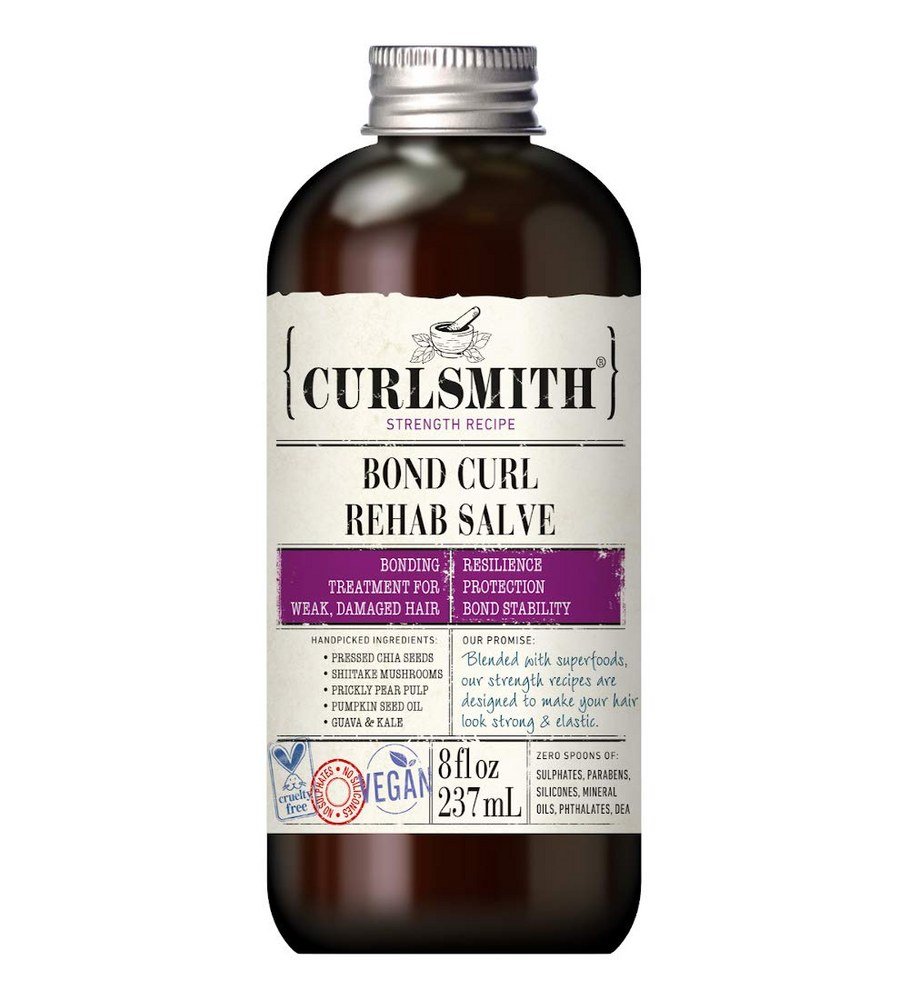
Bond Curl Rehab Salve is the protein forward entry here, a pre shampoo treatment from Curlsmith built for waves, curls and coils, with a bond complex plus a noticeable protein load and plant ingredients including apricot kernel oil and chia seed extract. It is included with a clear warning attached, because low porosity hair is the hair type most often protein sensitive: protein that cannot penetrate tends to sit on the surface and leave hair feeling stiff, dry and straw like, the exact opposite of the goal. Used knowingly, though, this salve has a real job. Low porosity hair that is damaged and limp, that will not hold a curl pattern and feels mushy when wet, is often the hair that does need protein, and a rinse out salve used every few weeks, followed by a protein free deep conditioner, is the controlled way to give it. Curlsmith’s instructions are flexible on timing, from fifteen minutes to an hour, which suits a planned wash day. The bottle is a generous 8 fl oz at a fair price for the category. What it is not is a weekly default for this hair type: if your low porosity hair already feels stiff or rough, skip this one and take any other pick in the guide.
Specifications
8 fl oz bottle
protein rich pre shampoo salve
apricot kernel and chia seed
for curly and coily hair
Pros
Bond care plus protein for limp, over softened curls
Generous 8 fl oz bottle
Flexible timing, rinse out control
Cons
Protein load can stiffen protein sensitive low porosity hair
Needs a protein free conditioner after it
Not a weekly default for this hair type
Who should buyyour low porosity curls are damaged, limp and over softened, and you use protein deliberately and occasionally
Who should skipyour hair already feels stiff or straw like, a classic sign to avoid protein entirely
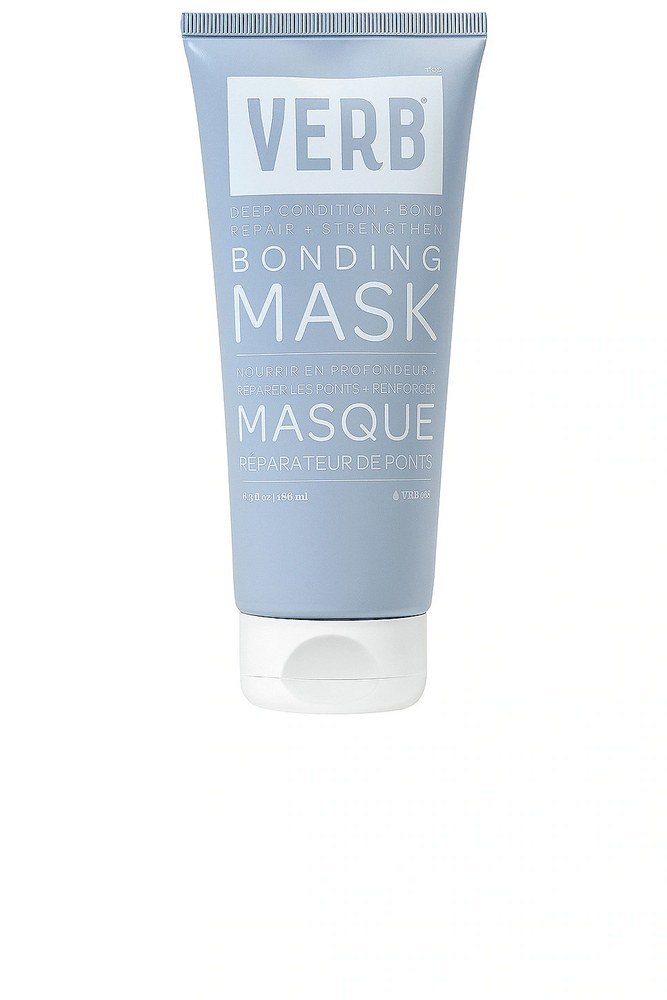
Verb’s Bonding Mask is the one true mask in this guide, included because some low porosity readers still want a mask ritual, and this is the mask least likely to punish resistant hair for it. The formula is built on an amino bond complex with a marine botanical blend, mafura butter and manketti seed oil, and Verb keeps the texture lighter than the dense butter masks that define the category, so a five to seven minute application after shampooing rinses cleaner than most. The technique decides everything with this product on low porosity hair: apply it to freshly clarified, soaking wet hair, work it through in sections, and add gentle heat, a shower cap and warm water over it, which is the reliable way to lift a closed cuticle enough to accept a cream. Used that way it doubles as the week’s conditioning step, which the pure bond treatments above do not. The honest trade offs are that a mask is still the hardest format for this hair type to absorb, the bond chemistry is a house complex rather than a patented molecule with published testing, and the butters, while light for a mask, make it the wrong choice for hair that is fine as well as low porosity. As the conditioning end of the bond spectrum, it earns its place.
Specifications
6.3 oz tube
amino bond complex
mafura butter and manketti seed oil
5 to 7 minutes, weekly
Pros
Bond care and real conditioning in one step
Lighter texture than most butter masks
Vegan, cruelty free, no parabens or sulfates
Cons
Mask format is hardest for low porosity hair to absorb
Needs heat and sectioning to work well
Butters too rich for fine low porosity hair
Who should buyyou want one weekly product that conditions and bond cares, and you will apply it with heat in sections
Who should skipyour hair is fine and low porosity, where the spray and liquid picks will serve you better
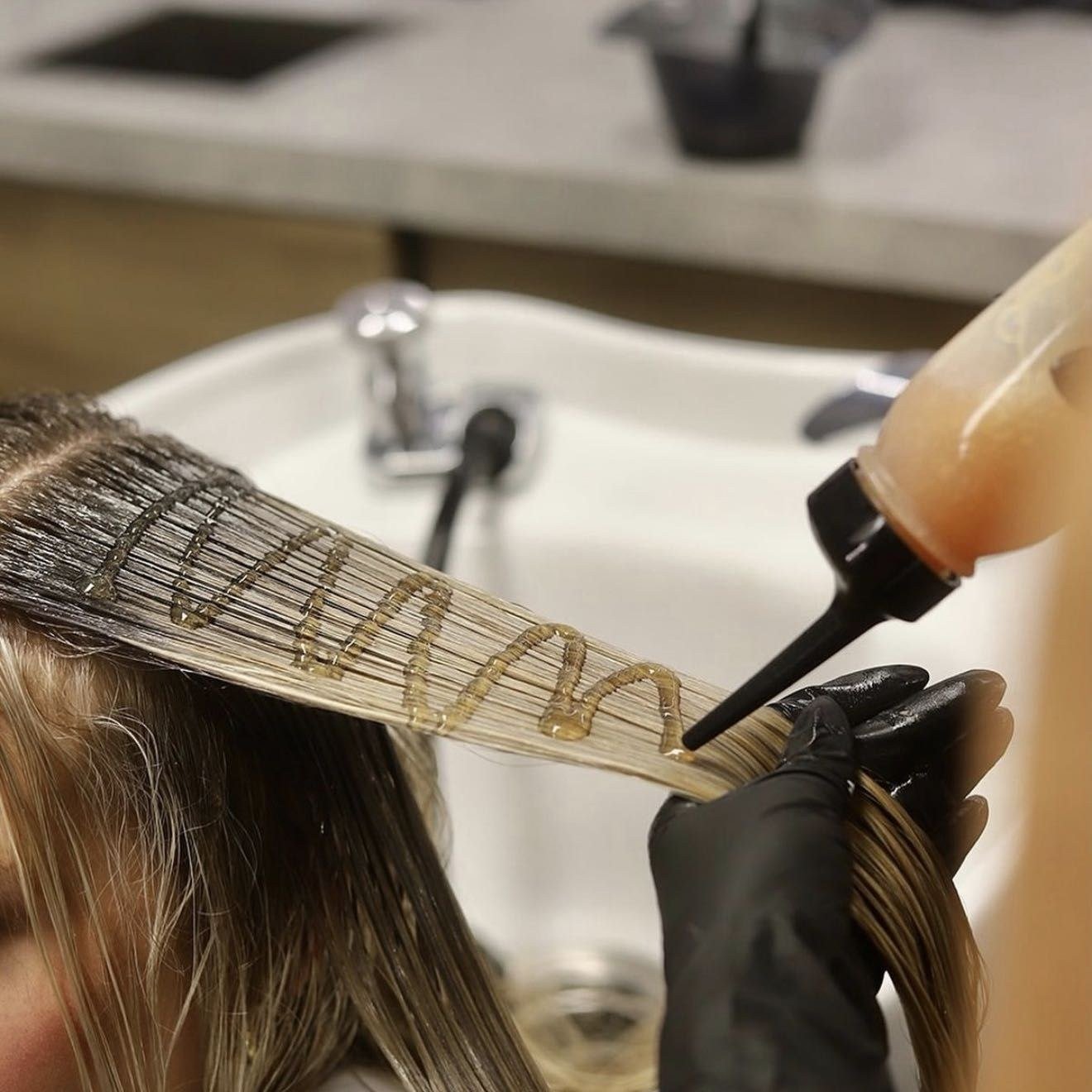
A treatment targeting the internal bonds of damaged hair to restore strength and reduce breakage from colour and heat.
How it works: Bond building chemistry supports the hair’s internal structure.
Different brands use different chemistries, from bis aminopropyl diglycol dimaleate to peptide based systems, but the claim is shared: reconnecting or protecting the disulfide and other bonds that give hair its strength. It is not a moisturiser, and hair still needs moisture alongside, which is why bond routines pair with masks. Overuse can leave hair feeling stiff or coated in some systems. Nothing repairs a split end; bond care reduces further breakage and improves how damaged hair behaves and feels.
Best for: Bleached, coloured and heat damaged hair that breaks easily.
In your routine: Use as directed, often as a pre shampoo or in shower step weekly or per wash for damaged hair, and keep a moisture product in the same routine. Judge by breakage and elasticity over a month, not by first day softness.
What Is Hair Mask?
A concentrated conditioning treatment left on hair for several minutes for deep moisture and softness.
How it works: Rich conditioners coat and hydrate hair beyond a daily conditioner’s effect.
The choice that matters is moisture versus protein. Dry, dull, stretchy feeling hair needs moisture: humectants, fatty alcohols and oils. Hair that is limp, mushy or over processed may need protein and bond support instead, and more moisture makes it worse. Ingredient lists reveal the type: proteins appear as hydrolysed keratin, wheat or rice protein. Time on the hair matters more than brand; five to twenty minutes as directed beats a thirty second rinse, and heat from a shower cap helps coarse hair take it in.
Best for: Weekly deep conditioning for dry, dull or coarse hair.
In your routine: After shampooing, squeeze out excess water, apply from mid lengths to ends, leave for the stated time, rinse cool. Weekly suits most hair; very damaged hair may use it each wash for a period.
The Downsides of Each
Bond Repair Treatment: It does not moisturise, and overuse can leave hair feeling stiff. The commonest way people make it worse: replacing all conditioning with bond products, leaving hair strong but dry and rough
Hair Mask: Too rich for fine hair if used often, and it cannot repair internal damage. The commonest way people make it worse: using a rich mask on fine hair at every wash and wondering why it will not hold a style
Verdict by Use Case
Choose Bond Repair Treatment if bleached, coloured and heat damaged hair that breaks easily. That is the use case where its strengths matter most, and where its main downside, it does not moisturise, and overuse can leave hair feeling stiff.
Choose Hair Mask if weekly deep conditioning for dry, dull or coarse hair. That is the use case where its strengths matter most, and where its main downside, too rich for fine hair if used often, and it cannot repair internal damage.
If your situation sits between the two, the deciding question is usually effort: which option fits the routine you will actually keep for the next three months? The better option on paper loses to the one you use consistently, in almost every hair care category.
Can You Use Both?
In many hair care routines the options complement each other: used at different times, on different days or for different areas, each covering the other’s weak ground. The cautions are overload and duplication: do not run both at full intensity in the same session, and do not pay twice for the same job. Introduce any combination gradually, one change at a time, so you can tell what each option is actually doing for you.
How to Decide
Work through three questions in order. First, which option matches your type: the table’s best for row is written for exactly this, and a mismatch there outweighs every other advantage. Second, which downside can you live with: every option in this comparison has one, and the right choice is usually the one whose downside does not touch your actual problem. Third, which fits the routine you already keep: the option that slots into your existing hair care habits will still be in use in three months, and consistency is what turns a reasonable choice into a good result. If the answers point different ways, weight them in that order: type, downside, routine.
Which is better overall, bond repair treatment or hair mask?
There is no universal winner: the better option is the one matching your skin or hair type, routine and the use cases in the verdict section above. The difference table shows where each one genuinely leads, and the downsides section shows what each one costs you.
Can I use both in the same routine?
In many hair care routines the two can complement each other, used at different times or for different areas, as long as the combination does not overload skin or hair. Introduce any combination gradually, and keep the total intensity at a level your routine can sustain.
Which is better for beginners?
Beginners usually do best with the option that has the gentler learning curve and the fewer downsides for their type, as set out in the table. Start there, and switch only if your needs change.
Which is better for delicate or damaged hair?
The option with the shorter, gentler downside list for your type: compare the downsides row in the table first, start with the milder option, and patch test or trial at the lowest intensity before committing. If your skin or hair is under a clinician’s care, their sequencing comes first.
Which works out cheaper over time?
Compare total cost, not shelf price: how much product or how many consumables each option uses per month, how long a unit lasts in real use, and what you would otherwise spend on the alternative. In this category the cheaper option per use is often the one people abandon, which makes it the most expensive of all.
How do I decide if I can only choose one?
Match the option to your type first, using the best for row in the table, then check that its main downside does not overlap with the problem you are trying to solve. Finally, pick the one that fits the routine you already keep, because three months of consistent use with the second best option beats three weeks of the best one.
What is the best bond repair treatment for low porosity hair?
The buying guide Best Bond Repair Treatment for Low Porosity Hair compares the leading options for this exact need against the criteria that matter, with specifications, honest pros and cons, and a clear statement of who should skip each pick. It is linked from this page.
By Mirror & Glow Editorial Desk – November 23, 2026
Everything behind can you use bond repair and protein treatment together: different brands use different chemistries, set out as a clear step by step with the mistakes and questions readers raise most.
By Mirror & Glow Editorial Desk – November 23, 2026
Everything behind how often should i use epres bond repair treatment: different brands use different chemistries, set out as a clear step by step with the mistakes and questions readers raise most.
By Mirror & Glow Editorial Desk – November 23, 2026
Best Bond Repair Treatment for Low Porosity Hair: K18 Leave-In Molecular Repair Hair Mask first, epres Bond Repair Treatment close behind, every pick specced, photographed and given a buy or skip verdict.