Can You Use Bond Repair and Protein Treatment Together
By Mirror & Glow Editorial Desk – November 23, 2026
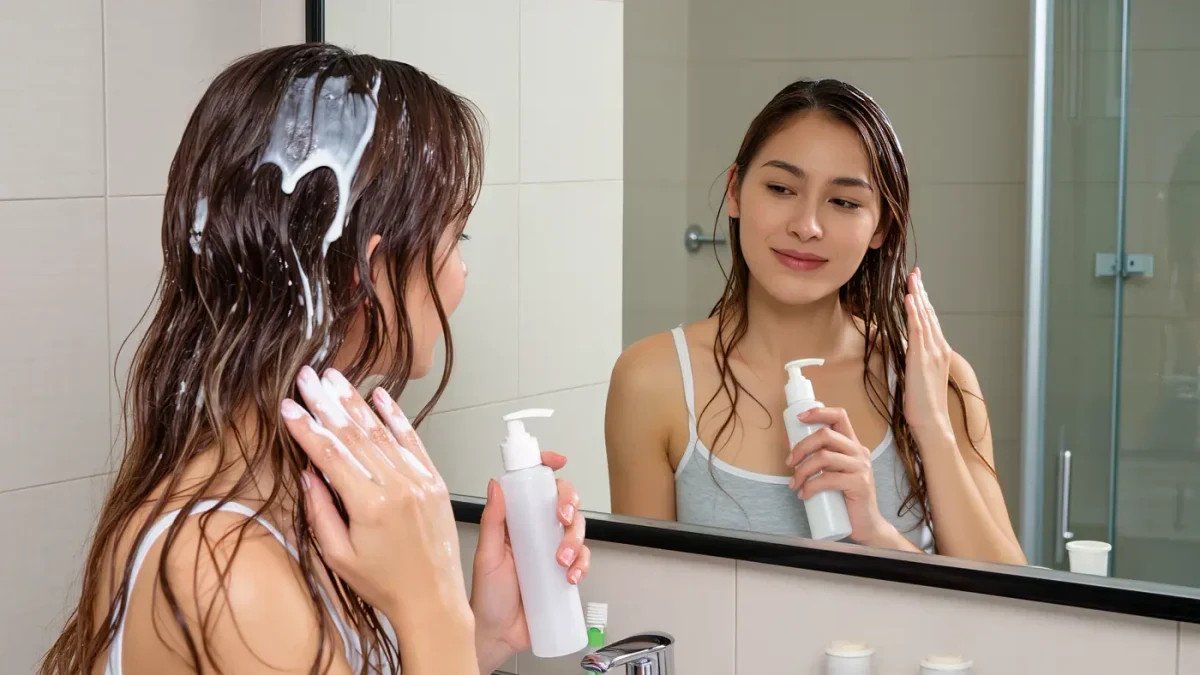
Woman working a creamy hair treatment through her wet hair in a spa style bathroom.
The direct answer: in most cases yes, with conditions. Whether you can use bond repair and protein treatment together depends on the products involved, your skin or hair type, and how you layer or time them. The guide below gives the conditions, the safe way to do it, and the situations where the answer becomes no.
Bond Repair Treatment Explained
A bond repair treatment targets the broken internal bonds in damaged hair, from bleaching, colour and heat, aiming to restore strength and reduce breakage. It is repair aimed at structure rather than surface softness, and it is the category that transformed care for bleached hair.
Different brands use different chemistries, from bis aminopropyl diglycol dimaleate to peptide based systems, but the claim is shared: reconnecting or protecting the disulfide and other bonds that give hair its strength. It is not a moisturiser, and hair still needs moisture alongside, which is why bond routines pair with masks. Overuse can leave hair feeling stiff or coated in some systems. Nothing repairs a split end; bond care reduces further breakage and improves how damaged hair behaves and feels.
Using Bond Repair and Protein Treatment Together
Bond Repair: A treatment targeting the internal bonds of damaged hair to restore strength and reduce breakage from colour and heat.
Whether the combination works comes down to three things: whether the two products compete for the same job, whether one changes how strongly the other acts, and whether your skin or hair has the tolerance for both at once. As a rule, water based products go on before oil based ones, treatments go on before moisturisers, and two strong actives are introduced on alternate days or nights until you know how the pairing behaves on you. If either product is new to you, establish it alone for a week first; combining two new products makes every reaction a mystery with two suspects.
The answer becomes no, or at least not yet, when both products are strong exfoliants or retinoids in the same session, when one is a medication your clinician has sequenced for you, or when your skin or hair is currently irritated, sunburnt or freshly treated. In those cases the pairing is not wrong in principle; the timing is.
Step by Step: Bond Repair Treatment
The method below is the standard technique for this category, in the order that makes each step work. Adapt the amounts to your own skin or hair, and keep the order. If you still need the product itself, the buying guide Best Bond Repair Treatment for Low Porosity Hair compares the current options for this exact need.
Start with hair washed and gently squeezed free of excess water
Apply the product to mid lengths and ends first, where hair is oldest and driest
Use the contact time on the label rather than rinsing immediately
Rinse with lukewarm water and judge softness once hair is fully dry, not wet
Repeat on a weekly rhythm and adjust the amount before switching products
Getting Bond Repair Treatment Right in Your Routine
Fit matters more than intensity with bond repair treatment. Build the habit at the gentlest effective level first: the right product amount, the right frequency for your type, and one change at a time so you can see what is actually helping. Keep the rest of your hair care routine stable while you judge the change, and give the routine the full period the product guidance describes before deciding it does not work.
Keep notes for the first two weeks: what you used, how much, and how your skin or hair felt the next day. That simple record answers most follow up questions, including whether a reaction came from the new step or from something layered with it.
Use as directed, often as a pre shampoo or in shower step weekly or per wash for damaged hair, and keep a moisture product in the same routine. Judge by breakage and elasticity over a month, not by first day softness.
K18 is the bond treatment that suits low porosity hair best, because of what it is not: it is not a heavy cream, a butter mask or an oil. The formula is a light leave in built around the K18PEPTIDE, a peptide the brand says works at the molecular level to reconnect broken keratin chains, the deepest bonds damaged by bleach, colour, heat and chemical services. For low porosity hair, whose tightly closed cuticle resists absorbing product, the format matters as much as the chemistry: a small amount of this fluid worked through damp, freshly washed hair sits in a thin film rather than a coating layer, and there is no rinsing, so nothing depends on the hair drinking in a thick mask during a short shower window. The routine is specific: shampoo, skip conditioner, towel dry, apply one to three pumps in sections, wait four minutes before styling or layering anything else. Used that way, the improvements owners describe are elasticity and reduced breakage rather than surface softness, which is exactly the low porosity complaint when hair is damaged but product just sits on it. The compromises are the price per millilitre, which is the highest here, and the discipline the method asks: apply it to hair loaded with conditioner or styling cream first and you blunt the very access the peptide needs.
Specifications
50 ml pump bottle
K18PEPTIDE molecular repair
leave in, no rinse
four minute treatment
Pros
Light leave in format that does not coat low porosity hair
Peptide repair aimed at internal keratin chains
No rinse step, four minutes and done
Cons
Highest cost per millilitre in this guide
Method is strict: conditioner first blunts it
Small 50 ml bottle on long, thick hair
Who should buyyour hair is damaged but heavy masks sit on it, and you want the strongest repair in the lightest format
Who should skipyou want a rich, conditioning mask feel, where the Verb and Curlsmith picks below fit better
No. 3 is the original home bond builder and still the reference point every other product in this guide is compared with: a pre shampoo cream treatment carrying Olaplex’s patented bond building molecule, applied to damp hair for at least ten minutes, then rinsed, shampooed and conditioned as normal. For low porosity hair it sits in the middle of this line up. The cream is thinner than a mask and spreads well through towel dried hair, especially if you work in sections and add a little warmth, a shower cap and body heat help resistant cuticles take in any treatment. Its record is its strength: it has been the salon recommended take home since 2014, the instructions are foolproof, and it suits every damage source from bleach to flat irons. The limitations are equally established. It is a bond treatment only, with no conditioning richness, so hair can feel straw like if you skip conditioner afterwards. The 100 ml bottle empties quickly on long hair, pushing regular users to the 250 ml size. And on truly low porosity hair the cream format asks more patience than the liquid No. 0 or the epres spray. As the proven, single bottle starting point for bond repair, it remains the safest first purchase here.
Specifications
100 ml bottle
bis-aminopropyl diglycol dimaleate
pre shampoo treatment
10 minutes on damp hair
Pros
The original, best documented home bond builder
Simple pre shampoo routine, hard to misuse
Works on damage from bleach, colour and heat
Cons
Cream format absorbs slowly on resistant hair
No conditioning benefit, conditioner still needed
100 ml bottle runs out fast on long hair
Who should buyyou want the most proven bond treatment in a single bottle and your porosity is only mildly low
Who should skipyour hair is strongly low porosity and needs a liquid or spray format instead
Epres takes the opposite route to almost every bond product here: it is a water light spray, mixed at home from concentrate vials into a reusable spray bottle, and sprayed onto dry hair where it works in about ten minutes before you wash or style as normal. The brand’s Biodiffusion technology is acid free, which matters for low porosity hair in two ways. First, a spray of near water consistency cannot build up the way creams and masks do on hair that already repels product, so the treatment reaches the strand instead of filming it. Second, acid free positioning makes it gentle enough for frequent use, and consistency is what bond maintenance on resistant hair actually needs. The spray on dry hair step is also the most forgiving format in this guide for readers whose wash day is already long: no extra shower step, no timing a mask while water runs. The trade offs are real. The kit format means mixing and an ongoing concentrate refill purchase, the per bottle story is less proven than Olaplex or K18, which have a decade of salon use behind them, and because it is so light, hair that is severely damaged may still need a richer treatment in rotation. As the low effort, low residue bond step, though, nothing else here is simpler to keep using.
Specifications
Spray kit with concentrate vials
acid free bond repair
water light spray
no rinse, works in 10 minutes
Pros
Water light spray cannot film or coat resistant hair
Works on dry hair in about ten minutes
Acid free, gentle enough for frequent use
Cons
Kit format means mixing and refill vials
Shorter track record than Olaplex or K18
Very damaged hair may still need a richer treatment
Who should buyyou want bond care with zero residue risk and the shortest possible routine step
Who should skipyour hair is severely damaged and needs the heaviest repair chemistry available
Applying rich products to the roots, which weighs hair down and dulls it
Judging a conditioner while hair is still wet and coated
Using protein heavy products daily on hair that needs moisture instead
Skipping heat protectant because a treatment is in the routine
Replacing all conditioning with bond products, leaving hair strong but dry and rough
Expecting it to mend split ends, which only scissors remove
When to See a Professional
See a trichologist, dermatologist or experienced stylist if you notice sudden shedding, patchy loss, scalp pain, sores or breakage that continues despite gentle care. Those signs point beyond product choice, and professional assessment comes before further buying.
Deciding between options? The comparison Bond Repair Treatment vs Hair Mask sets out the differences, downsides and verdicts for this topic.
Frequently Asked Questions
Can You Use Bond Repair and Protein Treatment Together – what is the most important thing to get right?
Consistency at the right level for your type. With bond repair treatment, the correct amount and frequency used steadily will outperform an intense routine used occasionally, and it avoids most of the irritation that makes people abandon the routine.
How long does it take to see a difference?
Most hair care routines show their direction within two to four weeks of consistent use, with fuller results over two to three months for concerns involving skin renewal or hair growth cycles. Judge on that timeline, not on single days.
What if my skin or hair reacts badly?
Stop the new step, return to your simplest routine until things settle, and reintroduce only one product at a time if you try again. Persistent pain, swelling or spreading irritation is a reason to seek professional advice rather than push through.
What is the biggest mistake people make with bond repair treatment?
Replacing all conditioning with bond products, leaving hair strong but dry and rough A close second: expecting it to mend split ends, which only scissors remove
What should I check before starting with bond repair treatment?
Different brands use different chemistries, from bis aminopropyl diglycol dimaleate to peptide based systems, but the claim is shared: reconnecting or protecting the disulfide and other bonds that give hair its strength. Beyond that, check the product’s own directions against your skin or hair type, start at the gentle end of any range, and change nothing else in your routine for the first two weeks so the result is readable.
What is the best bond repair treatment for low porosity hair?
The buying guide Best Bond Repair Treatment for Low Porosity Hair compares the leading options for this exact need against the criteria that matter, with specifications, honest pros and cons, and a clear statement of who should skip each pick. It is linked from this page.
By Mirror & Glow Editorial Desk – November 23, 2026
Everything behind how often should i use epres bond repair treatment: different brands use different chemistries, set out as a clear step by step with the mistakes and questions readers raise most.
By Mirror & Glow Editorial Desk – November 23, 2026
Best Bond Repair Treatment for Low Porosity Hair: K18 Leave-In Molecular Repair Hair Mask first, epres Bond Repair Treatment close behind, every pick specced, photographed and given a buy or skip verdict.
By Mirror & Glow Editorial Desk – November 23, 2026
Looking for the best bond repair treatment for 4c hair? Start with the types: this guide breaks down the options, the specifications to check before buying, and who should buy or skip each one.