By Mirror & Glow Editorial Desk – November 23, 2026
Woman working a treatment through her wet coiled hair with her fingers.
Affiliate disclosure: Mirror & Glow may earn a commission from qualifying purchases made through links on this page, at no extra cost to you. Full disclosure.
The verdict up front: start with Olaplex No. 3 Hair Perfector, the strongest all round match in this line up for 4c hair. Every pick is compared in the table below, then reviewed in full with its downsides as well as its strengths.
If you are looking for the best bond repair treatment for 4c hair, the right choice depends on fit, not hype. This guide is written for 4c hair, and every criterion below is weighted for that need first. The short answer: choose the bond repair treatment whose formula, format and strength match your hair, check the ingredient or specification list before the marketing claims, and avoid the options whose downsides match the problem you are trying to solve.
What matters most in bond repair treatment is covered in depth below: what the product actually is, the types on sale and how they differ, the buying criteria explained one by one, how to use what you buy, and the mistakes that waste the most money in this category.
Best Bond Repair Treatment for 4c Hair Compared
Product
Standout Point
Key Specification
Olaplex No. 3 Hair PerfectorTop Pick
The original patented bond building active
3.3 fl oz bottle – Bis-Aminopropyl Diglycol Dimaleate bond builder – pre shampoo treatment, 10 minutes – the original at home bond product – all hair types
Peptide repairs inner chains, not just surface bonds
50 ml pump bottle – K18Peptide biomimetic peptide – leave in, 4 minutes, no rinsing – replaces conditioner on treatment days – concentrated dose format
11 oz jar – HydroPlex Technology and Amino Blend – amla oil and fair trade shea butter – formulated for type 3 and 4 hair – five minute masque – drugstore price
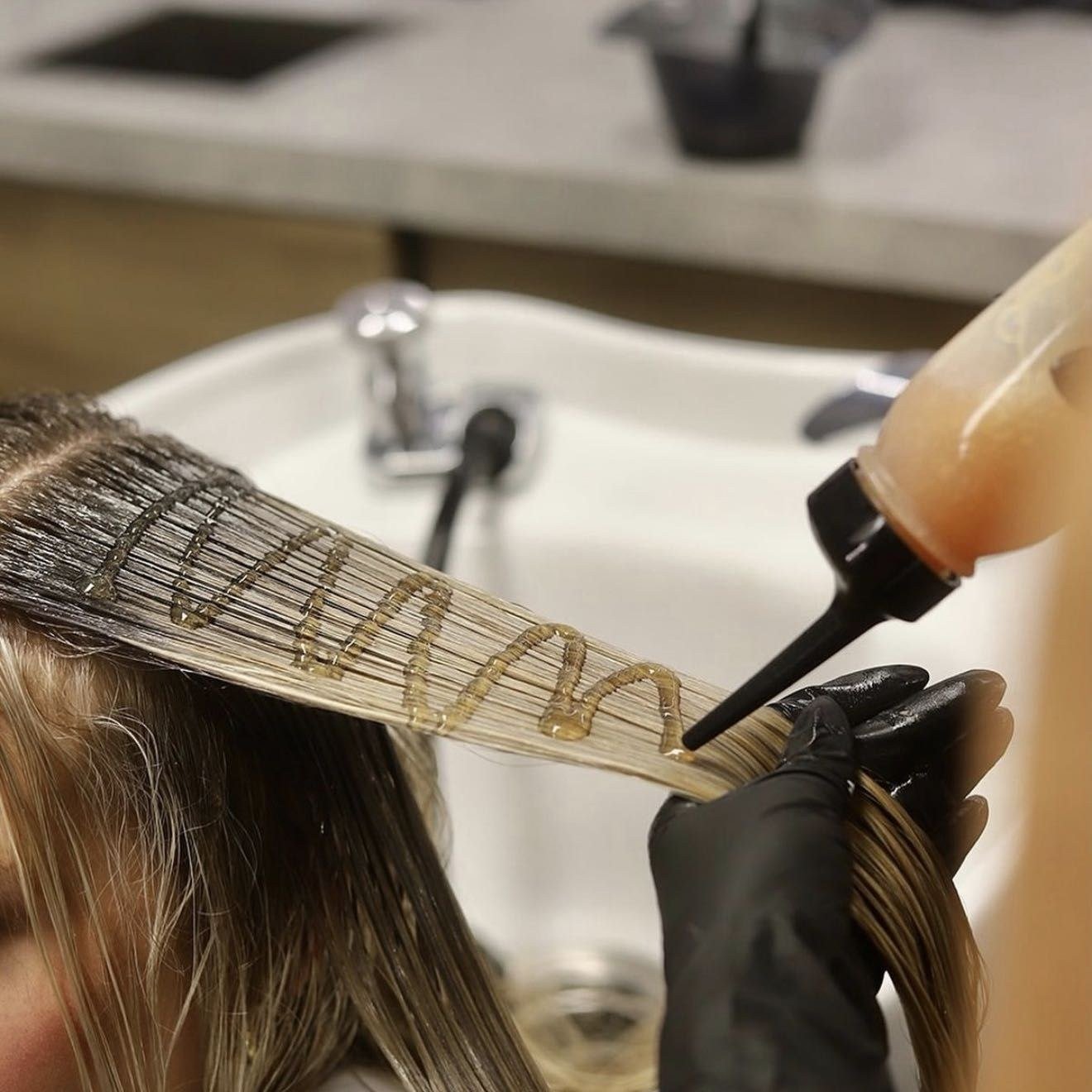
No. 3 is the product that invented this category, and on 4c hair its value is specific: coily hair is the most fragile hair type at every twist of the strand, and it is routinely exposed to the exact stresses bond builders exist for, heat straightening, colour, relaxers and the mechanical strain of protective styling and takedowns. The active, Bis-Aminopropyl Diglycol Dimaleate, works on the disulfide bonds broken by those processes, and the treatment is used as a pre shampoo step on damp hair for a minimum of ten minutes before washing and conditioning as normal. Used weekly on damaged coils, the consistent result is hair that stretches a little before it snaps, holds a twist out with less breakage at the ends, and tolerates manipulation better. It is not a conditioner and does not pretend to be: there is little slip or softness from No. 3 itself, which is why 4c readers should always follow with a moisturising deep conditioner, because bond repair without moisture leaves coily hair strong but dry. The bottle is small and the price per ounce is the highest of the mainstream picks, and hair that is simply dry rather than chemically or heat damaged will see far less from it. The brand’s patent litigation history means imitators are everywhere, so buy from authorised sellers. For 4c hair with real damage, silk presses, colour or a relaxer in its life, this remains the benchmark treatment the rest of the guide is measured against.
Specifications
3.3 fl oz bottle
Bis-Aminopropyl Diglycol Dimaleate bond builder
pre shampoo treatment, 10 minutes
the original at home bond product
all hair types
Pros
The original patented bond building active
Targets heat, colour and relaxer damage directly
Small weekly dose, visible strength change
Cons
No moisture or slip, must deep condition after
Highest price per ounce of the mainstream picks
Little benefit on hair that is dry but undamaged
Who should buyyour 4c hair is heat, colour or relaxer damaged and breaking at the twists and ends
Who should skipyour hair is undamaged and only needs moisture, where a deep conditioner is the better buy
K18 took a different scientific route from Olaplex: instead of working on disulfide bonds alone, its K18Peptide is a biomimetic peptide small enough to travel into the hair’s inner structure and reconnect the polypeptide chains that run lengthwise through the strand, the chains whose breakage shows up as coils that will not spring back and ends that fray. The format is what wins over many 4c users. It is a leave in mask applied to damp, shampooed hair, a small number of pumps worked through and left for four minutes, with no rinsing and no conditioner layered over it on treatment days, which shortens a wash day that for coily hair is already long. The dose discipline matters: one to three pumps is genuinely enough, and using it like a conditioner both wastes money and over proteins the hair. On heat damaged or bleached coils the recovery of elasticity and curl definition can be striking within a few uses, and it is the strongest option here for hair whose curl pattern has gone limp from straightening. The cautions: the 50 ml bottle is expensive even by salon standards, the no conditioner rule feels wrong to 4c users whose hair craves moisture, so many use it for the first four to six washes of a repair course and then return to conditioning normally, and like Olaplex it does not add moisture itself. For severe damage it is arguably the most advanced treatment in this guide.
Specifications
50 ml pump bottle
K18Peptide biomimetic peptide
leave in, 4 minutes, no rinsing
replaces conditioner on treatment days
concentrated dose format
Pros
Peptide repairs inner chains, not just surface bonds
Leave in format shortens long wash days
Strongest curl pattern recovery for heat damage
Cons
Expensive 50 ml bottle
No conditioner on treatment days feels dry
Over use can over protein coily hair
Who should buyyour coils have lost elasticity and pattern from heat or bleach and you want the fastest repair course
Who should skipyour wash day depends on heavy conditioning and your budget is drugstore
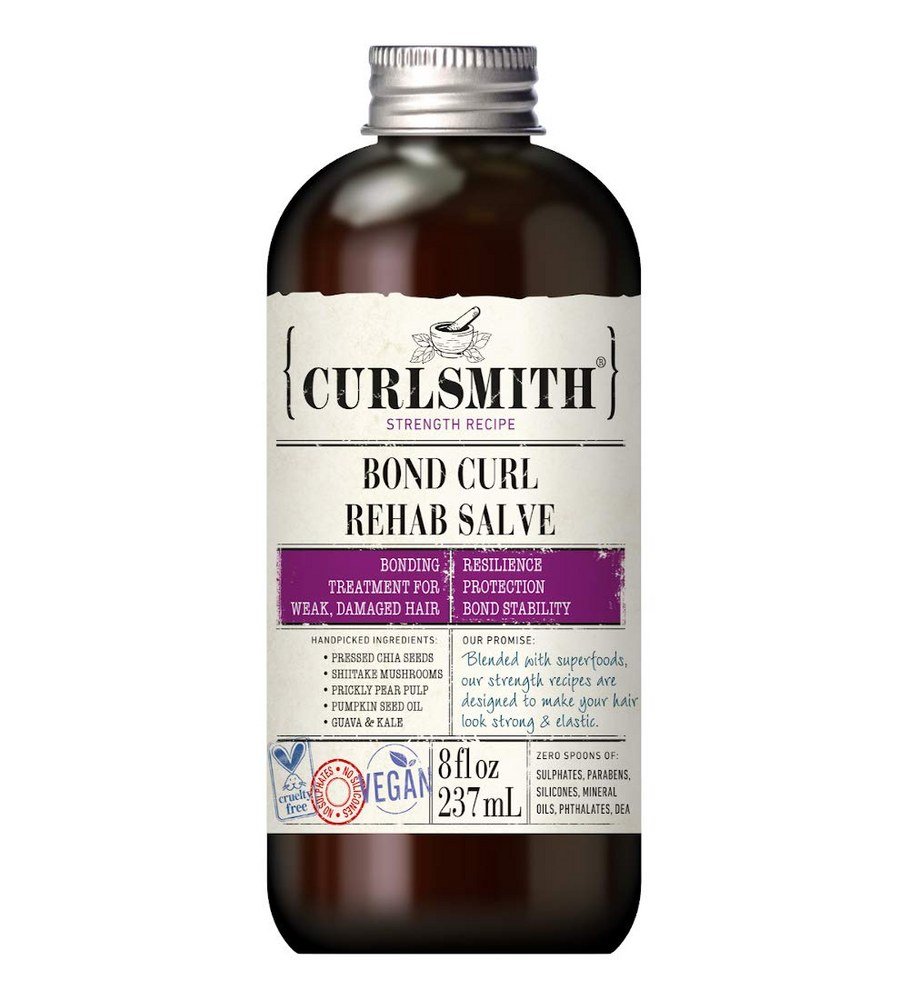
Curlsmith is the pick in this guide designed from the first sketch for textured hair, and the Bond Curl Rehab Salve shows it. It is a pre shampoo bond treatment, applied to damp hair for a minimum of ten minutes or up to an hour, that combines a bond building complex with a protein blend of chia seed, flax and plant proteins plus moisturising ingredients, so it strengthens and conditions in the same step instead of leaving coils strong but parched the way the pure bond builders can. That balance is exactly what 4c hair needs, because its damage problem and its dryness problem are the same problem wearing two coats. The texture is a rich cream that spreads through dense coils properly, the 8 ounce bottle is the most generous in this guide, and the whole formula is vegan and free of the sulfates and silicones curl routines avoid. Used every two to three washes on damaged hair, it supports elasticity, definition and length retention, since ends that stop snapping are ends that stay. The honest limits: its bond technology is a cosmetic complex rather than a single patented active with the research profile of Olaplex or K18, protein sensitive or low porosity coils should start with shorter contact times, and it is a treatment step, not a styler, so wash day still needs your usual products after. For 4c readers who want bond care that speaks curl fluently and does not need a moisture rescue afterwards, this is the most natural fit in the guide.
Specifications
8 fl oz bottle
bond complex with chia and flax proteins
pre shampoo treatment
made for waves, curls and coils
vegan and cruelty free
Pros
Bond care and moisture in one step
Formulated for curls and coils specifically
Largest bottle here, vegan formula
Cons
Cosmetic bond complex, not a patented active
Protein content needs care on low porosity hair
Still a treatment step, not a styler
Who should buyyou want bond repair that respects how dry 4c hair runs and adds moisture in the same step
Who should skipyou want a single patented active with published research
Shea Moisture’s Bond Repair line is the drugstore arrival of this category, a four step system formulated specifically for type 3 and 4 hair, and the masque is its best product. The technology is HydroPlex, the brand’s bond system, paired with an Amino Blend of fortifying amino acids and amla oil, in a rich shea butter based cream that behaves first as a proper deep conditioner and second as a bond treatment. The brand cites testing showing substantially less breakage and stronger hair against a basic shampoo baseline, figures to read as directional rather than dramatic, but the in use experience backs the positioning: five minutes on washed coils delivers real slip, softness and detangling ease alongside the strengthening, which no other pick in this guide manages at this price. At 11 ounces in supermarkets and pharmacies everywhere, it is also the most accessible bond product ever made for 4c hair, and that matters for consistency. The honest framing: this is a masque with bond support, not a concentrated bond builder on the Olaplex or K18 level, so severely damaged hair should treat it as the maintenance partner to a stronger treatment rather than the whole repair plan. It contains fragrance, and the richness that coils love will overwhelm fine hair. For weekly wash day strengthening with moisture built in, at a price that allows weekly use without rationing, it is the easiest recommendation in the guide and the one most 4c readers will actually finish and rebuy.
Specifications
11 oz jar
HydroPlex Technology and Amino Blend
amla oil and fair trade shea butter
formulated for type 3 and 4 hair
five minute masque
drugstore price
Pros
Bond support inside a real deep conditioner
Made for type 3 and 4 hair, sold everywhere
Big jar, weekly use without rationing
Cons
Maintenance strength, not a concentrated builder
Fragranced formula
Too rich for fine hair types
Who should buyyou want weekly bond support with deep conditioning in one affordable jar
Who should skipyour hair is severely damaged and needs a concentrated bond course first
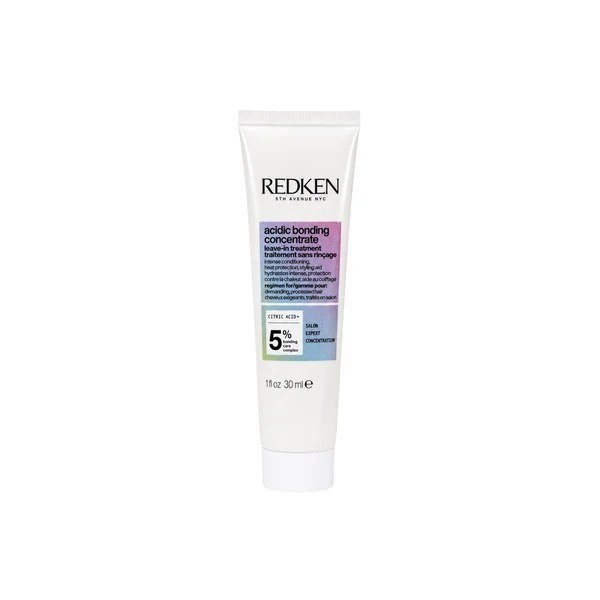
Redken’s Acidic Bonding Concentrate system approaches bonds through acidity: its formulas are built on citric acid at an acidic pH with a Bonding Care Complex, designed to reinforce the weakened bonds in damaged hair while sealing the cuticle back into its healthy, acidic state. The leave in is the most useful format for 4c routines, a cream applied to damp hair after washing that stays in to protect rather than rinsing away, with heat protection rated to 450 degrees Fahrenheit, which makes it the natural partner for silk press and blow out days when coils face their highest damage risk. It adds slip and softness as it works, helps with detangling, and layers under stylers without flaking, a detail 4c users test ruthlessly. Used at every wash, it functions as continuous low level bond maintenance between deeper treatments. The boundaries: as a leave in it is a maintenance concentration, so hair in crisis needs one of the dedicated treatments above first, the acidic system works best used as a line, which is a commitment, and protein and moisture balance still needs watching, since this leans strengthening. The price is salon standard for a bottle that lasts well at a coin sized amount per use. For 4c hair that is regularly heat styled, this is the most practical daily bond product in the guide, because it protects at exactly the moment damage happens rather than only repairing it afterwards.
Specifications
5.1 fl oz bottle
citric acid and Bonding Care Complex
leave in on damp hair
heat protection to 450F
salon line for damaged hair
Pros
Bond care plus 450F heat protection in one leave in
Adds slip and detangles without flaking
Ideal partner for silk press and blow out days
Cons
Maintenance strength, not a rescue treatment
Works best inside its own system
Leans strengthening, watch moisture balance
Who should buyyou heat style your coils regularly and want bond protection at the moment of styling
Who should skipyour hair is in crisis and needs a concentrated repair treatment first
L’Oréal Paris EverPure Bond Repair Pre-Shampoo Treatment
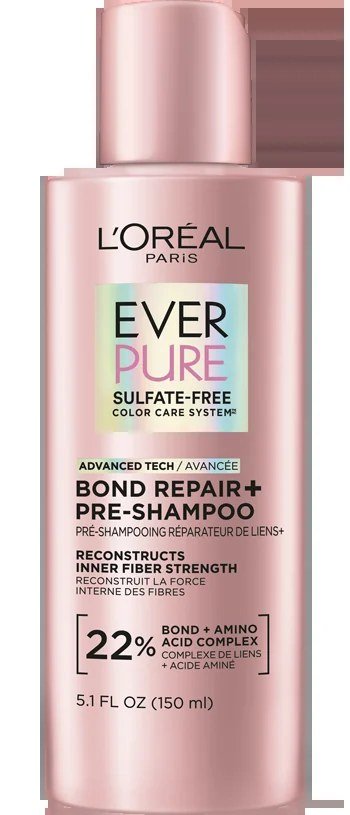
EverPure’s bond range is L’Oréal’s move to put bond repair on the supermarket shelf, and the pre shampoo treatment is the concentrated step of the system, built on a citric acid bond repair complex and used for five to ten minutes on damp hair before shampooing. For 4c readers it offers the dedicated treatment format, the one Olaplex charges salon prices for, at a drugstore price and in a tube large enough to coat dense, long coils without anxiety. The system around it, a sulfate free bond shampoo and conditioner, is equally affordable, so a complete bond routine costs less than one bottle of the premium picks. In use it smooths and strengthens noticeably on hair damaged by colour, heat and styling, with the acidic formula leaving the cuticle flatter and the hair shinier after the full routine. The honest positioning: citric acid systems are gentler technology than the patented bond builders, the results on severely compromised hair are correspondingly milder, and the pre shampoo step adds time to wash day that some will skip, at which point the shampoo and conditioner alone give only light support. The fragrance is the line’s signature scent, pleasant and present. Judged as the accessible entry into bond care, it is excellent: 4c hair on a budget gets a real treatment step, a matched system and no rationing, and for mild to moderate damage that combination beats a premium bottle used too sparingly to work.
Specifications
6.7 fl oz tube
citric acid bond repair complex
pre shampoo, 5 to 10 minutes
sulfate free system
drugstore price
Pros
Dedicated pre shampoo treatment at drugstore price
Tube size suits dense, long coils
Full matched system costs less than one premium bottle
Cons
Gentler citric acid technology, milder results
Adds a step to wash day
Signature fragrance is present
Who should buyyour damage is mild to moderate and you want a complete bond system on a drugstore budget
Who should skipyour hair is severely compromised and needs the strongest patented technology
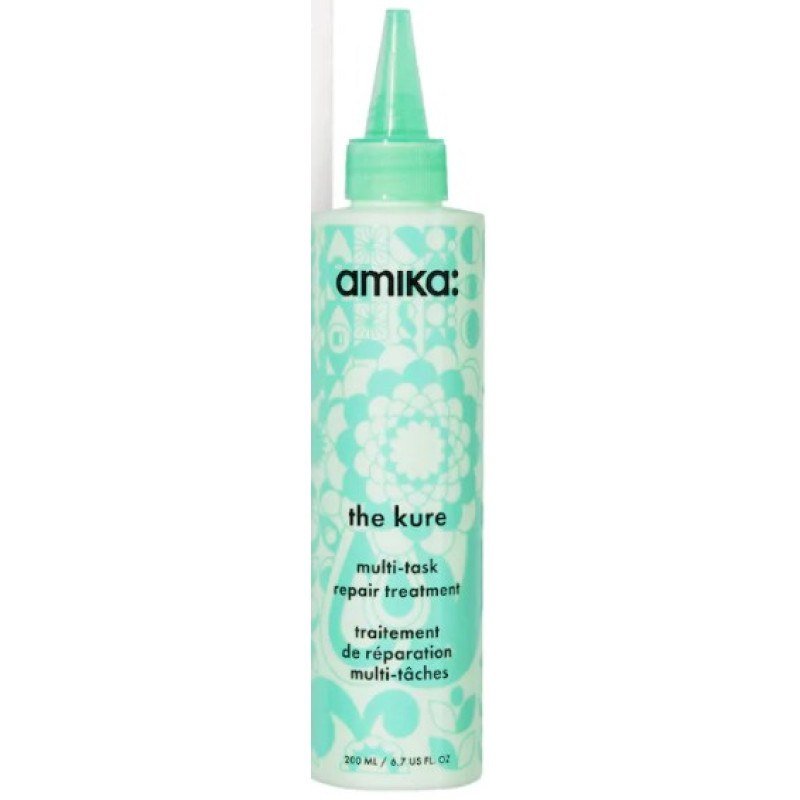
amika’s Kure line is salon bond care with a friendlier personality, and the Multi-Task Repair Treatment is its flexible centrepiece: a spray cream built on the brand’s Bond Cure Technology with vegan proteins and rich plant butters, usable as a leave in on damp hair or as a quick rinse out treatment, which lets it slot into 4c routines of any length. The spray format distributes through dense coils more evenly than a dollop of cream, the formula is aimed squarely at chemically treated and heat damaged hair, and amika supports the line with clinical style claims of reduced breakage and repaired damage after use. In practice it leaves hair softer and more manageable than the pure bond builders, because the butters and conditioning agents do moisture work alongside the strengthening, and it layers cleanly under leave ins and stylers. For protective style takedown days, when coils are fragile and tangled, it is a genuinely useful detangling treatment. The limits: as a multi task product it is not the deepest bond intervention here, hair that is severely damaged needs K18 or Olaplex first, the brand’s sweet fragrance is strong, and the spray head can clog if the product dries in it. The 200 ml bottle is fairly priced for a salon brand. For 4c readers who want bond care that behaves like a good leave in treatment rather than a chemistry set, and who value a routine they will actually keep, The Kure is the most liveable pick in this guide.
Specifications
200 ml spray bottle
Bond Cure Technology
vegan proteins and plant butters
leave in or rinse out
for damaged, chemically treated hair
Pros
Bond care in a flexible leave in spray cream
Moisture and softness alongside strengthening
Excellent on fragile takedown days
Cons
Not the deepest bond intervention here
Strong sweet fragrance
Spray head can clog between uses
Who should buyyou want bond support inside a soft, liveable leave in you will use at every wash
Who should skipyour hair needs intensive repair from severe chemical damage
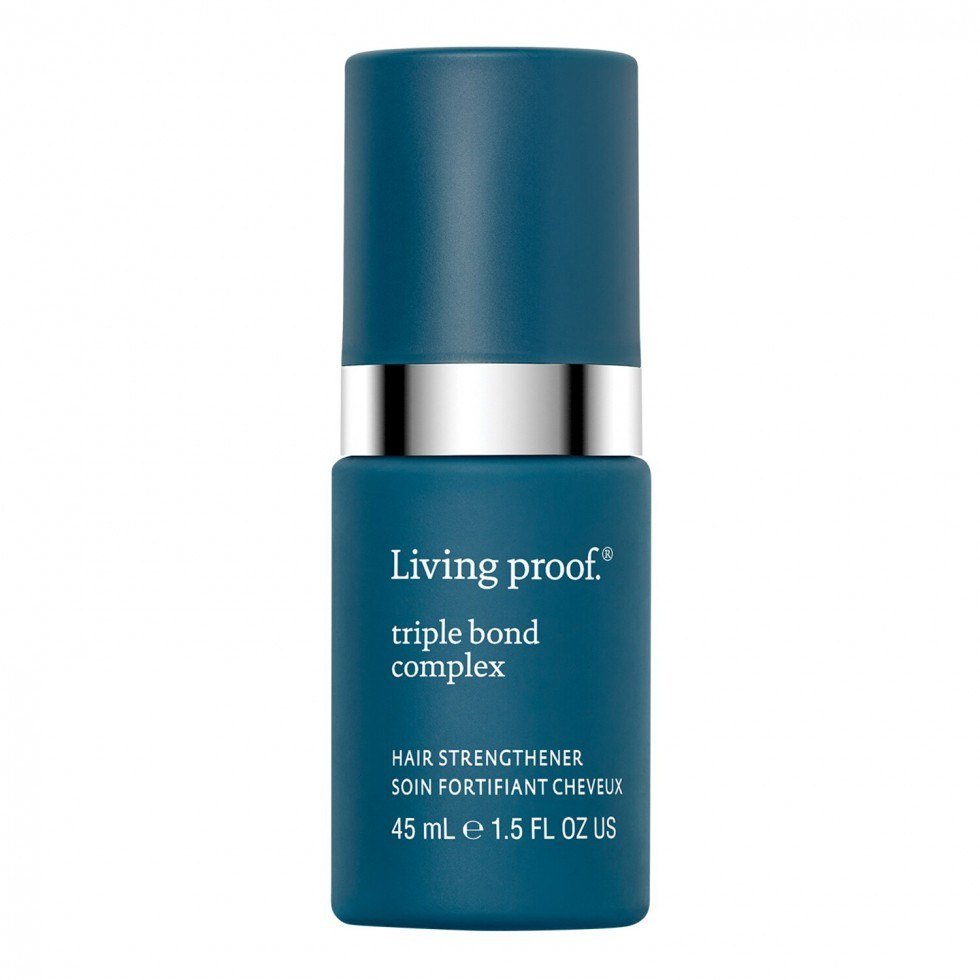
Living Proof’s entry makes the boldest structural claim in this guide: where most bond products address one bond type, Triple Bond Complex is positioned as building all three, hydrogen, ionic and covalent, in a single weekly leave in treatment. The formula is a concentrated cream applied to damp hair after washing, left in rather than rinsed, and combed through before styling, with heat protection to 450 degrees Fahrenheit included. For 4c hair the appeal is the combination of ambition and simplicity: one product, once a week, no extra wash day steps, from a brand whose reputation rests on published testing and a no silicone, no nonsense formulation style. Used consistently on damaged coils it improves strength, smoothness and the hair’s tolerance of heat styling, and its light texture will not disturb a twist out or wash and go the way a heavy mask can. The reservations are size and scope. At 45 ml it is the smallest bottle here and dense, long 4c hair will work through it quickly, making it one of the most expensive routines in the guide to maintain. It is also a weekly maintenance treatment rather than a rescue for hair that is actively disintegrating, and its bond claims, while from a credible brand, are its own. For readers with shorter or finer coils, or those who heat style and want one weekly step with maximum technology per pump, it is a sharp, modern pick. Length and density should do the cost maths first.
Specifications
45 ml pump bottle
weekly leave in treatment
builds hydrogen, ionic and covalent bonds positioning
heat protection to 450F
silicone free
Pros
All three bond types in one weekly step
Heat protection included, light texture
No extra wash day stages to manage
Cons
Smallest bottle, costly on long dense hair
Maintenance level, not a rescue treatment
Bond claims are the brand’s own
Who should buyyou heat style and want one weekly leave in with the broadest bond technology
Who should skipyour hair is long and dense and you need treatment sizes that last
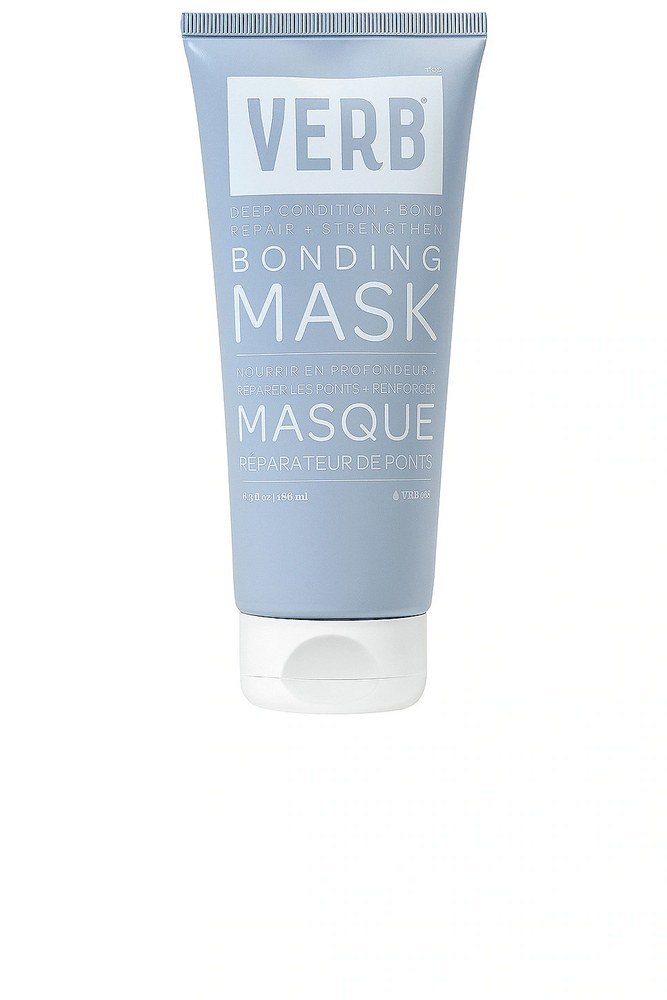
Verb is the value salon brand in this guide, and its Bonding Mask delivers the category’s essentials without the category’s usual pricing drama: an amino acid complex designed to help reconnect and fortify damaged strands, in a rich weekly mask that also conditions properly while it works. For 4c hair that dual action is the attraction, because the mask softens, smooths and adds the slip that makes detangling safer, at the same time as the strengthening system does its work, so wash day gets shorter rather than longer. The formula is vegan, the brand is transparent about its mid market positioning, and the tube format is more hygienic and shower friendly than a jar. Used weekly for a few minutes after shampooing, it suits hair with moderate damage from heat, colour and styling, and it is gentle enough in its protein balance for regular use where stronger treatments need spacing. The honest limits are the expected ones at this price: the bond technology is an amino acid complex rather than a patented molecule with published studies, severely damaged hair will need a stronger course from the top of this guide, and the tube, while decent sized, will move quickly on very long coils. Nothing about it is flashy, and that is the point. For readers who want salon bond care as a sustainable weekly habit rather than an occasional event, Verb is the pick that respects both the hair and the budget.
Specifications
6.3 fl oz tube
amino acid complex
vegan bonding mask
weekly treatment
mid priced salon brand
Pros
Bond support and real conditioning together
Vegan, fairly priced salon formula
Gentle enough for weekly use
Cons
Amino acid complex, no published studies
Not strong enough for severe damage alone
Tube moves fast on very long hair
Who should buyyou want a weekly salon bonding mask you can afford to keep using
Who should skipyour hair is severely damaged and needs a patented intensive treatment
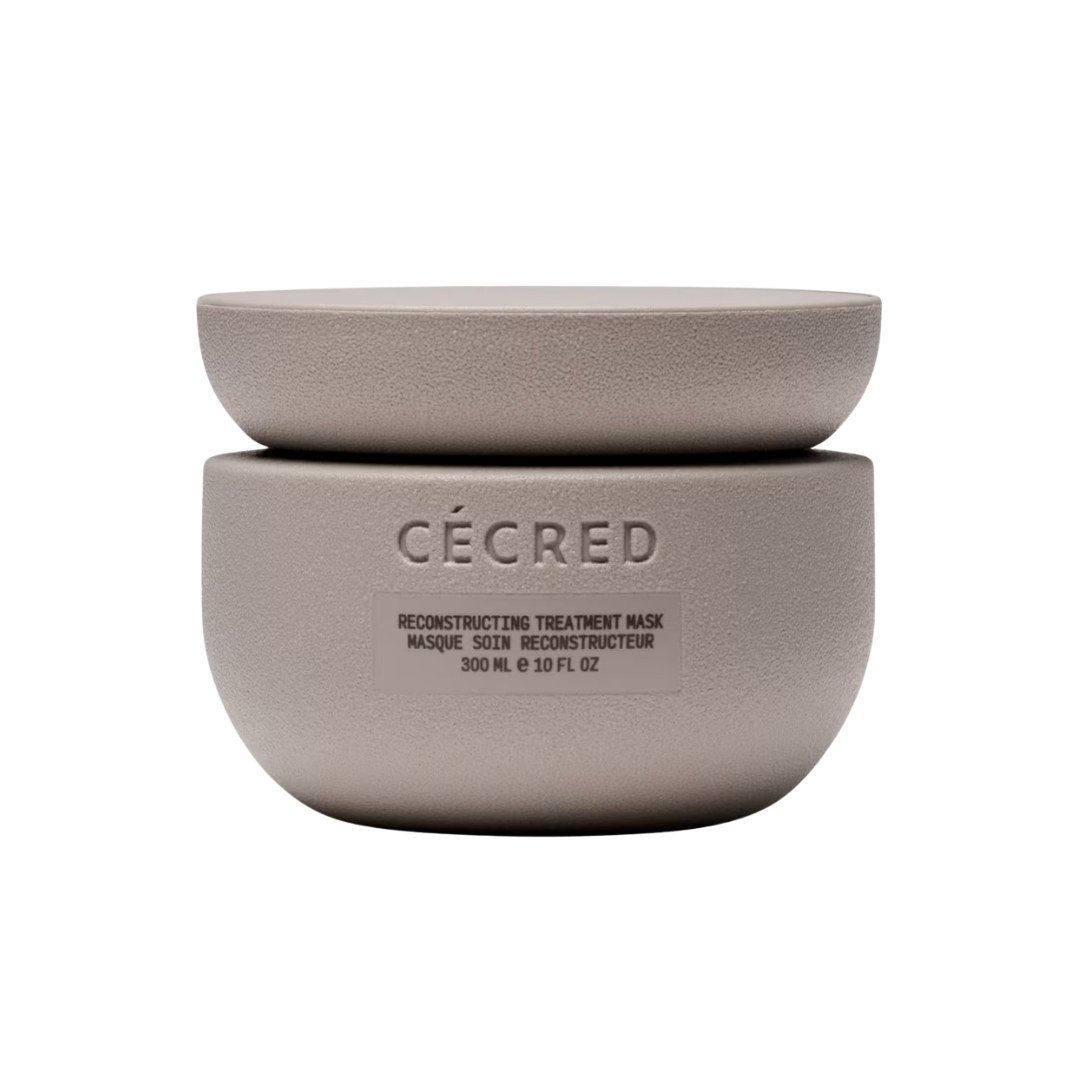
Cécred arrived with more attention than any hair launch of its decade, as Beyoncé’s brand built explicitly around the science of textured hair, and the Reconstructing Treatment Mask is its repair flagship. The technology is a patent pending Bioactive Keratin Ferment, a fermented blend of lactobacillus, hydrolysed wool keratin and honey that the brand positions as delivering protein into the strand in a bioavailable form, supported by sea buckthorn oil and squalane for moisture and shine. The brand reports clinical testing showing reduced damage and breakage after a single use, and the mask is dermatologist tested and colour safe. For 4c hair the design intent matters: this is a rich, fortifying mask formulated with coily textures as the primary case rather than an afterthought, and it behaves like one, coating densely, softening as it strengthens, and leaving coils defined rather than stripped. The 10 ounce jar is generous and a little goes a long way. The reservations are access and evidence maturity. Cécred sells mainly through its own site and select partners, so it is not an Amazon shelf staple everywhere, the price is premium, and while the ferment technology is genuinely interesting, its published track record is younger than Olaplex or K18’s. Readers should also note the wool derived keratin means it is not vegan. For 4c readers who want the most texture centred premium treatment in the guide, from a brand investing seriously in their hair type, it is a compelling final pick.
Specifications
10 fl oz jar, also 2.5 fl oz travel
patent pending Bioactive Keratin Ferment
sea buckthorn oil and squalane
clinically tested breakage claim
premium textured hair brand
Pros
Formulated for textured hair as the primary case
Fermented keratin technology, rich mask format
Generous 10 oz jar, clinically tested claims
Cons
Premium price, mainly direct sales channels
Younger evidence base than Olaplex or K18
Wool keratin means it is not vegan
Who should buyyou want a premium strengthening mask designed first for coily hair
Who should skipyou need a vegan formula or supermarket availability
A bond repair treatment targets the broken internal bonds in damaged hair, from bleaching, colour and heat, aiming to restore strength and reduce breakage. It is repair aimed at structure rather than surface softness, and it is the category that transformed care for bleached hair.
Different brands use different chemistries, from bis aminopropyl diglycol dimaleate to peptide based systems, but the claim is shared: reconnecting or protecting the disulfide and other bonds that give hair its strength. It is not a moisturiser, and hair still needs moisture alongside, which is why bond routines pair with masks. Overuse can leave hair feeling stiff or coated in some systems. Nothing repairs a split end; bond care reduces further breakage and improves how damaged hair behaves and feels.
How to Choose: the Criteria That Matter
Choosing hair care well starts with an honest read of your own hair: its thickness, its porosity, how damaged it is and what you actually do to it weekly. Match the product’s weight to your strand thickness, its job to your hair’s actual deficit, and its format to a slot in your real routine. The expensive mistake in this category is buying for the hair you wish you had, or copying the routine of a different hair type entirely.
Your hair type and porosity, since low porosity hair needs lighter products than high porosity hair
Porosity, how readily your hair takes in and loses water, decides how much product hair needs and how heavy it can be. Low porosity hair resists rich products and needs light layers and warmth; high porosity hair drinks product and needs it sealed in.
The job to be done: moisture, protein and bond support, scalp care or colour protection
Name the job before the product. Moisture, protein and bond support, scalp care and colour protection are different purchases, and the commonest hair mistake is buying a rich moisture product for hair that needed protein, or the reverse.
Ingredient weight: rich butters and oils for coarse hair, light emulsions for fine hair
Fine hair collapses under butters and heavy oils; coarse hair laughs at light sprays. Read ingredient weight honestly against your strand thickness, and dose by section rather than by handful.
Silicone and sulfate position, depending on your routine and how you clarify
Neither position is a moral stance: sulfates clean thoroughly and suit oily scalps and build up, while sulfate free washing protects colour, keratin treatments and dry curls. Silicones similarly split by need: smoothness and protection for damaged hair, build up risk for fine hair.
How the product is used: rinse out, leave in, or pre wash treatment
Rinse out, leave in and pre wash products are different tools. A leave in cannot do a mask’s job and a mask cannot be left in; buying the right format for the routine slot you actually have is what makes the purchase work.
Also Considered
These products were researched for this guide and left off the picks list for the reasons given. They are not poor products; they simply fit the exact question of this guide less well.
Aphogee Two-Step Protein Treatment
The classic hard protein treatment, respected for decades on relaxed and natural hair, and researched carefully for this guide. It was left off because it is a protein treatment, not a bond builder: it reinforces by coating and hardening the strand, which rescues weak hair but can leave 4c hair brittle and dry if the essential balancing moisturiser step is rushed or the treatment is used too often. Readers who use it should follow the two step system exactly.
Elizavecca CER-100 Collagen Coating Protein Treatment
A Korean coating protein treatment with a devoted following and a very low price. It was excluded because its action is surface coating with collagen and ceramides rather than bond building, and its official distribution outside import listings is inconsistent, which makes the exact product hard to verify bottle to bottle.
Briogeo Don’t Despair, Repair! Deep Conditioning Mask
One of the best loved masks for textured hair, and researched as a borderline case. It is a moisture and protein conditioning mask without dedicated bond building technology, so it belongs in a deep conditioner comparison rather than this one. As a moisture partner after the bond treatments above, it is an excellent buy.
How to Use What You Buy
Start with hair washed and gently squeezed free of excess water
Apply the product to mid lengths and ends first, where hair is oldest and driest
Use the contact time on the label rather than rinsing immediately
Rinse with lukewarm water and judge softness once hair is fully dry, not wet
Repeat on a weekly rhythm and adjust the amount before switching products
Hair care rewards rhythm over intensity. A weekly pattern, wash, condition, one treatment step, gentle styling, does more than a monthly rescue session. Introduce one product at a time and judge it on fully dry, styled hair over at least three uses, since hair lies when it is wet and coated. Protect the routine’s gains at night with silk or satin and gentle handling, where a surprising share of breakage happens.
Use as directed, often as a pre shampoo or in shower step weekly or per wash for damaged hair, and keep a moisture product in the same routine. Judge by breakage and elasticity over a month, not by first day softness.
Who Should Buy, and Who Should Skip
Buy if your need matches this guide exactly: you are looking for options for 4c hair, you have checked the criteria above against your current routine, and you are willing to introduce the product gradually and judge it over the period the category needs.
Skip if your concern is different from the one in the title, your skin or hair is currently irritated or damaged and needs recovery first, or a clinician has advised you on this concern, in which case their advice comes before any buying guide.
Common Mistakes in Bond Repair Treatment
Applying rich products to the roots, which weighs hair down and dulls it
Judging a conditioner while hair is still wet and coated
Using protein heavy products daily on hair that needs moisture instead
Skipping heat protectant because a treatment is in the routine
Replacing all conditioning with bond products, leaving hair strong but dry and rough
Expecting it to mend split ends, which only scissors remove
Frequently Asked Questions
How do I choose the right bond repair treatment?
Start with the criteria in this guide: match the formula or specification to your hair type and the exact concern in the title, check the published ingredient or specification list, and pick the option whose downsides do not overlap with your problem. The type decision comes first: most disappointment in bond repair treatment is a good product bought in the wrong type.
How long before I see results from a bond repair treatment product?
It depends on the category, but most hair care products need consistent use over several weeks before a fair judgement. Devices and treatments state their expected course in the manual or on the packaging, and that timeline is the one to follow. Judge on the category’s clock, not on the first week.
What should I avoid when buying for 4c hair?
Avoid buying on claims alone: skip options with no published ingredient or specification list, strengths far beyond what your routine needs, and any product whose stated downsides match the exact issue you are trying to fix. Also avoid changing two other parts of your routine in the same week, which makes the new product impossible to judge.
Is the most expensive option always the best?
No. In bond repair treatment, price often reflects branding, packaging and extras rather than the core ingredient or specification doing the work. The criteria in this guide matter more than the price band, and mid priced options with the right specification beat premium options with the wrong one.
What is the most common mistake with bond repair treatment?
Replacing all conditioning with bond products, leaving hair strong but dry and rough A close second: expecting it to mend split ends, which only scissors remove
How does bond repair treatment fit into a daily routine?
Use as directed, often as a pre shampoo or in shower step weekly or per wash for damaged hair, and keep a moisture product in the same routine. Judge by breakage and elasticity over a month, not by first day softness. Hair care rewards rhythm over intensity.
Can You Use Bond Repair and Protein Treatment Together?
The companion how-to guide, Can You Use Bond Repair and Protein Treatment Together, covers this in full: the step by step method, the right amounts and frequency for your type, and the mistakes that stop it working. It is linked from the routine sections of this page, and it is the right next read once you have chosen a product.
By Mirror & Glow Editorial Desk – November 23, 2026
Everything behind can you use bond repair and protein treatment together: different brands use different chemistries, set out as a clear step by step with the mistakes and questions readers raise most.
By Mirror & Glow Editorial Desk – November 23, 2026
Everything behind how often should i use epres bond repair treatment: different brands use different chemistries, set out as a clear step by step with the mistakes and questions readers raise most.
By Mirror & Glow Editorial Desk – November 23, 2026
Best Bond Repair Treatment for Low Porosity Hair: K18 Leave-In Molecular Repair Hair Mask first, epres Bond Repair Treatment close behind, every pick specced, photographed and given a buy or skip verdict.