By Mirror & Glow Editorial Desk – November 23, 2026
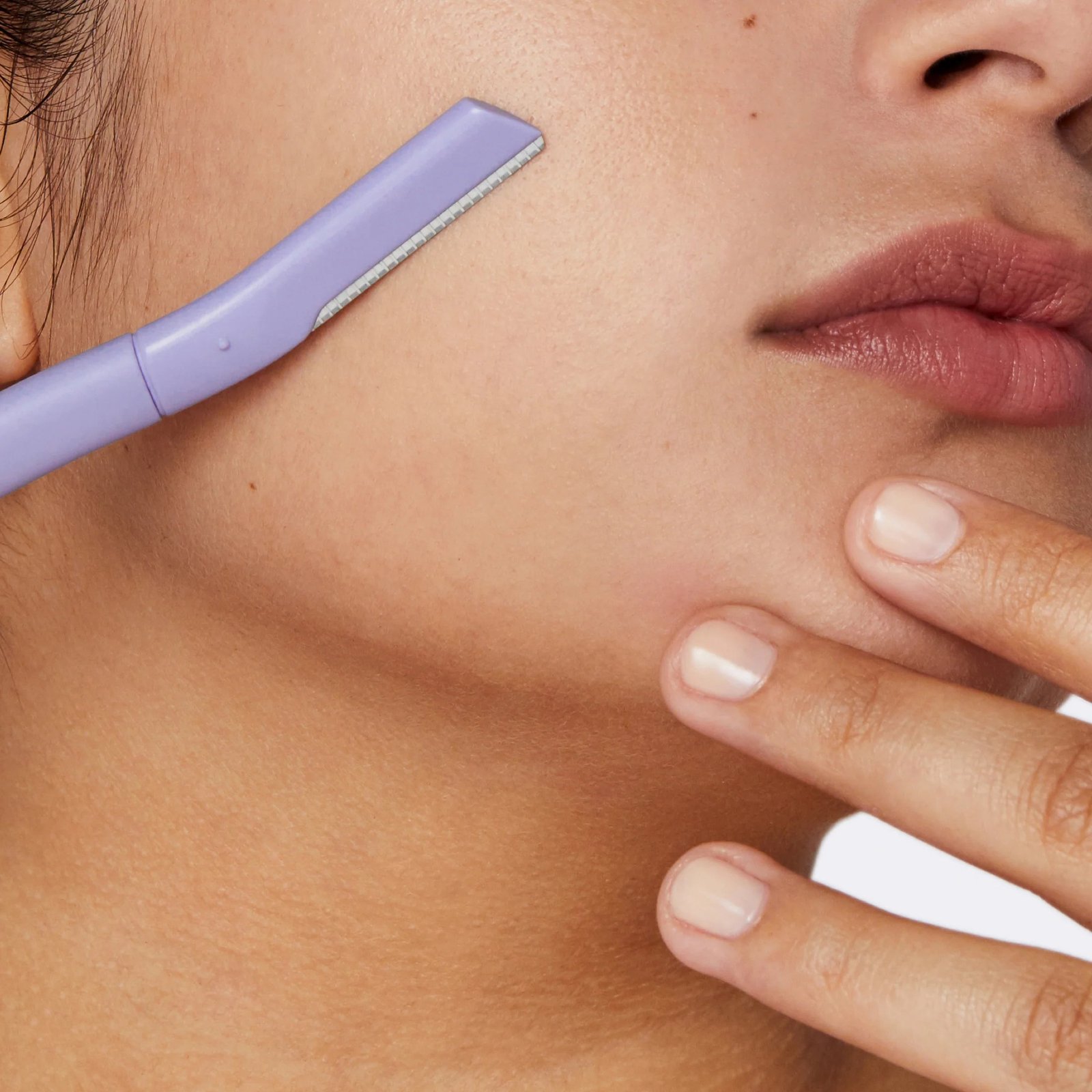
Mature woman dermaplaning her cheek with a small facial razor.
Affiliate disclosure: Mirror & Glow may earn a commission from qualifying purchases made through links on this page, at no extra cost to you. Full disclosure.
The verdict up front: start with StackedSkincare Dermaplaning Tool, the strongest all round match in this line up for mature skin. Every pick is compared in the table below, then reviewed in full with its downsides as well as its strengths.
If you are looking for the best dermaplaning tool for mature skin, the right choice depends on fit, not hype. This guide is written for mature skin, and every criterion below is weighted for that need first. The short answer: choose the dermaplaning tool whose formula, format and strength match your skin, check the ingredient or specification list before the marketing claims, and avoid the options whose downsides match the problem you are trying to solve.
What matters most in dermaplaning is covered in depth below: what the product actually is, the types on sale and how they differ, the buying criteria explained one by one, how to use what you buy, and the mistakes that waste the most money in this category.
Why this guide has eight picks, not ten: dermaplaning tools divide into manual razors and two sonic device systems. Dozens of further listings are the same generic guarded razor sold under different names, so rather than list near duplicates, this guide covers every genuinely distinct design, from the weighted metal handle to the budget multi packs.
Best Dermaplaning Tool for Mature Skin Compared
Product
Standout Point
Key Specification
StackedSkincare Dermaplaning ToolTop Pick
Weighted metal handle gives the steadiest glide
Reusable metal handle – replaceable single edge blades – designed for at home exfoliation – refills sold in packs
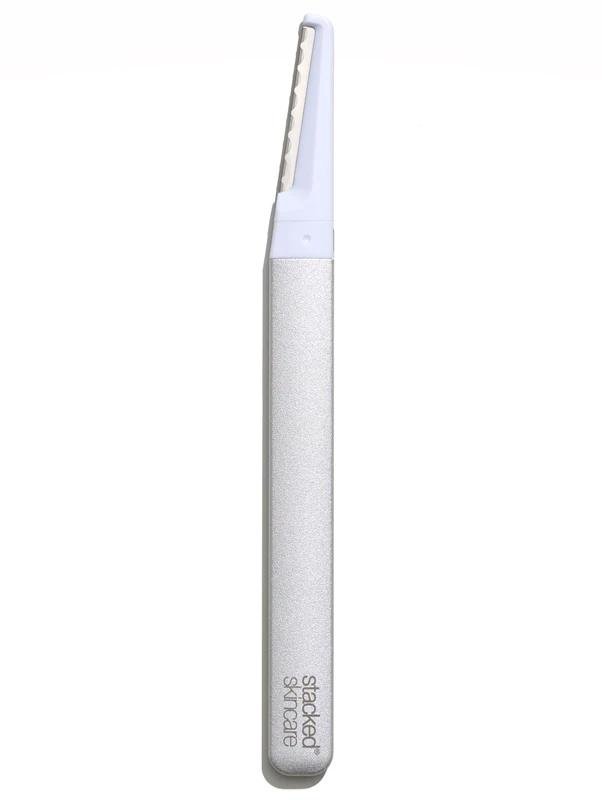
StackedSkincare built this tool specifically for dermaplaning rather than adapting an eyebrow razor, and that purpose shows in the two things mature skin cares about most: weight and control. The handle is metal, noticeably heavier than the plastic razors in this guide, and that weight does the work for you, so the blade glides at a steady pressure instead of skipping or digging when your hand is light. For skin over fifty, where the surface is thinner and less forgiving of a dragged or chattering blade, that steadiness is the difference between a clean exfoliation and a grazed cheek. The blades are single edge, replaceable and sold in refill packs, and the brand recommends a fresh blade for each full face session, which keeps the edge keen and the hygiene simple. Used on clean, dry skin held taut, at roughly a forty five degree angle with short downward strokes, it removes the layer of dead cells and vellus hair that makes mature skin look dull and makes foundation settle into fine lines. The honest costs are the highest manual tool price in this guide and the ongoing refill spend, plus a learning curve: the first two sessions should be on the jawline and cheeks only, not around the mouth or eyes. If you dermaplane monthly and want the most controlled manual tool sold for the job, this is it.
Specifications
Reusable metal handle
replaceable single edge blades
designed for at home exfoliation
refills sold in packs
Pros
Weighted metal handle gives the steadiest glide
Purpose built for full face dermaplaning
Replaceable blades keep every session sharp
Cons
Highest manual tool price in the guide
Refill blades are an ongoing cost
Technique takes two or three sessions to learn
Who should buyyou dermaplane regularly and want the control of a weighted, reusable handle on thinner mature skin
Who should skipyou are new to dermaplaning and want the cheapest possible first try before investing in a handle
The Hydro Silk Touch-Up is the dermaplaning razor most beginners actually start with, and for mature skin its safety design is the reason it ranks this high. Each blade carries fine micro guards, a comb like edge that limits how deeply the blade can engage the skin, which makes it markedly more forgiving of uneven pressure than a bare eyebrow blade. There is also a lubricating strip with aloe and vitamin E above the blade, a small thing that genuinely helps on drier, older skin that drags against a dry razor. The handles are slim, textured and easy to grip, and the pack of three means one razor can live in the bathroom while another travels. Used dry or with a light facial oil, held at a shallow angle on taut skin, it takes off peach fuzz and surface dullness in one pass and leaves makeup sitting noticeably smoother. The limits are those of every disposable: the blade dulls after two or three full face uses and a dull blade tugs rather than glides, the slim handle gives less control than a weighted tool, and the plastic waste adds up. As an inexpensive, widely stocked way to dermaplane mature skin with a safety margin, it remains the default recommendation.
Specifications
3 disposable razors per pack
fine micro guards on the blade
aloe and vitamin E comfort strip
pink and blue handles
Pros
Micro guards make it forgiving for beginners
Aloe and vitamin E strip suits drier skin
Sold everywhere and inexpensive per pack
Cons
Blades dull after two or three uses
Slim handle offers less control than metal tools
Disposable plastic format creates waste
Who should buyyou want a guarded, forgiving razor for dermaplaning mature skin and you prefer disposables
Who should skipyou dermaplane often and want a weighted reusable handle instead of repeat plastic purchases
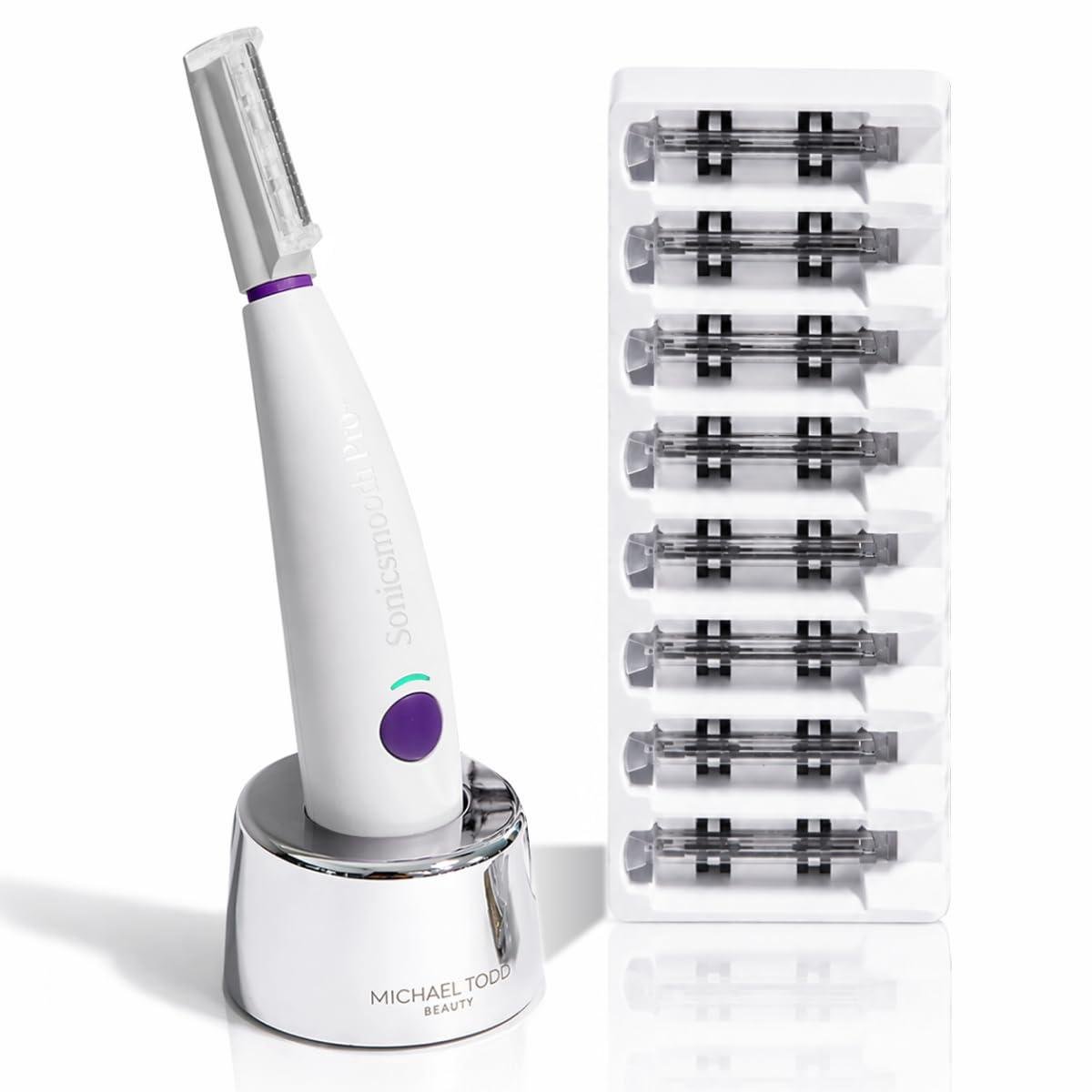
Sonicsmooth takes the manual skill out of dermaplaning by moving the blade for you. The handpiece vibrates at sonic speed, and those micro movements let the single edge tip shear away dead skin and vellus hair with almost no pressure from your hand, which is exactly what mature skin needs: pressure is where nicks and grazing come from, and thinner skin shows every mistake. The kit is complete in a way the manual tools are not, with a charging stand, a supply of single use safety tips, a cleanser and a moisturiser, so the routine is wash, dermaplane, moisturise with nothing else to buy. Michael Todd positions it as a weekly treatment, and that cadence suits older skin better than the monthly manual session, because each pass is gentler. In use it feels more like gliding a pen than shaving, and it is the easiest tool here to use around the upper lip and jawline. The trade offs are cost, the proprietary tips that must be replaced every session and bought from the brand, and a result that some experienced manual users find slightly less close than a well handled blade. For mature skin that wants exfoliation without technique anxiety, it is the most reassuring device in the guide.
Specifications
Rechargeable sonic device
sonic vibrations per minute in the thousands
weekly safety tips
charging stand and cleanser included in kit
Pros
Sonic motion removes the pressure problem
Complete kit with stand, tips and skincare
Weekly gentle sessions suit thinner skin
Cons
Device plus tips cost the most over a year
Tips are proprietary and single use
Finish slightly less close than a skilled manual pass
Who should buyyour hands are unsteady or your skin grazes easily and you want the device to control the pressure
Who should skipyou are happy with manual technique and do not want proprietary single use tips to reorder
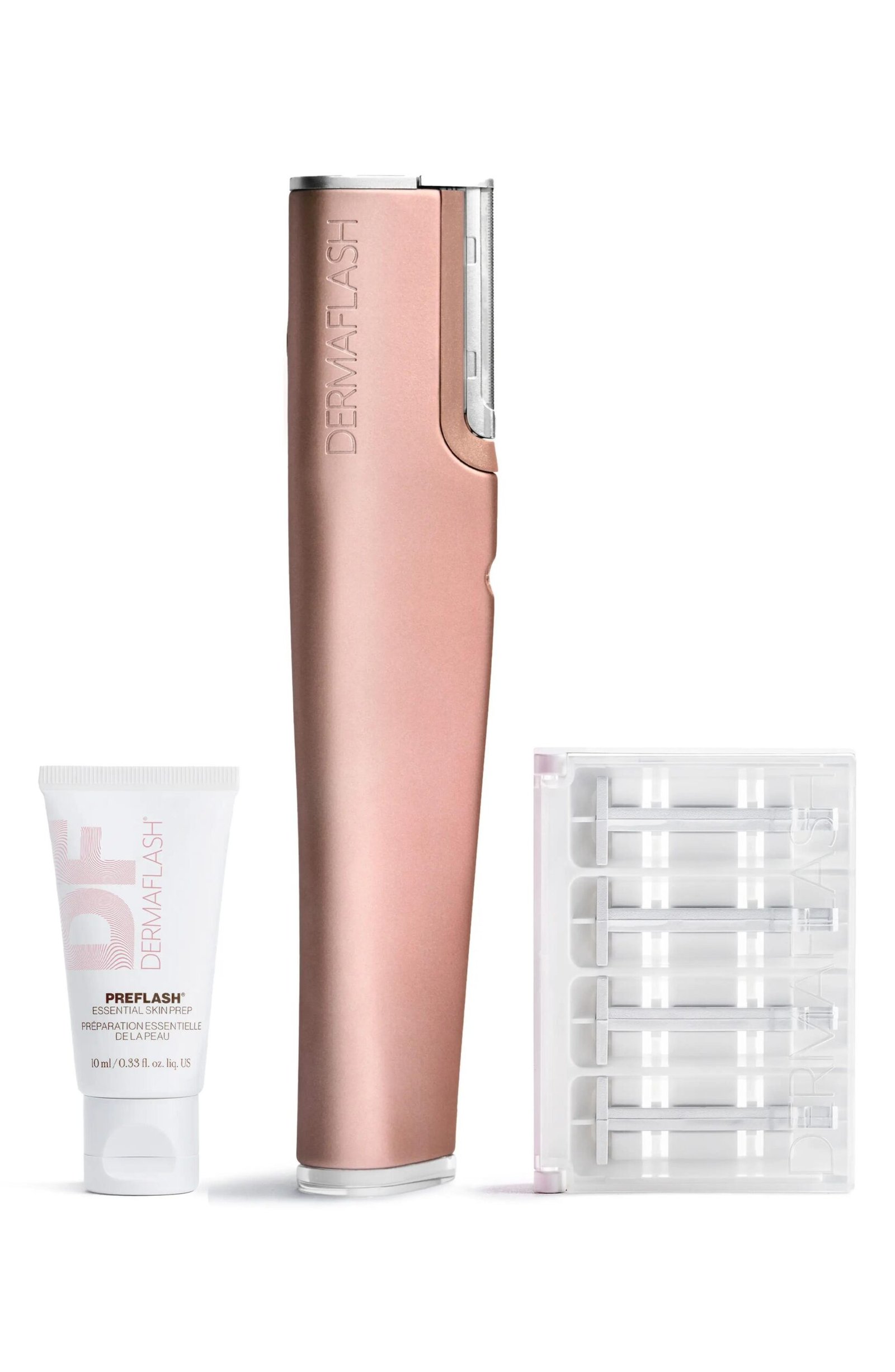
Dermaflash is the original sonic dermaplaning brand, and the Luxe+ is its current flagship: a rechargeable handpiece with two speeds, single use Edge blades, and a kit that includes the brand’s PrepFlash cleanser to degrease the skin before treatment. The sonic action works the same way as the Sonicsmooth, letting the blade do the cutting while your hand simply guides, and the second, faster speed is genuinely useful on the coarser hair along the jawline that mature skin often develops. The exfoliation is thorough: owners consistently report the same result as a good manual session, with foundation sitting flatter afterwards, and the device shape sits comfortably in the hand for the ten minutes a full face takes. Where it loses ground to its rival is running cost and routine strictness. Edges are single use and proprietary, the brand insists on its own pre and post products for best results, and the upfront price is the highest in this guide. It is also a firmer treatment than the Sonicsmooth at its top speed, so sensitive mature skin should stay on speed one. If budget is secondary and you want the established sonic system with the strongest accessories range, the Luxe+ earns its place.
Specifications
Rechargeable sonic device
single use Edge blades
PrepFlash cleanser included
two speed settings
Pros
Two speeds handle fine fuzz and coarser jaw hair
Established brand with a full accessory range
Thorough exfoliation in about ten minutes
Cons
Highest upfront price in the guide
Single use proprietary Edges add running cost
Top speed can be too firm for sensitive skin
Who should buyyou want the established sonic system and the two speed range for mixed fine and coarse hair
Who should skipyour skin is sensitive or your budget is firm, where the gentler rival or a manual razor fits better
Versed approaches dermaplaning the way it approaches skincare: one reusable handle, replaceable blades, and as little waste as the format allows. The Instant Gratification tool is a slim pen with a handle made from recycled plastic, sold with blades that swap out when they dull, and refills are stocked wherever the brand is sold. For mature skin the slim format is a mixed blessing that resolves in its favour with practice. It is light rather than weighted, so control comes from your grip, but the narrow head reaches the awkward zones, the sides of the nose, the upper lip, the brow bone, more precisely than the wider disposable razors. The blade itself is a standard guarded dermaplaning edge, effective on fuzz and surface cells in the usual shallow angle, short stroke technique. Versed suggests use every few weeks, which matches mature skin’s slower tolerance for exfoliation. The compromises are the light handle, which unforgivingly transmits a shaky grip, and a refill ecosystem that is smaller than Schick’s, so blades may need ordering online. Readers who like the reusable idea but not the StackedSkincare price will find this the sensible middle: a permanent handle, honest blades and a brand that publishes its sustainability reasoning.
Specifications
Reusable handle in recycled plastic
replaceable blades, refills available
slim pen format
vegan brand
Pros
Reusable handle with widely stocked refills
Narrow head reaches lip and brow areas precisely
Recycled plastic handle reduces waste
Cons
Light handle transmits an unsteady grip
Refills may need ordering online
Less blade guarding than the Schick design
Who should buyyou want a reusable handle and precise narrow head without the premium metal tool price
Who should skipyou are a first time user who needs the extra forgiveness of a micro guarded disposable
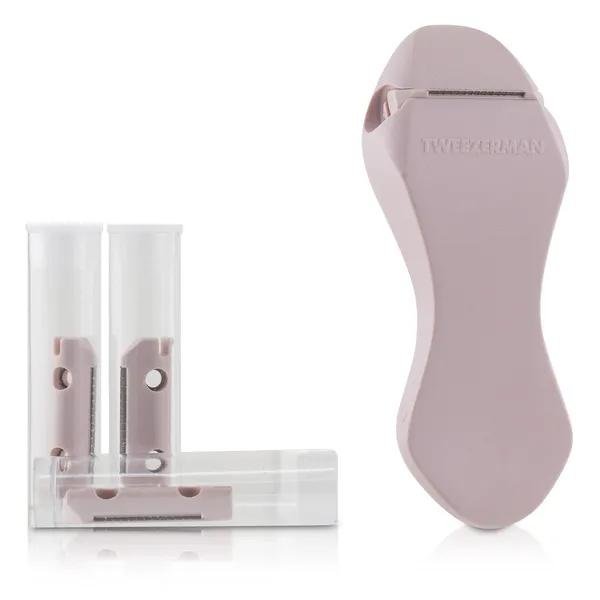
Tweezerman is a tools company first, and its dermaplaner reflects that: a short, contoured reusable handle shaped to sit in the fingers rather than the fist, with replaceable blades and spares included in the pack. The petite size is the point. This is a precision instrument for the areas where mature faces actually need dermaplaning most carefully, the upper lip, between the brows, along the jaw where hair coarsens, and it gives a level of fingertip control that full length razors cannot match. The blade is a proper dermaplaning edge, so on cheeks it exfoliates as well as the bigger tools, though covering the whole face with a short handle takes longer and more strokes. For that reason most owners use it as their detail tool alongside a razor for broad areas, or as their only tool if they dermaplane small zones rather than the full face. Blades are replaced by sliding the head, refills are sold separately, and the handle itself is effectively permanent. The limits are coverage speed and the same technique requirement as every manual blade on reactive skin. As the precision pick from a brand whose reputation is tool quality, it fills a slot nothing else here does.
Specifications
Reusable contoured handle
replaceable blades included
petite size for precision work
from the Studio Collection
Pros
Fingertip control for lip, brow and jaw detail
Quality replaceable blades with spares included
Permanent handle from a specialist tool brand
Cons
Short handle makes full face sessions slow
Refills are a separate purchase
Still a manual blade, so technique matters
Who should buyyou mainly dermaplane small zones and want precision control around the lip and jawline
Who should skipyou want to cover the whole face quickly, where a full length razor or sonic device is faster
Kitsch sells dermaplaning the way it should be sold at the budget end: a dozen guarded razors in one resealable pack, at a per razor price that makes using a fresh blade every session realistic rather than wasteful feeling. That freshness matters for mature skin more than for young skin, because a keen edge glides while a dull one drags, and dragging is what leaves older skin red and grazed. The blades are stainless steel with the micro guard pattern common to this format, and the handles are recycled plastic in soft colours, with a cap for safe storage and travel. In use they behave like the Schick razors, a shallow angle on taut, clean skin, short strokes, no pressure, and they handle both fuzz removal and light exfoliation competently. The differences are in refinement: the comfort strip of the Hydro Silk is absent, and the guard feels a touch less protective on the first pass, so very reactive skin should start with the Schick. What Kitsch wins is value and blade discipline. Twelve razors encourage the habit that keeps dermaplaning safe, which is retiring blades early. For mature skin on a budget that dermaplanes monthly, this pack is the economical way to do it properly.
Specifications
12 disposable razors per pack
stainless steel blades with micro guards
recycled plastic handles
assorted colours
Pros
Twelve razors make a fresh blade per session affordable
Guarded stainless blades suit regular use
Resealable pack with caps for storage
Cons
No lubricating comfort strip
Guard slightly less forgiving than Schick’s
Disposable format, even with recycled handles
Who should buyyou dermaplane monthly on a budget and want enough razors to always use a sharp one
Who should skipyour skin is very reactive and you want the extra comfort strip and guarding of the Schick razors
The Tinkle is the razor that started the at home dermaplaning habit, a slim Korean facial razor from Dorco that has been sold for years at a price per razor lower than anything else in this guide. Its blade carries a safety guard and the handle is long, light and simple, and used with the standard technique, clean dry skin, a shallow angle, short strokes with the skin held taut, it removes vellus hair and surface dullness perfectly well. Millions of successful dermaplaning sessions have happened with exactly this tool, and it would be dishonest to pretend the expensive options remove hair in a different league. What you give up is everything around the blade. The handle is the least grippy here, the guard is the most basic, there is no comfort strip, and quality control between the many marketplace listings varies, so buy from a listing that is clearly the genuine Dorco product rather than an unbranded copy using the name. On mature skin those compromises deserve respect: thinner skin plus a basic guard plus a slippery handle is the combination most likely to nick. Experienced users with steady hands will be fine and will save real money. Beginners over fifty should start higher up this list.
Specifications
3 or 6 razors per pack
stainless steel blade with safety guard
slim folding style handle
the original facial razor
Pros
Lowest price per razor in the guide
Proven, simple design sold for years
Long handle reaches all areas easily
Cons
Most basic guard and least grippy handle
Marketplace copies make genuineness a check
Least forgiving option on thin, mature skin
Who should buyyou are an experienced dermaplaner with steady hands and want the cheapest genuine razor
Who should skipyou are new to dermaplaning or your skin is thin and reactive, where guarding and grip matter more
Dermaplaning is exfoliation and vellus hair removal with a single blade drawn across the skin at an angle, removing the top layer of dead cells and peach fuzz together. At home it is done with small guarded facial razors; professionally, with a surgical blade.
The immediate effect is smoothness and better makeup application, because both the rough surface and the fine hairs that catch product are gone. It does not change hair growth: the follicle is untouched, and regrowth feels blunt because the hair was cut at an angle, not because it thickened. The risks are nicks and irritation, and it is avoided over active acne, eczema or rosacea flares, where the blade spreads irritation and can trigger breakouts.
How to Choose: the Criteria That Matter
Choosing skincare well means buying for the skin you have, in the order it needs help. Start with the concern, not the product shelf: breakouts, marks, dryness, redness and lines each have a short list of ingredients with real evidence behind them, and the guide’s topic section names the ones that matter here. Then check your current routine for conflicts before adding anything. Most failed purchases are good products bought for the wrong concern, or two strong actives introduced in the same week so that irritation gets credited to both.
Active ingredient and its stated strength, since a named active without a percentage tells you very little
A percentage on the label lets you compare like with like: a 10 percent azelaic acid and a 2 percent salicylic acid are honest products, while a serum that names an active without a strength is asking you to trust the marketing instead.
Formula type for your skin: gel for oily skin, cream for dry skin, emulsion for combination skin
The same active in a gel, a cream and an oil behaves like three different products. Gel and water based formulas suit oily and combination skin; creams and emulsions carry dry skin through the day; oils are finishing steps, not treatments.
What the formula leaves out: fragrance, drying alcohol and common irritants if your skin is reactive
What is left out decides tolerance. Fragrance, essential oils and drying alcohol are the three most common reasons a well reviewed product stings, flushes or breaks someone out, and sensitive skin should read for their absence first.
How it layers with the rest of your routine, including retinoids, vitamin C and sunscreen
A product that pills under sunscreen or fights your retinoid will not survive in a real routine. Think in pairs: water based before oil based, thinnest to thickest, and actives split across morning and night when they compete.
Packaging that protects the formula, such as airless pumps and opaque bottles for light sensitive actives
Actives degrade in light and air. Vitamin C, retinoids and many antioxidants keep their strength in opaque, airless packaging, and a clear dropper bottle on a sunny shelf is quietly expiring.
Also Considered
These products were researched for this guide and left off the picks list for the reasons given. They are not poor products; they simply fit the exact question of this guide less well.
Finishing Touch Flawless Facial Hair Remover
Researched as the most advertised facial hair device in this category, but it is a rotary electric trimmer: it cuts hair at the surface without the exfoliating blade pass that defines dermaplaning, so it does not deliver the skin smoothing this guide is comparing.
Billie Dermaplane Starter Kit
A genuine dermaplaning kit from the razor subscription brand, researched for this guide. Its guarded razors duplicate the design already covered by the Schick and Kitsch picks, and its starter kit model leans on the brand’s wider subscription ecosystem, so it was left off on duplication rather than quality.
Revlon Smooth and Perfect Face Defuzzer
A two pack of slim defuzzing razors in the same format as the Dorco Tinkle, researched and left off because it offers the same basic guarded blade at a higher price per razor, with no comfort strip or grip advantage for mature skin.
How to Use What You Buy
Start with clean, dry or slightly damp skin as the product type directs
Apply the amount stated on the product, usually a pea sized amount or two finger lengths for sunscreen
Introduce one new active at a time and give it at least two weeks before judging
Use the product at the time of day it is designed for, and always finish morning routines with sunscreen
Note any stinging, breakouts or dryness in the first week and adjust frequency before giving up
Fit decides whether a good product works. Skincare actives need a stable base routine around them: a gentle cleanser, a moisturiser your skin likes, and sunscreen every morning. Add the new product to that base one at a time, at the frequency the category supports, and keep everything else unchanged for the first month. That discipline is what turns a purchase into a result you can actually attribute.
On clean, dry skin, hold the skin taut and use short, light strokes downward at a shallow angle, once every three to four weeks at most. Moisturise after, skip other exfoliants that day, and sunscreen the following days.
Who Should Buy, and Who Should Skip
Buy if your need matches this guide exactly: you are looking for options for mature skin, you have checked the criteria above against your current routine, and you are willing to introduce the product gradually and judge it over the period the category needs.
Skip if your concern is different from the one in the title, your skin or hair is currently irritated or damaged and needs recovery first, or a clinician has advised you on this concern, in which case their advice comes before any buying guide.
Common Mistakes in Dermaplaning
Starting three new actives in the same week, which makes reactions impossible to trace
Using more product than directed, which increases irritation without improving results
Skipping sunscreen while using brightening or exfoliating products, which undoes their work
Expecting visible change in days when most skincare actives need weeks of consistent use
Pressing or going over the same area repeatedly, which is how nicks and raw patches happen
Dermaplaning over active breakouts, which cuts spots open and spreads the problem
Frequently Asked Questions
How do I choose the right dermaplaning tool?
Start with the criteria in this guide: match the formula or specification to your skin type and the exact concern in the title, check the published ingredient or specification list, and pick the option whose downsides do not overlap with your problem. The type decision comes first: most disappointment in dermaplaning is a good product bought in the wrong type.
How long before I see results from a dermaplaning product?
It depends on the category, but most skincare products need consistent use over several weeks before a fair judgement. Devices and treatments state their expected course in the manual or on the packaging, and that timeline is the one to follow. Judge on the category’s clock, not on the first week.
What should I avoid when buying for mature skin?
Avoid buying on claims alone: skip options with no published ingredient or specification list, strengths far beyond what your routine needs, and any product whose stated downsides match the exact issue you are trying to fix. Also avoid changing two other parts of your routine in the same week, which makes the new product impossible to judge.
Is the most expensive option always the best?
No. In dermaplaning, price often reflects branding, packaging and extras rather than the core ingredient or specification doing the work. The criteria in this guide matter more than the price band, and mid priced options with the right specification beat premium options with the wrong one.
What is the most common mistake with dermaplaning?
Pressing or going over the same area repeatedly, which is how nicks and raw patches happen A close second: dermaplaning over active breakouts, which cuts spots open and spreads the problem
How does dermaplaning fit into a daily routine?
On clean, dry skin, hold the skin taut and use short, light strokes downward at a shallow angle, once every three to four weeks at most. Moisturise after, skip other exfoliants that day, and sunscreen the following days. Fit decides whether a good product works.
Can I Use Dermaplaning Before Laser Hair Removal?
The companion how-to guide, Can I Use Dermaplaning Before Laser Hair Removal, covers this in full: the step by step method, the right amounts and frequency for your type, and the mistakes that stop it working. It is linked from the routine sections of this page, and it is the right next read once you have chosen a product.
By Mirror & Glow Editorial Desk – November 23, 2026
Everything behind can i use dermaplaning before laser hair removal: the immediate effect is smoothness and better makeup application, set out as a clear step by step with the mistakes and questions readers raise most.
By Mirror & Glow Editorial Desk – November 23, 2026
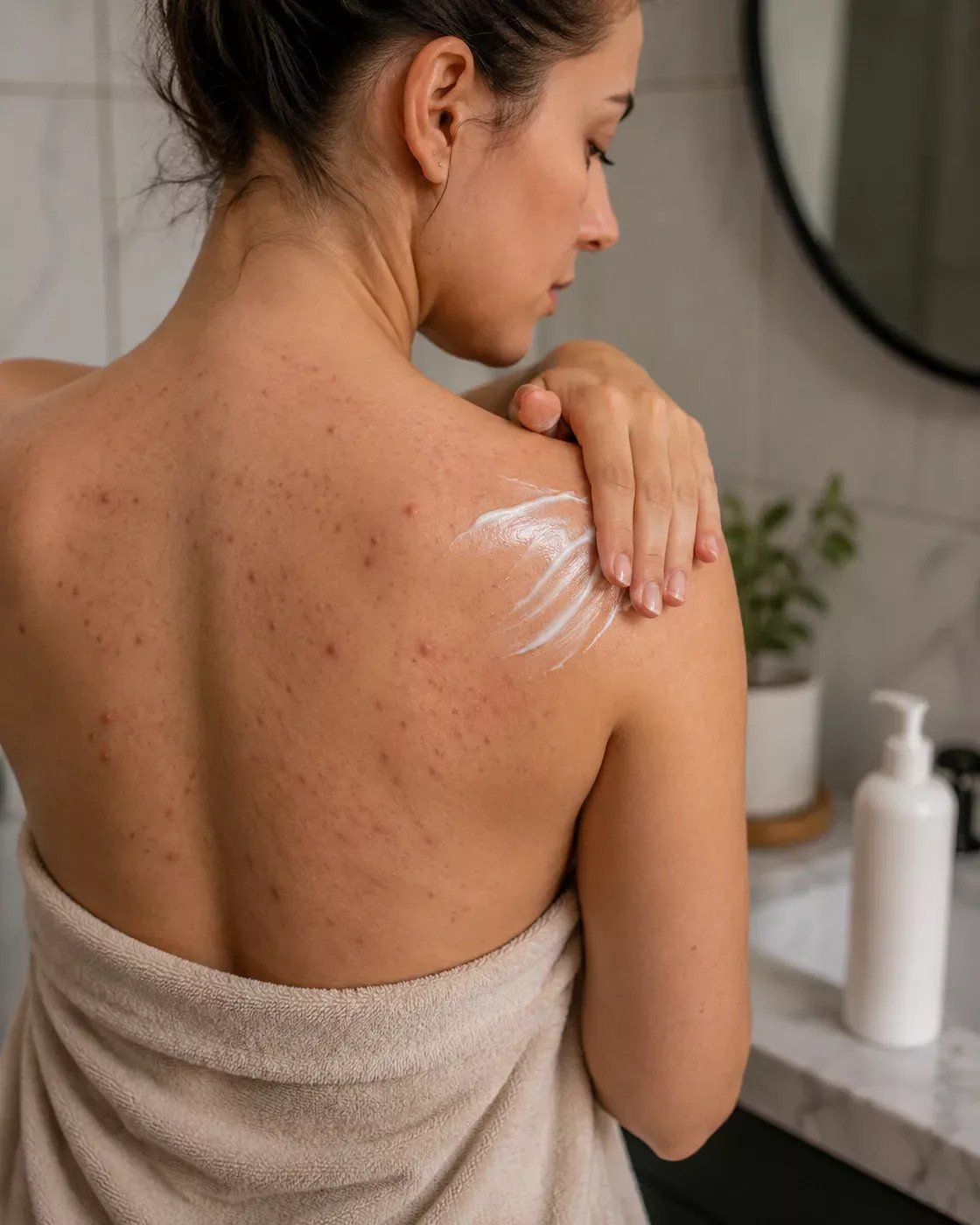
How to Get Rid of Acne Scars on Back? The short answer first, then the detail: one active at a time, introduced over two weeks, judged at eight to twelve weeks, with timing, amounts and the errors that stop it working.
By Mirror & Glow Editorial Desk – November 23, 2026
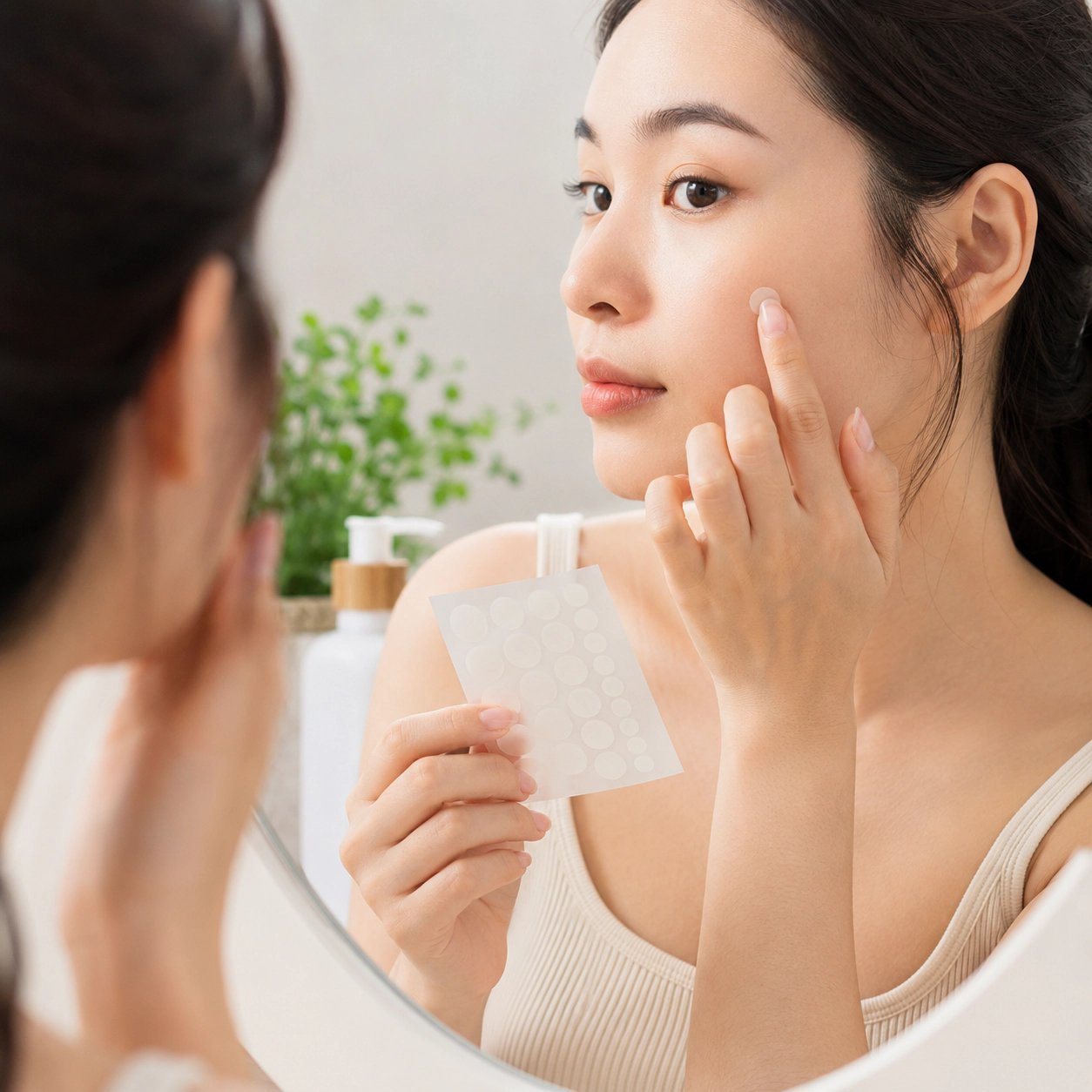
Hydrocolloid is a wound dressing material: it draws out fluid and turns white as it works. This guide applies that to how often to use pimple patches on a single spot: the method, the timing, and the traps to avoid.