By Mirror & Glow Editorial Desk – November 23, 2026
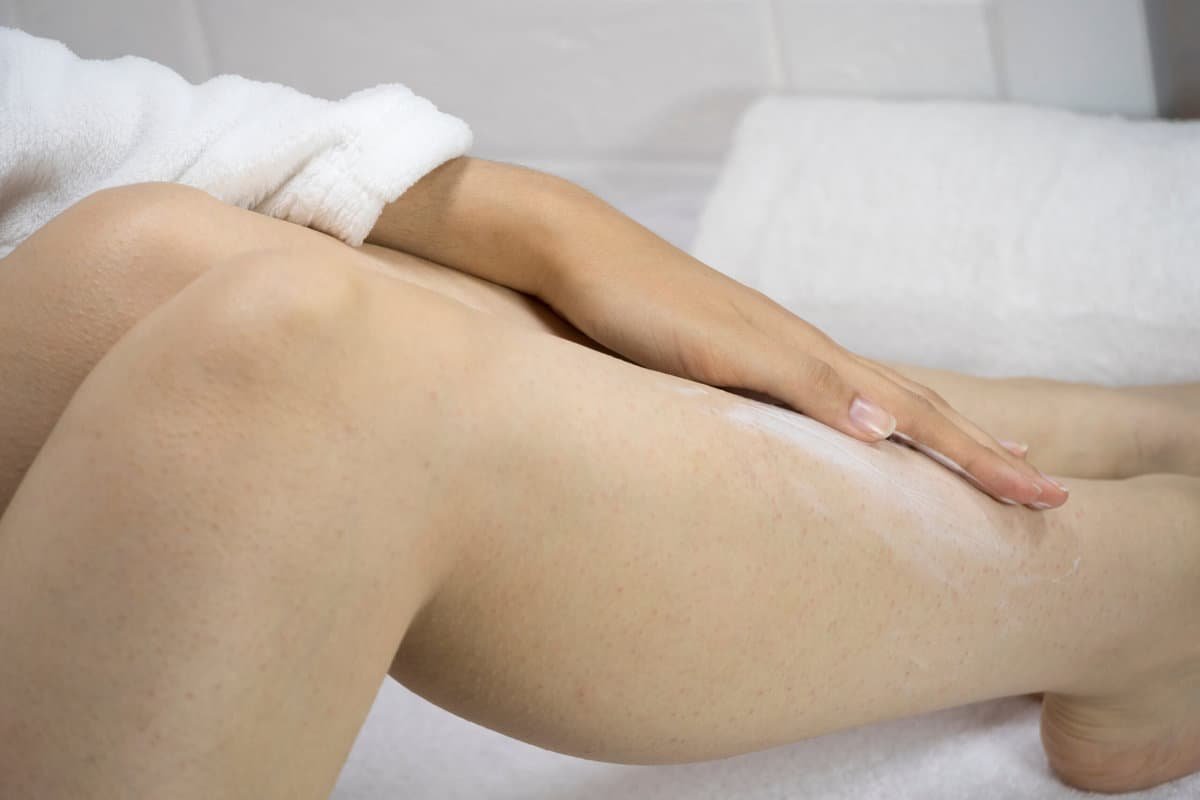
Woman in a bathrobe applying body lotion to her leg on a sofa after a bath.
The short verdict on body lotion vs body oil which is better: neither option wins for everyone. Body Lotion, Body Oil differ in how they work, who they suit and what they cost in effort and money terms. Each option is explained in depth below, the table sets the differences out plainly, and the verdict section matches each option to the readers it actually suits.
Body Lotion vs Body Oil Which Is Better Compared
Factor
Body Lotion
Body Oil
How it works
It spreads quickly and absorbs fast for daily consistency.
It locks in moisture on damp skin effectively.
Best for
Daily maintenance of normal to dry body skin.
Dry skin that prefers an oil finish, and massage style routines.
Routine fit
Apply within a few minutes of showering, onto slightly damp skin, a thin film over the whole area rather than spots. Daily use is the design assumption; if skin still feels tight by midday, step up to a cream rather than applying lotion twice.
Apply to damp skin straight after showering, a few drops per limb spread thin, then pat dry or dress once it has settled for a minute. In winter, layering oil over lotion is the heavy duty pattern for very dry skin.
Cost level
Varies by brand and format; judge by the criteria in this guide rather than headline prices.
Varies by brand and format; judge by the criteria in this guide rather than headline prices.
Downsides
Not rich enough for very dry or cracked areas.
Can feel greasy and transfer to clothing.
The Products Behind This Comparison
Comparisons are settled by real products, so the full line up from the buying guide Best Body Lotion for Dry Skin Dermatologist Recommended is set out here in the same detail: every product with its photo, full description, specifications, pros and cons, and who should buy or skip it.
Product
Standout Point
Key Specification
Eucerin Intensive Repair LotionTop Pick
Alpha hydroxy plus natural moisturising factors in one formula
500 ml pump bottle – alpha hydroxy and natural moisturising factors – fragrance free – rich lotion for very dry skin
This is the heavy duty end of the daily lotion category: a rich, slow absorbing formula built on Eucerin’s published combination of alpha hydroxy, which loosens the dull surface layer so moisture can get in, and natural moisturising factors, the water binding compounds skin itself uses. The texture sits between a lotion and a cream, and it leaves a noticeable protective film for the first minutes after application, which is exactly why it suits very dry, flaky body skin rather than mild dryness. It is fragrance free, which matters at whole body scale because body lotions are a common source of fragrance reactions, and the 500 ml pump makes twice daily use realistic rather than rationed. Dermatology guidance for dry skin consistently favours fragrance free formulas with humectants plus an occlusive element applied straight after bathing, and this formula matches that pattern closely. The trade offs are texture and patience: it can feel tacky under tight clothing if applied generously, it is too rich for humid summer days for many users, and the alpha hydroxy content means freshly shaved or broken skin can sting. Used on damp skin after a shower, a thin even layer is enough; more product does not repair faster, it just sits longer on the surface.
Specifications
500 ml pump bottle
alpha hydroxy and natural moisturising factors
fragrance free
rich lotion for very dry skin
Pros
Alpha hydroxy plus natural moisturising factors in one formula
Fragrance free and sized for whole body daily use
Rich enough for flaky, winter damaged skin
Cons
Feels tacky if over applied or rushed under clothing
Can sting on shaved or broken skin
Too rich for humid weather for many users
Who should buyyour dryness is very dry or flaky and a light lotion disappears within the hour.
Who should skipyour skin is only mildly dry, or you want a lotion that vanishes instantly under clothes.
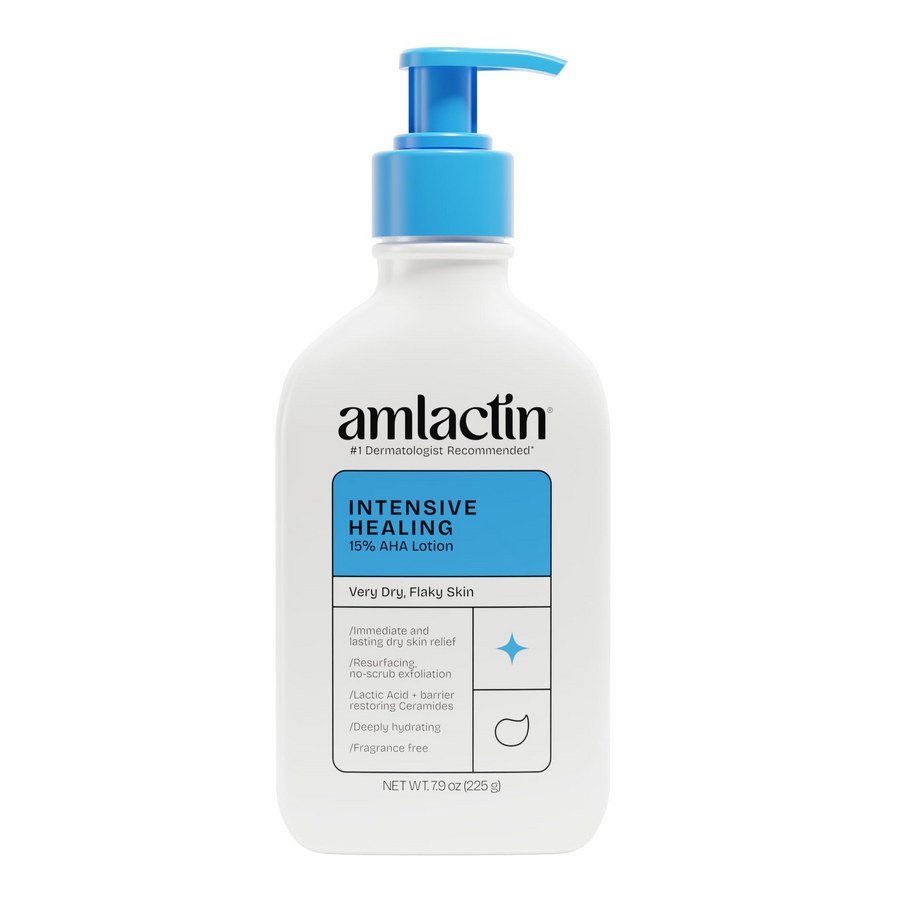
AmLactin is the pick for dry skin that is also rough, because it treats the two problems as one: 15% lactic acid is an alpha hydroxy acid that loosens the bonds between dead surface cells while also acting as a humectant, drawing water into the skin it has just smoothed. That dual action is why dermatologists so often name it for the sandpaper texture on upper arms, shins and backs, where a plain moisturiser sits on top of roughness without changing it. The published strength is the point of the product: at 15% it is a genuine exfoliating treatment, not a lotion with a token acid, so results on texture are usually visible within a few weeks of daily use. It is applied once or twice daily like a normal lotion, ideally after showering. The honest limits follow from the strength. It can tingle or sting on sensitive, freshly shaved or broken skin, it makes skin more sun sensitive so exposed areas need sunscreen, and the natural scent of lactic acid is noticeable to some users even in the fragrance free version. It is also not the fastest route to comfort for cracked or eczema type dryness, where a plain barrier cream should come first and the acid introduced once skin has calmed. That practicality is decisive on a back, where the best product is the one that can cover the area every single day without becoming a project.
Specifications
567 g pump bottle
15% lactic acid
exfoliating moisturiser
fragrance free version available
Pros
A stated 15% lactic acid strength, not a token amount
Smooths rough, bumpy texture while it moisturises
Large pump bottle suits daily whole body use
Cons
Can sting on sensitive, shaved or broken skin
Increases sun sensitivity on exposed skin
Natural acid scent is noticeable to some users
Who should buyyour dry skin is rough or bumpy as well as dry, and plain lotions have not changed the texture.
Who should skipyour skin is cracked, eczema prone or currently irritated, where an acid lotion is the wrong first step.
This is the default daily lotion for normal to dry skin in this guide, and its restraint is the reason. The formula pairs three ceramides, the lipids that make up much of the skin barrier, with hyaluronic acid in a light, oil free lotion that CeraVe releases gradually through its MVE delivery system. It absorbs in about a minute, leaves no tacky film, and layers under clothing and sunscreen without pilling, which is what makes a twice daily routine sustainable for people who dislike the feel of body creams. It is fragrance free and non comedogenic, so it doubles as a face lotion for readers who want one product. For dry skin that is dry rather than severely dry, or for summer months and humid climates, that lighter texture is what keeps a routine consistent, and consistency beats intensity in body care. The limits mirror its lightness: on cracked heels, winter shins or eczema level dryness it will not be enough alone, and very dry readers will layer it under a richer cream or switch to the cream version of the same line. As a maintenance lotion for skin that is already in reasonable shape, though, it is the easiest recommendation in this guide to live with.
Specifications
355 ml pump bottle
ceramides NP, AP and EOP
hyaluronic acid
lightweight oil free lotion
fragrance free
Pros
Light texture that absorbs fast and never feels tacky
Ceramides and hyaluronic acid in a fragrance free base
Works on face and body for a one product routine
Cons
Not rich enough alone for severely dry or cracked skin
Pump bottle size goes quickly with whole body use
Very dry skin will need a richer cream layered over it
Who should buyyou want a daily lotion you will actually use twice a day, with no residue under clothes.
Who should skipyour skin is severely dry, cracked or eczema level, where a richer cream or ointment is the right tool.
Lipikar Balm AP+ is the richest lotion format in this guide, a balm texture in a pump bottle built for extra dry, itch prone skin. Its published base is shea butter and glycerin with niacinamide, an ingredient dermatology guidance associates with barrier support and calming visible redness, in La Roche-Posay’s prebiotic thermal water. The brand positions it for the whole family including babies, and it carries the National Eczema Association seal, which reflects its fragrance free, low irritant formulation rather than any drug claim. The texture is the story: it spreads like a cream but finishes with the staying power of a balm, so one application after an evening shower genuinely lasts into the next day on shins, arms and hands that drink up lighter lotions. For dry skin with an itchy, reactive character, that combination of richness and restraint is hard to find elsewhere in this list. The costs are the mirror image of the benefits. It is too heavy for oily or sweat prone areas in warm weather, the pump struggles with the last portion of the thick formula, and the price per bottle is above the drugstore lotions here, though the 400 ml size narrows that gap in cost per use.
Specifications
400 ml pump bottle
shea butter and glycerin
niacinamide
prebiotic thermal water
fragrance free
accepted by the National Eczema Association
Pros
Balm richness with a pump bottle’s convenience
Niacinamide and shea butter in a fragrance free base
Suitable for the whole family, babies included
Cons
Too heavy for warm weather or oily areas
Thick formula makes the pump slow at the end
Pricier per bottle than the drugstore lotions here
Who should buyyour dry skin is extra dry and itchy, and lighter lotions are gone within hours.
Who should skipyou want a fast absorbing summer lotion, or your dry areas are mainly sweat prone folds.
Vanicream is the formula dermatologists reach for when the brief is to remove variables: a petrolatum based cream deliberately free of fragrance, dyes, lanolin, parabens and the other common sensitisers its maker lists and excludes. Petrolatum is the most effective occlusive in routine skincare, forming the barrier that stops water escaping while the skin underneath recovers, which is why this plain cream outperforms more elaborate formulas on genuinely compromised dry skin. The pump tub format matters more than it sounds, because it keeps fingers out of the product and dispenses a thick cream that a standard pump bottle could not move. It is frequently recommended after procedures and for eczema prone skin precisely because there is so little in it to react to. The trade off is elegance. It is thick, slow to rub in and leaves a definite film, so it suits evenings, targeted areas and winter far better than a quick morning application under fitted clothes. It also contains no exfoliating or brightening actives, so rough texture needs a separate product on calmer days. For sensitive, reactive dry skin, though, boring is the highest compliment a moisturiser can earn, and this one earns it. It is also one of the easiest creams to combine with prescription dry skin care, since nothing in the formula competes with topical treatments used alongside it.
Specifications
453 g pump tub
petrolatum based
free of fragrance, dyes, lanolin and parabens
for sensitive skin
Pros
The shortest, plainest ingredient list in this guide
Petrolatum base gives the strongest moisture barrier here
Pump tub keeps a thick cream hygienic and usable
Cons
Thick and slow to absorb, with a lasting film
No actives for rough texture or dullness
Best suited to evenings and targeted areas
Who should buyyour dry skin is sensitive or reactive and fragranced, active laden lotions have stung or flared it.
Who should skipyou want a light, fast, elegant lotion for quick morning use.
Where the CeraVe lotion in this guide is the light daily option, this cream is the same system at full strength: three ceramides and hyaluronic acid in a petrolatum containing cream that the brand’s MVE technology releases gradually, so one thorough application keeps working for hours. The texture is a proper cream, thick enough to stay where it is put on heels, elbows and shins, yet it rubs down without the greasy residue of a pure ointment, which makes it the middle path for readers who find lotions too weak and ointments too much. It is fragrance free and non comedogenic, and the large tub format makes it economical at whole body scale, which matters for a product dermatologists suggest using daily and generously. It is also the most versatile format here: face in winter, body all year, hands overnight. The limits are format and weight. A tub means fingers in the product unless a spatula or the pump version is chosen, and on humid days or under tight synthetic clothing the richness can feel like a layer too many. For established dry skin that needs more than a lotion but balks at an ointment, this is the guide’s centre of gravity.
Specifications
454 g tub
three essential ceramides
hyaluronic acid
petrolatum
fragrance free
MVE gradual release
Pros
Cream strength with the same ceramide system as the lotion
Lasts for hours from one application
Large tub is economical for whole body use
Cons
Tub format is less hygienic without a spatula
Can feel heavy in humid weather
Richness is wasted on only mildly dry skin
Who should buya lotion is not quite enough for your dry skin but an ointment feels like too much.
Who should skipyour skin is normal to slightly dry, where the lighter lotion version is the better match.
Aveeno’s daily lotion is built on the ingredient the brand is known for: oat. The published formula uses prebiotic oat alongside dimethicone, which is listed as the skin protectant active, in a fragrance free lotion the brand positions for a full day of moisturisation per application. Oat based formulas have a long history in dermatology for dry, itch prone skin, and colloidal oatmeal is a recognised skin protectant, which gives this lotion a calmer character than its light texture suggests. In use it sits between the CeraVe lotion and the richer creams here: it absorbs quickly, leaves skin feeling dressed rather than coated, and suits the large group of readers whose dryness comes with sensitivity and itching rather than flaking. The pump bottle is sized for a bathroom shelf rather than a whole winter of body use, so heavy users will replace it often. Its limits are the familiar ones for a mid weight lotion. Severely dry, cracked or eczema level skin will need a cream or ointment over or instead of it, and it carries no exfoliating active for rough, bumpy texture. As an everyday, fragrance free lotion for dry and sensitive skin, it remains one of the most recommended names in the category for good reason.
Specifications
354 ml pump bottle
prebiotic oat
dimethicone skin protectant
fragrance free
24 hour moisturisation claim
Pros
Oat based formula suits dry skin that also itches
Dimethicone protectant in a fast absorbing lotion
Fragrance free and gentle enough for daily family use
Cons
Mid weight richness is not enough for cracked skin
Bottle size runs out quickly on whole body routines
No exfoliating active for rough, bumpy texture
Who should buyyour dry skin is sensitive and itchy and you want a calm, fragrance free daily lotion.
Who should skipyour main problem is rough texture or cracked heels, which need an acid or urea formula instead.
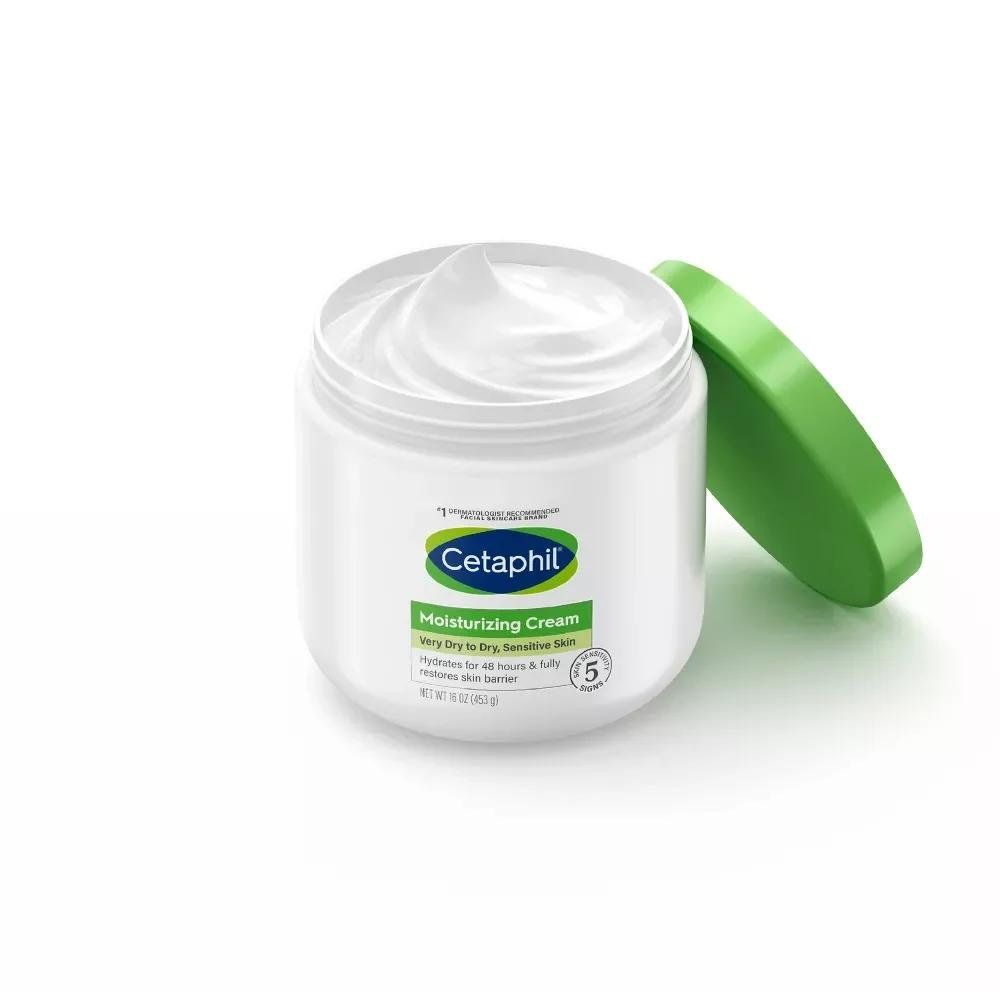
Cetaphil’s cream is the traditional pharmacy answer to very dry, sensitive skin, and the current formula pairs its emollient base with glycerin, panthenol and niacinamide, a combination aimed at holding water in the skin and supporting the barrier rather than simply sealing it. The brand publishes a 48 hour hydration claim and positions the cream for very dry to dry, sensitive skin on face and body. The texture is a smooth, non greasy cream that spreads further than the petrolatum heavy options here, so it works as a daytime body cream where Vanicream’s film would be too much, while still being a clear step up from a lotion. It is fragrance free and formulated to be non comedogenic. The jar format is the main practical drawback: fingers in the tub unless a spatula is used, and the pump version is not always stocked. It also sits in the middle of this guide’s richness range, so the most severe dryness, cracked heels and eczema patches will still want an ointment over it at night. For readers who want one fragrance free cream that behaves well on both face and body, it is a sound, unshowy choice. That middle position is precisely its usefulness: for many households it becomes the single cream kept in the bathroom for every member and every area.
Specifications
453 g jar
glycerin and panthenol
niacinamide
sweet almond oil
fragrance free
for very dry to dry sensitive skin
Pros
Glycerin, panthenol and niacinamide in a fragrance free cream
Richer than a lotion but spreads and finishes cleanly
Published for face and body, very dry to dry sensitive skin
Cons
Jar format needs a spatula for hygiene
Not occlusive enough alone for cracked or eczema skin
Mid range richness may disappoint very dry skin in winter
Who should buyyou want one fragrance free cream for face and body that is richer than a lotion but not an ointment.
Who should skipyour dryness is severe or cracked, where a petrolatum ointment should lead.
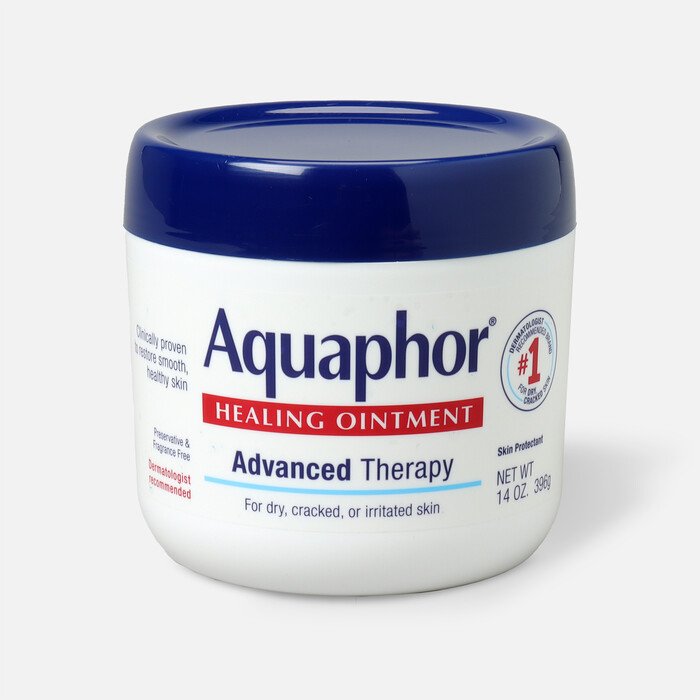
Aquaphor is not really a lotion at all, and that is its role in this guide: it is the ointment step for dry skin that has gone past dry into cracked, split or raw. Its published base is petrolatum as the skin protectant, with panthenol and glycerin, in a preservative and fragrance free formula the brand positions for dry, cracked or irritated skin. An ointment creates the most complete seal of any format here, which is why dermatology guidance so often ends with it for heels, hands, lips and any patch that stings when water touches it. Used overnight under socks or cotton gloves, it routinely does in days what weeks of lotion could not on cracked areas. Nobody should pretend it is pleasant at scale: it is greasy, it transfers to bedding and clothing, and covering a whole body with it is impractical, so its correct use is targeted, on the worst areas, over or instead of a cream. It also has no exfoliating action, so thick callused skin needs a urea or acid product in the routine as well. Every dry skin household benefits from a jar; it is the rescue step the rest of this guide maintains skin to avoid needing.
Specifications
396 g jar
petrolatum skin protectant
panthenol and glycerin
preservative and fragrance free
advanced therapy
Pros
The strongest moisture seal of any product in this guide
Fragrance and preservative free petrolatum formula
Unmatched on cracked heels, hands and raw patches overnight
Cons
Greasy and transfers to fabric
Impractical as an all over body product
No exfoliating action for thick callus
Who should buyyour dry skin has cracked or split areas that lotions and creams have not repaired.
Who should skipyou want an everyday all over lotion, where its grease makes it the wrong format.
Illiyoon is the Korean entry in this guide, from Amorepacific’s sensitive skin line, and it earns its place on texture: a ceramide lotion that feels almost like a light gel cream, spreads over large areas with very little product, and absorbs to a soft, non sticky finish that richer Western creams rarely manage. The published formula centres on the brand’s ceramide skin complex in a fragrance free base positioned for face and body, including for younger and sensitive skin. For readers whose dry skin is on the normal to dry side, or who layer products and dislike heavy finishes, it is the most elegant application experience here, and its mildness makes it a good first ceramide lotion for reactive skin that has found richer creams suffocating in warm weather. The limits are availability and strength. It is an imported product, so price and stock vary by seller, and its lightness means severely dry or cracked skin will find it insufficient alone in winter, the same caveat as the other lotions here. Judged as a daily lotion rather than a rescue cream, though, it shows why Korean body care has built such a following: barrier ingredients without the barrier cream feel.
Specifications
350 ml pump bottle
ceramide skin complex
fragrance free
face and body lotion
Korean pharmacy staple
Pros
Ceramide formula with an unusually light, elegant finish
Fragrance free and mild enough for sensitive skin
Spreads far, so the bottle lasts well
Cons
Imported, so price and availability vary
Too light alone for severely dry winter skin
Less widely stocked than the pharmacy brands here
Who should buyyou want ceramide care in a light lotion you can use on face and body without any sticky finish.
Who should skipyour skin is severely dry or cracked, where the creams and ointment in this guide are stronger tools.
A lighter, fast absorbing body moisturiser for daily use on mild to moderate dryness.
How it works: It spreads quickly and absorbs fast for daily consistency.
Lotions are mostly water with humectants such as glycerin and a light oil phase, so they spread thin and absorb fast. For genuinely dry or rough skin the same brand’s cream will outperform it, and for texture problems like bumps, an active lotion with lactic acid or urea does work a plain lotion cannot. Fragrance is the main tolerance question, since lotion covers the most skin area of any product you own.
Best for: Daily maintenance of normal to dry body skin.
In your routine: Apply within a few minutes of showering, onto slightly damp skin, a thin film over the whole area rather than spots. Daily use is the design assumption; if skin still feels tight by midday, step up to a cream rather than applying lotion twice.
What Is Body Oil?
An oil applied to body skin, usually after showering, to seal in water and add glow.
How it works: It locks in moisture on damp skin effectively.
That mechanism explains both its strength and its limit: on damp skin it is one of the most effective softeners there is; on dry skin it can leave you greasy and still dehydrated. Oil choice decides feel: squalane and lighter esters absorb cleanly, while rich plant oils linger. Dry oils are formulations designed to reduce transfer onto clothes. In shower oils cleanse and deposit oil in one step, a different product wearing a similar name.
Best for: Dry skin that prefers an oil finish, and massage style routines.
In your routine: Apply to damp skin straight after showering, a few drops per limb spread thin, then pat dry or dress once it has settled for a minute. In winter, layering oil over lotion is the heavy duty pattern for very dry skin.
The Downsides of Each
Body Lotion: Not rich enough for very dry or cracked areas. The commonest way people make it worse: applying to bone dry skin hours after a shower, when most of the shower’s water has already escaped
Body Oil: Can feel greasy and transfer to clothing. The commonest way people make it worse: applying to dry skin and concluding body oil does not moisturise, when it was never given water to seal in
Verdict by Use Case
Choose Body Lotion if daily maintenance of normal to dry body skin. That is the use case where its strengths matter most, and where its main downside, not rich enough for very dry or cracked areas.
Choose Body Oil if dry skin that prefers an oil finish, and massage style routines. That is the use case where its strengths matter most, and where its main downside, can feel greasy and transfer to clothing.
If your situation sits between the two, the deciding question is usually effort: which option fits the routine you will actually keep for the next three months? The better option on paper loses to the one you use consistently, in almost every body care category.
Can You Use Both?
In many body care routines the options complement each other: used at different times, on different days or for different areas, each covering the other’s weak ground. The cautions are overload and duplication: do not run both at full intensity in the same session, and do not pay twice for the same job. Introduce any combination gradually, one change at a time, so you can tell what each option is actually doing for you.
How to Decide
Work through three questions in order. First, which option matches your type: the table’s best for row is written for exactly this, and a mismatch there outweighs every other advantage. Second, which downside can you live with: every option in this comparison has one, and the right choice is usually the one whose downside does not touch your actual problem. Third, which fits the routine you already keep: the option that slots into your existing body care habits will still be in use in three months, and consistency is what turns a reasonable choice into a good result. If the answers point different ways, weight them in that order: type, downside, routine.
There is no universal winner: the better option is the one matching your skin or hair type, routine and the use cases in the verdict section above. The difference table shows where each one genuinely leads, and the downsides section shows what each one costs you.
Can I use both in the same routine?
In many body care routines the two can complement each other, used at different times or for different areas, as long as the combination does not overload skin or hair. Introduce any combination gradually, and keep the total intensity at a level your routine can sustain.
Which is better for beginners?
Beginners usually do best with the option that has the gentler learning curve and the fewer downsides for their type, as set out in the table. Start there, and switch only if your needs change.
Which is better for sensitive skin?
The option with the shorter, gentler downside list for your type: compare the downsides row in the table first, start with the milder option, and patch test or trial at the lowest intensity before committing. If your skin or hair is under a clinician’s care, their sequencing comes first.
Which works out cheaper over time?
Compare total cost, not shelf price: how much product or how many consumables each option uses per month, how long a unit lasts in real use, and what you would otherwise spend on the alternative. In this category the cheaper option per use is often the one people abandon, which makes it the most expensive of all.
How do I decide if I can only choose one?
Match the option to your type first, using the best for row in the table, then check that its main downside does not overlap with the problem you are trying to solve. Finally, pick the one that fits the routine you already keep, because three months of consistent use with the second best option beats three weeks of the best one.
What is the best body lotion for dry skin dermatologist recommended?
The buying guide Best Body Lotion for Dry Skin Dermatologist Recommended compares the leading options for this exact need against the criteria that matter, with specifications, honest pros and cons, and a clear statement of who should skip each pick. It is linked from this page.
By Mirror & Glow Editorial Desk – November 23, 2026
Lotions are mostly water with humectants such as glycerin and a light oil phase. This guide applies that to how to use body lotion before bath or after bath: the method, the timing, and the traps to avoid.
By Mirror & Glow Editorial Desk – November 23, 2026
Alpha Skin Care Renewal Body Lotion Before and After? Apply within a few minutes of showering, onto slightly damp skin. The full method, the mistakes to avoid, and where it fits in your routine.
By Mirror & Glow Editorial Desk – November 23, 2026
How to Use Body Lotion and Body Oil Together? Apply within a few minutes of showering, onto slightly damp skin. The full method, the mistakes to avoid, and where it fits in your routine.